Everyone is looking at the wrong target.
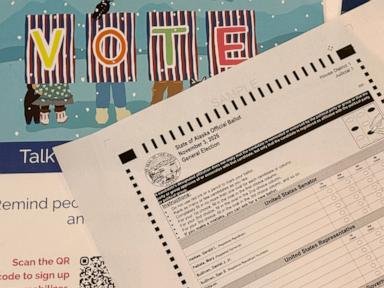
When news broke that the Department of Justice requested the separation of Alaska ballots ranking Dan J. Sullivan in the U.S. Senate race, the political commentary class immediately reached for its favorite worn-out playbook. Partisans screamed about federal overreach. Opponents of ranked-choice voting (RCV) cheered what they viewed as an inevitable constitutional reckoning. And mainstream outlets dutifully framed the story as a narrow legal squabble over how one state tallies its votes.
That framing is lazy. Worse, it blinds voters to what is actually happening beneath the hood of American election administration.
If you think this fight is simply about Dan J. Sullivan, or even about whether the DOJ has the statutory authority to demand physical segregation of specific ballot batches, you are falling for a procedural distraction. Having spent years dissecting election litigation and watching state-level ballot challenges implode in courtrooms from Pennsylvania to Arizona, I can tell you this: the legal skirmishes that capture front-page headlines are rarely the ones that alter the mechanics of power.
The real story here is not about ballot separation. It is about the weaponization of administrative friction—and how both defenders and detractors of Alaska’s voting system are misreading the constitutional terrain.
The Myth of the Neutral Ballot Audit
Let’s dismantle the primary consensus first. The prevailing narrative suggests that requests to separate specific categories of ballots—such as those ranking a particular federal candidate like Dan J. Sullivan—are merely routine, hyper-technical housekeeping steps designed to preserve evidence or ensure compliance with federal oversight statutes.
On paper, that sounds sterile. In practice, it is anything but.
In election administration, physical handling equals risk. Every time a local election board is forced to alter its standard tabulation workflow to isolate, hand-sort, or segregate a subset of ballots based on candidate selection, three things happen immediately:
- Chain-of-custody complexity multiplies. Standard optical-scan tabulation relies on uniform batching. Introducing conditional sorting—pulling ballots based on how a voter ranked a specific Senate candidate—creates new human touchpoints. More touchpoints mean more opportunities for clerical error, misfiled batches, and fuel for future litigation.
- Tabulation timelines stretch. Alaska’s geography already makes ballot collection a logistical marathon. Villages off the road system rely on bush planes and weather windows to get mail-in ballots to regional hubs. Adding a secondary sorting mandate doesn't just slow down the count; it creates an information vacuum where conspiracy theories thrive.
- The presumption of regularity erodes. Under established election law principles, state election officials operate under a presumption that their certified processes are valid unless proven otherwise. When federal authorities intervene mid-stream or demand bespoke ballot segregation, it signals institutional distrust before a single piece of evidence is weighed in open court.
The competitor’s coverage treats this request as a binary political clash: DOJ versus Alaska, or Democrats versus Republicans. That misses the structural reality. Election infrastructure is a machine built for standardization. The moment you force the gears to sort by political preference—even for ostensibly legal or investigative reasons—you degrade the reliability of the entire apparatus.
What Everyone Gets Wrong About Ranked-Choice Tabulation
To understand why separating ballots ranking Dan J. Sullivan is such a loaded maneuver, you have to understand how Alaska’s system actually works—and why most pundits explain it backward.
In a traditional plurality system, a ballot is a static, single-choice artifact. You pick Candidate A, and your ballot stays in Candidate A’s pile forever.
Ranked-choice voting destroys that static model. Under Alaska’s Ballot Measure 2 framework, a ballot is not a vote for a single person; it is a conditional algorithm. If a voter ranks Dan J. Sullivan first, their ballot resides in his active pile during Round 1. If a voter ranks an independent or third-party candidate first and Sullivan second, that ballot does not belong to Sullivan at all—until the first-choice candidate is eliminated, triggering an instant runoff transfer.
Now, stop and think about the sheer operational absurdity of a request to "separate ballots that rank Dan J. Sullivan."
Does that mean ballots where Sullivan is ranked first? Or does it include ballots where Sullivan is ranked second, third, or fourth?
If it’s the latter, you aren't just pulling a neat stack of partisan votes. You are pulling ballots belonging to voters who actively preferred someone else, whose votes might never even transfer to Sullivan depending on elimination thresholds. Conversely, if you only separate first-choice Sullivan ballots, you completely sever the mathematical link between first-round totals and subsequent reallocation rounds.
I have watched legal teams burn millions of dollars in post-election discovery because they failed to grasp the difference between a static tally and a dynamic transfer algorithm. In an RCV audit, you cannot meaningfully examine one candidate's ballots in isolation without disrupting the relational matrix of the entire precinct. Every ballot’s legal weight is tethered to the fate of every other candidate on that same piece of paper.
The Federalism Trap Nobody Wants to Admit
Here is the uncomfortable truth that neither side of the aisle wants to say out loud: federal election statutes were never written with ranked-choice algorithms in mind.
When the Department of Justice invokes federal oversight powers—typically anchored in the Civil Rights Act of 1960, which requires election officers to retain and preserve federal election records for 22 months, or the Help America Vote Act (HAVA)—it is applying 20th-century statutory tools to 21st-century tabulation mechanics.
Let’s look at the actual legal tension:
- The Federal Mandate: Under 52 U.S.C. § 20701, the Attorney General has broad authority to inspect and demand the preservation of all records and papers relating to any application, registration, payment of poll tax, or other act requisite to voting in a federal election. Courts have historically given the DOJ wide latitude here. You don't get to tell the Justice Department "no" when they ask to inspect federal election records.
- The State Prerogative: Under Article I, Section 4 of the U.S. Constitution (the Elections Clause), the "Times, Places and Manner" of holding elections for Senators and Representatives are prescribed by each state legislature, unless Congress explicitly steps in to alter those regulations. Congress has never passed a law dictating how states must physically segregate ranked-choice ballots.
This creates a massive gray zone. When the DOJ requests the separation of specific candidate ballots, it is pushing the outer boundary of administrative inspection into the territory of operational dictation.
If Alaska’s Division of Elections complies without pushback, it sets a precedent where federal agencies can effectively dictate the physical sorting protocols of state-run elections on a candidate-by-candidate basis. Imagine a scenario where, in a razor-thin 2028 Senate race, the DOJ demands that a state isolate every ballot ranking a specific challenger before certification is complete. The administrative paralysis alone could push a state past federal safe-harbor deadlines.
On the other hand, if state officials flatly refuse, they invite immediate federal enforcement litigation, handing political opponents a megaphone to claim the state is hiding something. It is a classic institutional catch-22.
Dismantling the "People Also Ask" Fallacies
Whenever a story like this hits the news cycle, voters flood search engines with the same predictable questions—most of which are built on completely false premises. Let’s clear the brush.
"Does separating ballots change the election outcome?"
No, not directly—and asking this question misses the point entirely. Physical separation of paper ballots after scanning does not alter the digital cast vote record (CVR) used to compute the winner. However, it radically alters the legal posture of the race. Once ballots are physically segregated into distinct buckets, they become prime targets for selective legal challenges, targeted signature-matching disputes, and piecemeal invalidation efforts. You don't change the math by sorting the paper; you change which pieces of paper survive judicial scrutiny.
"Is the DOJ targeting Dan J. Sullivan specifically?"
Framing this as a personal vendetta against a single incumbent Senator is peak political theater, and it’s intellectually lazy. In high-profile federal races, specific candidates become the statutory hook through which federal oversight is triggered. Because U.S. Senate races are federal contests, any audit, preservation demand, or compliance review involving a multi-office ballot must anchor itself to a federal race to establish jurisdiction. Sullivan’s name is the jurisdictional key that unlocks federal authority over a ballot that also contains state and local contests.
"Can Alaska just ignore the Department of Justice?"
Not unless state officials want to spend the next two years in federal district court losing on procedural motions. Federal courts routinely enforce DOJ document preservation and inspection requests under the Civil Rights Act of 1960 with minimal tolerance for state-level stonewalling. The smart play for state election administrators is never outright defiance; it is strict, narrow compliance that satisfies federal statutory demands using digital cast vote records rather than physical ballot disruption.
The Flaw in My Own Argument (And Why It Still Holds)
To be completely candid, there is a legitimate counter-argument to my skepticism of physical ballot separation.
In scenarios involving suspected systemic scanner calibration errors—where optical sensors might be misreading oval marks in a specific column or row aligned with a particular candidate—physical segregation is the fastest way to run a manual hand-to-eye verification. If a printer defect caused ink bleed near Dan J. Sullivan’s name on a specific batch of absentee ballots, pulling those exact ballots is the most direct path to forensic clarity.
That is a real operational edge case. I have seen printing alignment bugs throw off precinct totals by several percentage points before anyone caught the hardware glitch.
Even so, using physical ballot sorting as a blunt instrument before proving a localized hardware defect is backward engineering. Modern optical scanners generate high-resolution ballot images and granular Cast Vote Records for every single sheet fed through the machine. A competent data team can query 500,000 digital ballot records for anomalies in under four seconds without a single human hand touching a piece of paper. Demanding physical separation in the digital era is like demanding a bank count its vault in pennies when you already have the ledger.
How Election Watchdogs and Strategists Should Actually Respond
If you are an election administrator, a campaign legal counsel, or simply a voter trying to cut through the partisan noise, stop reacting to the headlines and start focusing on the structural mechanics that actually protect election integrity.
- Demand Digital Transparency Over Physical Disruption. Stop treating physical paper shuffling as the gold standard of accountability. Push state election divisions to publish raw, anonymized Cast Vote Records alongside high-resolution ballot images immediately upon certification. When the underlying data is public, anyone with a laptop can audit the ranked-choice transfers independently, rendering selective physical sorting obsolete.
- Audit the Chain-of-Custody Logs, Not Just the Totals. Whenever a federal or state agency requests special handling of specific candidate ballots, the public record that matters most is the transfer log. Look at who touched the boxes, when the seals were broken, and whether bipartisan observers were present during the segregation process. A broken seal matters infinitely more than a delayed press release.
- Separate Federal Jurisdiction from State Tabulation. Election lawyers need to draw a bright red line between federal record preservation (keeping ballots safe for 22 months) and federal operational interference (dictating how states sort ballots during active tabulation). States should satisfy DOJ oversight through mirrored digital records while keeping physical ballots locked in their original precinct batches.
The obsession with separating ballots ranking Dan J. Sullivan is a symptom of a deeper pathology in American politics: we have stopped trusting neutral systems and started demanding bespoke handling for every political flashpoint. Every time we bend standard election procedures to accommodate a political or legal demand, we train the public to believe that routine administration is rigged unless a special referee steps onto the field.
Keep the ballots in their boxes, publish the digital records, and let the math speak for itself.