The heartbeat of the hospital in Polistena, a small town tucked into the rugged hills of Calabria, used to sound like a panic attack. For years, the emergency room doors swung open to a crisis that had nothing to do with medicine and everything to do with arithmetic. There simply were not enough doctors. Wards were shutting down. Neonatal units were going dark. The local population, living in the sun-drenched but economically neglected toe of Italy’s boot, faced a terrifying reality: get sick after hours, and you might die before the ambulance reached a city that could treat you.
Then came the Cubans.
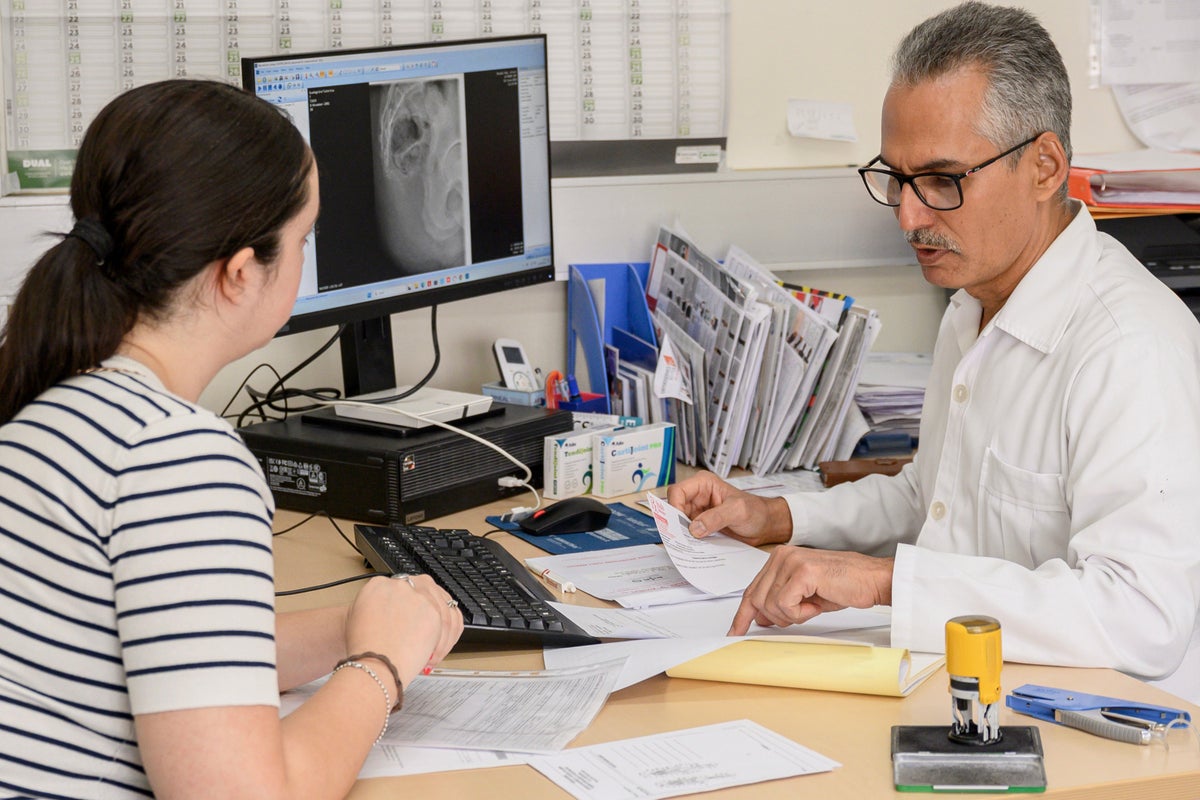
They arrived not with a fanfare of trumpets, but with suitcases packed with stethoscopes, winter coats they had never needed in Havana, and an intense curiosity about Italian grammar. Among them was a physician who found himself staring at an elderly Calabrian man weeping in a corridor. The man’s wife was suffering from acute respiratory distress. The local staff was drowning in paperwork and exhaustion. The Cuban doctor took the woman’s hand, spoke in a melodic, heavily accented mix of Spanish and newly learned Italian, and stayed by her bedside until her breathing steadied.
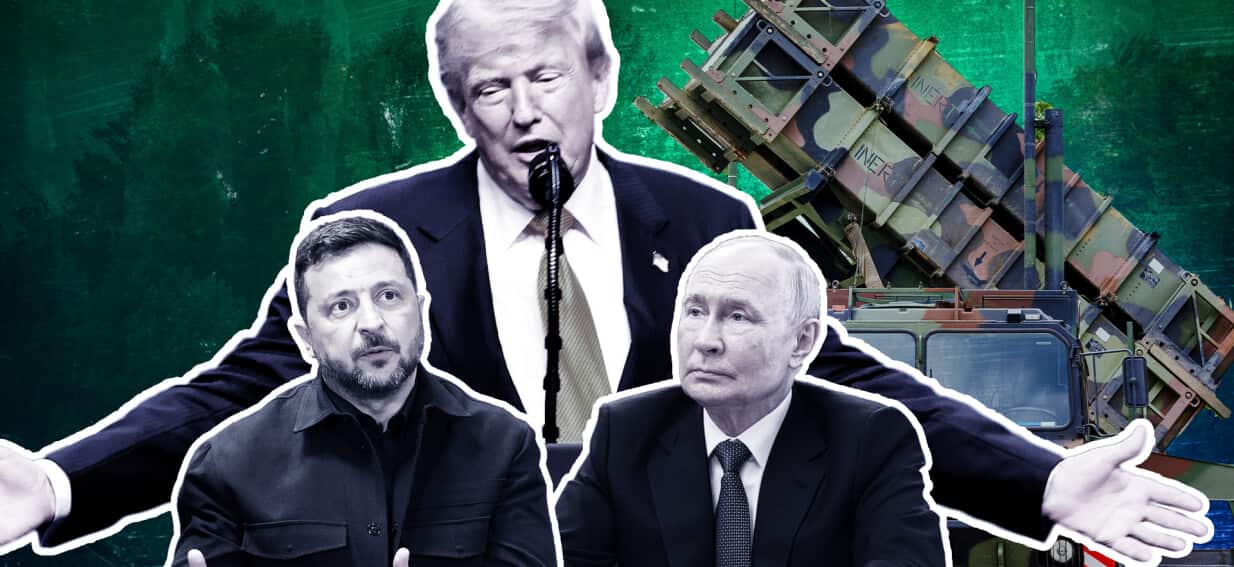
To the locals, this was a miracle. To the geopolitical machinery thousands of miles away in Washington, D.C., it was a provocation.
The Geography of Neglect
To understand why a center-right Italian politician would risk the wrath of the world’s lone superpower, you have to understand the silence of a dying hospital. Calabria is beautiful, but its healthcare system has been hollowed out by decades of austerity, mismanagement, and the creeping shadow of organized crime, which long ago realized that public health budgets are far easier to plunder than banks.
For twelve years, the region’s healthcare system was managed directly by Rome under an emergency receivership. The mandate was simple: cut costs. The result was catastrophic. Hundreds of positions were frozen. Equipment gathered dust because there was no one licensed to operate it. Young Italian medical graduates fled north to Milan, or across the Alps to Germany and the United Kingdom, where the pay is double and the shifts do not break your spirit.
Consider the raw math of a collapsing emergency room. A standard shift is eight hours. When you are short three doctors, that shift becomes sixteen hours. The eyes grow heavy. The judgment blurs. You begin to view patients not as human beings in agony, but as obstacles between you and a mattress.
Roberto Occhiuto, the governor of Calabria, looked at this mathematical ruin and realized he was presiding over a slow-motion disaster. He advertised for positions. He begged Italian doctors to move south. He offered bonuses.
Nothing worked.
The silence remained.
That was when Occhiuto turned his gaze across the Atlantic, toward a Caribbean island that has spent more than sixty years perfecting the art of survival under siege.
The White Coat Diplomacy
Cuba’s medical internationalism is a phenomenon unique in modern history. Since the early days of its revolution, the island has used its abundance of doctors as its primary diplomatic currency. When an earthquake shatters Pakistan, the Cubans arrive. When Ebola ravages West Africa, they are on the front lines.
But this is not merely an exercise in altruism. It is an economic lifeline. The Cuban government leases its medical professionals to foreign states, collecting their salaries from host governments, keeping a significant portion to fund its own bankrupt domestic systems, and passing a fraction along to the doctors themselves.
For a doctor in Havana, earning a state salary that might barely cover the cost of groceries for a month, an overseas mission is a ticket to a different life. It means being able to send money home. It means buying a refrigerator.
When Governor Occhiuto signed an agreement to bring nearly five hundred Cuban doctors to Calabria, he was not trying to make a ideological statement. He is a member of Forza Italia, a conservative, pro-Western political party founded by Silvio Berlusconi. He is no Marxist. He is a pragmatist who needed warm bodies with medical degrees.
But in international politics, there is no such thing as a pure pragmatist.
The United States government views Cuba’s medical brigades through a dark, uncompromising lens. In Washington, these doctors are not heroes; they are victims of state-sponsored human trafficking. The State Department argues that the Cuban government coerces these professionals into serving overseas, confiscates their passports, monitors their movements, and steals their wages.
The pressure from the American embassy in Rome was immediate, heavy, and polite. There were quiet meetings. There were expressions of deep concern. The message was unmistakable: terminating the Cuban program was a matter of alignment with Western democratic values. Italy, a core NATO ally, should not be financing the authoritarian regime in Havana.
The View from the Wards
Step away from the diplomatic cables and walk into the hospital at Gioia Tauro. Here, the grand geopolitical chess match feels absurd, almost comical.
The patients do not care about the embargo. They do not care about the ideological purity of the hands that palpate their abdomens or set their broken bones. They care that someone is there.
The transition was not seamless. Language was an immediate, formidable wall. Medical terminology is universal, but a ninety-year-old grandmother from a mountain village does not speak in textbook Italian; she speaks in a dense, ancient dialect that even northern Italians struggle to comprehend.
The Cuban doctors adapted with a resourcefulness born of scarcity. In Cuba, working in a hospital often means diagnosing a patient without the aid of an MRI machine because the parts are broken and cannot be replaced due to sanctions. It means relying on physical examination, on listening to the lungs with an intensity that modern Western medicine has largely forgotten.
This clinical intuition turned out to be exactly what Calabria needed. The Cubans brought a bedside manner that felt familiar to the elderly locals. They were accustomed to communities where the doctor is a neighbor, not a distant bureaucracy. They drank the strong espresso offered to them in tiny plastic cups. They learned the local idioms.
More importantly, they kept the doors open.
The numbers are difficult to argue with. In the first phases of the deployment, the Cuban physicians performed thousands of consultations, emergency interventions, and surgeries that simply would not have happened otherwise. They stabilized departments that were on the verge of total collapse.
But the political pressure did not dissipate. It intensified.
The Sovereign Defiance
The easy move for a regional governor in Italy is to defer to Rome, and for Rome to defer to Washington. That is how the hierarchy of global power is supposed to function. The periphery sacrifices its comfort to maintain the harmony of the center.
But Occhiuto did something rare in contemporary politics. He stood his ground.
He publicly defended the program, stating bluntly that until the Italian state or the European Union could provide him with the doctors necessary to guarantee the constitutional right to health for his citizens, he would look for them wherever they could be found. He pointed out the hypocrisy of a system that would rather see an emergency room close than allow a Cuban doctor to staff it.
This defiance highlights a deeper, more uncomfortable truth about the modern world. The grand narratives of global politics—democracy versus authoritarianism, East versus West—often fall apart when they collide with the basic biological needs of human beings.
The American argument that the doctors are exploited is not without merit. The financial arrangements are opaque, and the Cuban state undoubtedly uses these programs to prop up its authoritarian rule. If you speak to the doctors in private, when the official handlers are not listening, you find a complex mixture of pride and resentment. They know they are being used as geopolitical chess pieces. They know they are underpaid relative to the value they provide.
Yet, they also choose to go. They find dignity in the work. They find a freedom of movement that is otherwise denied to them on their island home.
To reduce their presence in Italy to a simple case of human trafficking is to erase their agency. It ignores the reality that for these doctors, a hospital in Calabria is an opportunity, a rare window to the wider world.
The Living Proof
The sun sets over the Tyrrhenian Sea, casting long, golden shadows across the concrete facade of the hospital. Inside, a shift change is happening. An Italian nurse, her face lined with the permanent fatigue of her profession, hands over a stack of charts to a Cuban physician. They share a quick joke about the weather, a brief moment of human connection that bypasses the ideological battlefields of Washington and Havana.
This experiment in the south of Italy is more than a temporary fix for a regional crisis. It is a mirror held up to the failures of the Western economic model, which can produce unimaginable wealth and cutting-edge medical technologies, yet somehow fails to ensure that a child in a rural village can see a pediatrician on a Tuesday night.
The Cuban doctors remain in Calabria. The pressure from across the Atlantic continues to hum in the background, a low-frequency vibration that everyone acknowledges but chooses to ignore.
The true measure of this defiance is not found in the rhetoric of politicians or the texts of diplomatic protests. It is found in the quiet rooms where a patient’s pulse is checked, where a fever is broken, and where the breath returns, steady and sure, because someone was there to catch it.