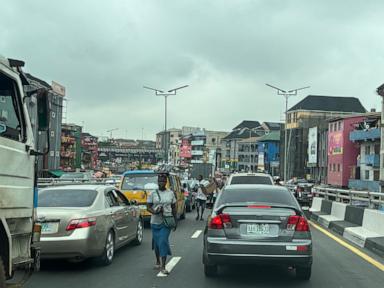
The air inside the bustling market stall in Abuja smells sharply of dried chili peppers and engine exhaust. Behind a stack of woven baskets, a merchant named Emeka adjusts his transistor radio, listening to the morning broadcast with a quiet, familiar fatigue. Down the street, campaign posters are already beginning to flutter in the Harmattan wind. Nigeria is marching toward another defining electoral cycle, and the political machinery is grinding into motion.
At the center of this storm sits President Bola Tinubu.
To understand the current political physics of Africa's most populous democracy, one has to look past the grand speeches and look closely at the math of survival. When Tinubu swept into power, he did not waste a single day. He inherited an economy teetering on a precipice, and his administration immediately pulled the emergency levers. The decades-long fuel subsidy vanished overnight. The currency was unpegged, floating into a brutal reality that left the local naira heavily devalued.
For international financial institutions, these moves were long overdue surgery. For Emeka and millions of ordinary citizens navigating soaring inflation, it felt like walking through fire without shoes. The price of bread, transport, and school fees multiplied. The kitchen table became a battleground of quiet arithmetic.
Yet, as campaign season officially opens, the political vulnerability that should naturally plague an incumbent facing such severe economic headwinds is running into an immovable wall.
That wall is the opposition itself.
Consider what happens when a house divided tries to weather a hurricane. The anti-incumbent sentiment across the country is palpable. Voters are vocal about unemployment, inflation, and the lingering shadows of insecurity. But elections are won not just by counting grievances, but by counting ballots. And right now, the mathematics heavily favors the ruling All Progressives Congress because the opposition is locked in a slow-motion collision with its own ambitions.
The historical playbook in Nigerian politics is clear. When the ruling party faces a fractured field of challengers, its path to victory widens considerably. Tinubu secured his initial mandate with roughly thirty-seven percent of the vote, edging out a crowded field where the total opposition vote vastly outnumbered his own. The strategy for unseating him was supposed to be simple on paper: unite under a single banner, pool the numbers, and present a monolithic alternative.
Instead, ambition got in the way.
The grand coalition billed as the most ambitious opposition realignment in over a decade began to crack under the weight of ego, legal battles, and internal friction. Figures like Peter Obi, who electrified millions of young voters with a massive youth-driven movement during the previous race, and veteran contender Atiku Abubakar found themselves pulling in different directions. Hopes of a unified front dissolved into separate camps, with multiple opposition figures throwing their hats into the ring.
The opposition is essentially running multiple tracks toward the same destination, ensuring that anti-incumbent votes will naturally cannibalize one another.
Meanwhile, the ruling party has systematically consolidated its foundations. Through a series of high-profile political alignments and defections, the ruling party's influence has rippled across the states, leaving governors and grassroots structures increasingly tethered to the center. In a landscape where local political weight dictates the movement of votes on election day, this structural consolidation provides an immense defensive shield.
Back at the market stall, Emeka turns off the radio as a customer approaches. He does not talk about macroeconomics or foreign exchange reserves. He talks about the cost of a bag of rice and whether anything will actually change when the ballots are cast.
The campaigns have begun. The challengers are crisscrossing the country, making passionate appeals to a weary populace. But unless the opposition can bridge the chasms between them, the story of this election may not be written by the depth of public anger, but by the math of a fractured mirror.
Nigeria's Opposition Splits Ahead of 2027 Election
This video provides a helpful overview of the fractured opposition strategies and the political dynamics shaping the ongoing election campaigns in Nigeria.

.jpg)

