The train tracks running north toward the Russian frontier carry more than just steel wheels and heavy cargo. They carry a quiet acceleration.
Standing on a cold platform in the eastern reaches of a distant continent, the air smells of old coal smoke and wet iron. You watch the freight cars roll past. Most people look away. They see logistics. They see maps smeared with red and blue arrows drawn by generals sitting thousands of miles away in heated rooms. But behind those steel doors sit men who have lived entire lives under strict horizons, now being funneled into the mud of the European borderlands.
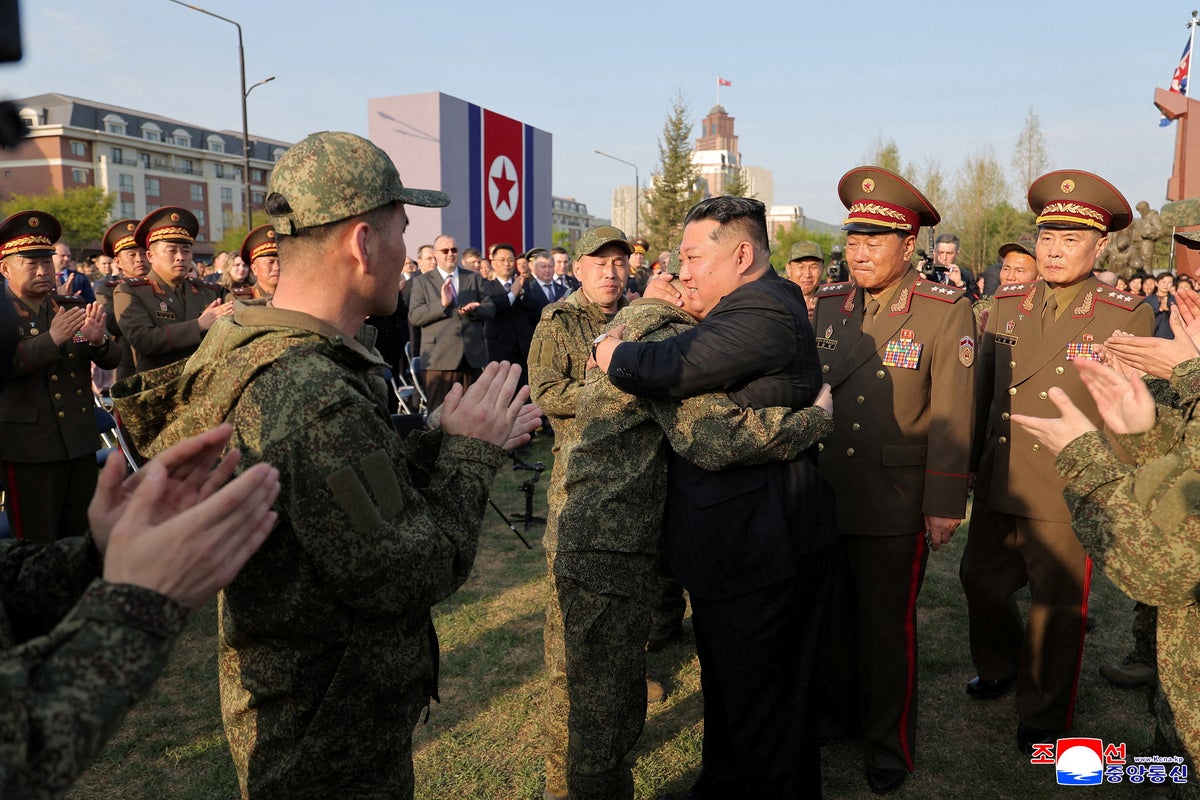
Reports indicate that Moscow is seeking another thirty thousand soldiers from North Korea to reinforce its positions against Ukraine.
Numbers drift through news tickers like dust motes in a shaft of sunlight. Thirty thousand. It sounds clean. It sounds like an administrative adjustment on a quarterly ledger. Yet, each digit represents a heartbeat, a pair of boots, a family left behind in a village where electricity is a luxury and silence is the default state of existence.
To understand why this recruitment drive matters, you have to step away from the abstract theater of geopolitics and look at the sheer attrition of modern artillery warfare. Trenches do not care about ideology. They care about bodies, shells, and attrition rates. When an army bleeds out its vanguard across months of drone-watched mud, it looks for replacements wherever the borders are porous and the agreements are transactional.
Consider what happens when a state economy runs low on currency but high on isolation.
For Pyongyang, sending troops is not merely an alliance gesture. It is an export. In exchange for manpower, the machinery of state receives hard resources, technological sharing, and foreign currency that props up a regime perpetually teetering on the edge of internal strain. The soldiers themselves are often told they are serving a grand international duty, but the reality on the ground is starkly transactional. They are traded for grain, fuel, and missile guidance systems.
The friction point lies in how this changes the geometry of the front lines.
For months, the conflict has settled into a grinding war of attrition. Both sides trade meters of devastated earth for heavy casualties. When fresh formations arrive from the Far East, they do not arrive speaking the language of their commanders. They require translators, separate supply chains, and specialized integration protocols. Yet, sheer mass matters in a war defined by the constant consumption of infantry.
A platoon of infantrymen from an isolated military district does not know the geography of the Ukrainian steppes. They do not know the names of the contested villages or the history of the soil beneath their boots. To them, the landscape is simply a zone of survival.
Listen closely to the silence that falls over a trench after a barrage stops. That is where the true weight of this expansion is felt.
Veterans of the front lines talk about the endless waiting. The drone hums overhead like an angry hornet, a constant reminder that visibility equals death. Now, into that brutal calculus, thousands of new fighters are being introduced. They bring foreign discipline, strict adherence to command hierarchies forged in total isolation, and an unfamiliar cultural dynamic to camps already strained by years of continuous combat.
Critics argue that foreign troops cannot easily bridge the technological gap required on a modern digital battlefield dominated by electronic warfare and thermal optics. That is true. A soldier stepping out of a twentieth-century training doctrine faces a steep, often fatal learning curve against modern surveillance assets. But war is rarely pure efficiency. Often, it is simply a matter of who can absorb the most damage before the breaking point arrives.
By pulling in external reserves, Moscow signals a desire to bypass the political costs of another domestic mobilization wave. Announcing a fresh draft inside major Russian cities carries domestic risks. It disrupts local economies, spooks urban populations, and invites quiet discontent. Outsourcing the human cost across international borders offers a convenient cushion. It keeps the casualty notices out of the newspapers in St. Petersburg and Moscow, shifting the burden to distant provinces and foreign barracks.
Yet, every deployment carries a ripple effect.
Regional powers watch closely. Seoul recalibrates its security posture, looking at the deepening ties between its northern neighbor and a nuclear-armed European power with growing alarm. Intelligence analysts track the movement of cargo ships between Rason and Vladivostok, logging every crate and container as if reading tea leaves. The alliance is no longer just a bilateral convenience; it is actively reshaping security architectures from the Baltic to the Pacific.
We forget that wars are fought by individuals who never wanted to see a map of the region they are dying in.
Imagine a young conscript sitting on a wooden bench inside a transit camp, staring down at a pair of issued boots that do not quite fit. He has never seen snow that falls like this. He has never heard the specific whistle of a high-velocity shell. His world has shrunk to the dimensions of his rucksack and the man standing to his left whose language he cannot speak.
That is the human core of the statistic.
The thirty thousand soldiers are not pieces on a board. They are sons, brothers, and laborers caught in the gravitational pull of a conflict that stretches far beyond their borders. When historians write about this era, they will measure the outcome in territorial shifts and political treaties. But the texture of the history will be found in the mud, the cold metal, and the quiet train rides moving ever westward through the night.