The coffee in the paper cup went cold hours ago. In rooms lit only by the pale amber glow of monitors, air circulates through heavy industrial filters, smelling faintly of ozone and old paper. Down the hall, phones ring with a muffled urgency, though nobody rushes. Rushing invites mistakes. In these places, tension does not manifest as shouting. It is measured in silence. It is measured in the deliberate cadence of a briefing officer speaking to an empty chair, practicing the words that might anchor a nation's response to an unfolding catastrophe.
Outside those sterile corridors, the world moves differently. Words hit the air like thrown stones. They skip across oceans, bouncing from satellite to receiver, amplified by microphones and distorted by anger. For another view, read: this related article.
When a former president leans into a microphone and delivers a blunt, unfiltered threat—promising to beat the living consequence out of a longtime adversary—the audio clip does not merely travel. It embeds itself in the atmosphere. It becomes a physical weight. Tehran hears it. Washington hears it. And in dusty alleyways thousands of miles away, ordinary people who just want to buy bread look up at the sky, wondering if the rhetoric will finally materialize into something falling from the clouds.
History is rarely made by calm men in quiet rooms. It is forged in the friction between explosive public declarations and the cold, mechanical gears of military retaliation. Similar analysis on this matter has been shared by The Washington Post.
To understand what happens when a superpower strikes Iran after weeks of escalating warnings, we have to look past the chyron banners on cable news. We have to look at the machinery of escalation.
The Anatomy of a Fuse
A long fuse burns quietly. You see only the small, bright tip moving toward the powder keg.
For years, the dance between the United States and Iran has followed a familiar choreography. Proxy groups strike shipping lanes or outposts. Intelligence agencies track the financial flows from Tehran to regional militias in Iraq, Syria, and Yemen. Statements are issued. Sanctions are tightened. The dial inches upward.
Then the language changes.
Rhetoric stops being diplomatic shorthand and becomes personal, visceral, and absolute. When threats cross the line from strategic deterrence into raw, unfiltered promises of absolute devastation, the psychological calculus in foreign capitals shifts. Leaders in Iran cannot dismiss harsh words as mere campaign theater or political posturing. They must plan for the worst-case scenario. They must harden their command bunkers, disperse their missile batteries, and ready their own retaliatory chess pieces.
Consider what happens inside a decision-making cell in Tehran when the translation of a fiery American warning hits the desk.
It is not read as an isolated comment. It is read as an intent. It is woven into a narrative of impending confrontation. Every radar ping is scrutinized with heightened paranoia. Every troop movement across the border is magnified through a lens of suspicion.
This is how momentum builds. The words create the environment. The environment demands a reaction. And once the reaction is set in motion, the original speaker—whether currently in office or campaigning for a return to power—no longer controls the velocity of events.
The Night the Sky Changed
Air strikes do not begin with explosions. They begin with absence.
Think of a coastal city at midnight. The hum of traffic slows. Neon signs buzz. Families sleep behind closed shutters. Then, high above the troposphere, invisible to the naked eye, specialized aircraft slide through the cold dark. They are shaped like shadows, designed to swallow radar waves rather than reflect them.
When the strike comes, it is surgical, violent, and absolute.
Precision-guided munitions do not care about political speeches. They care only about coordinates, telemetry, and atmospheric pressure. They drop through the ceiling of a command facility or detonate against a hardened underground munitions depot with mathematical indifference.
The flash illuminates the horizon in shades of bruised purple and blinding white. Glass shatters miles away. Car alarms begin to wail in unison, a chorus of metallic panic.
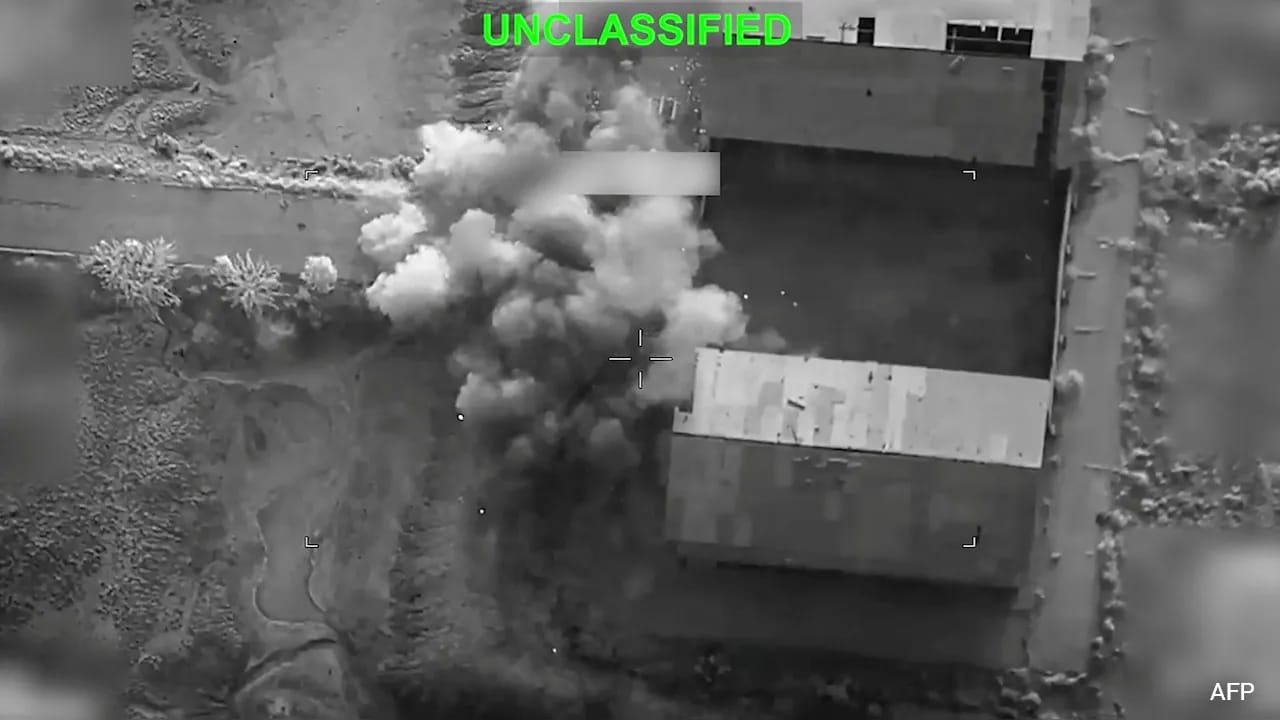
In that single second, the distance between a harsh verbal warning and undeniable kinetic reality vanishes. The rhetoric has shed its skin. It is no longer audio files or headlines. It is smoke billowing against the stars. It is the acrid scent of sulfur drifting over neighborhoods that had no say in the geopolitical chess match playing out above their heads.
Yet, for all the pyrotechnics, the fundamental truth of modern warfare is stubborn. A strike is an act of punctuation, not a conclusion.
The Echo Chamber of Retaliation
Action invites reaction. It is the oldest law of physics, imported wholesale into the brutal geometry of international relations.
When cruise missiles impact targets tied to revolutionary guard networks, the shockwave travels backward through global markets, diplomatic channels, and secret communications lines. Oil prices twitch upward on trading floors in New York and London. Tankers adjust their courses in the Persian Gulf, steering wider around the narrow bottleneck of the Strait of Hormuz where a fifth of the world's petroleum supply moves each day.
Local currencies dip. Anxiety spreads from the boardroom to the bazaar.
A shopkeeper in Isfahan calculates the rising cost of imported wheat, knowing that every missile exchange devalues his savings just a little bit more. A mother in a suburb of a Gulf state checks her phone constantly, looking for updates on flight cancellations or security alerts.
We forget this collateral damage when we consume news as entertainment. We treat geopolitical friction like a spectator sport, cheering for the strike or condemning the provocation from the safety of a living room couch thousands of miles away.
We do not feel the tremor in the earth. We do not hear the sudden silence that falls over a city when the power grid flickers and dies.
The Dangerous Comfort of Certainty
There is a powerful temptation in human psychology to demand simple stories. We want heroes and villains. We want clear causes and decisive effects.
Politicians know this. They feed the hunger for certainty with bold declarations and vivid imagery. They promise that strength can be measured by the volume of a threat or the swiftness of a retaliation.
But reality is stubbornly messy.
When a superpower strikes a sovereign nation, it steps onto a moving staircase. Each step upward requires more energy, more risk, and more blood. The threat to beat the resistance out of an adversary sounds satisfying in a stadium rally, but on the ground, it collides with a proud nation's history, a complex web of regional alliances, and the desperate calculus of survival.
Iran is not a static target on a map. It is a country of nearly ninety million people, most of whom were born long after the 1979 revolution, most of whom navigate daily struggles of inflation, employment, and personal freedom while carrying the heavy heritage of centuries of empire and isolation.
When foreign bombs strike their soil, the internal political dynamics shift instantly. Dissent against the ruling clerics is momentarily swallowed by the primal urge to defend the homeland against external aggression. The very strikes intended to weaken a regime can inadvertently cement its grip, turning disparate citizens into a unified front of grievance.
This is the hidden cost of public bravado married to military might. It solves nothing while complicating everything.
The Morning After
Dawn arrives without fanfare.
The smoke from the night's operations thins into a gray haze over the landscape. Rescue workers sift through rubble with bare hands, pulling concrete blocks away one by one, searching for signs of life in the grey dust.
Across the ocean, morning talk shows replay the soundbite of the warning, dissecting every syllable for hidden meaning. Pundits argue over whether the strike was proportionate, whether it went too far, or whether it should have come sooner.
They speak of deterrence. They speak of red lines. They speak of strategic messaging.
None of those words matter to the child sitting on a fractured curb, staring down at a pair of dust-covered shoes.
The speech is over. The missiles have returned to their empty tubes. The satellites have shifted their gaze to the next crisis on the horizon. But the earth remains scorched, the air remains heavy with distrust, and the fuse—though burned down a little further—is still smoldering in the dark.