The conventional wisdom in political consultant boardrooms is simple, lazy, and completely wrong. When a Democrat runs in a hostile red or purple district, the standard playbook demands immediate separation from the national brand. Cut ties with Washington. Drop the images with the sitting president or vice president. Run ads pretending party affiliation is a clerical error.
I have watched campaigns blow millions of dollars on this exact psychological evasion. It is treated as an immutable law of gravity: if the top of the ticket is underwater in your zip code, chain yourself to a cinderblock and throw yourself into the political river.
This strategy fails because it misdiagnoses why voters reject candidates.
Voters do not smell policy alignment as much as they smell cowardice. When a candidate spends hundreds of thousands of dollars running away from their own team, they achieve two things simultaneously: they alienate the base troops needed to walk precinct doors, and they fail to fool a single conservative voter who already knows their voting record.
Let us define the core mechanism clearly. Political brand dilution occurs when a party’s local standard-bearer tries to occupy a non-existent ideological vacuum. The assumption is that voters in conservative regions evaluate candidates on a clean slate. They do not. Modern polarization is total. Every single local race is nationalized whether you want it to be or not. Pretending you have nothing to do with the national party does not make you an independent; it makes you look like a target lacking core convictions.
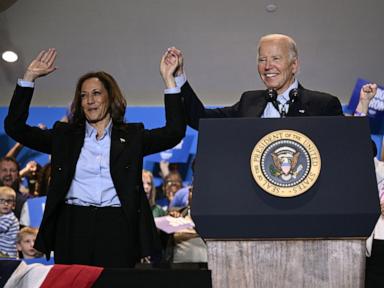
Look at the structural mechanics of how elections are actually won. Turnout wins elections, not conversion of die-hard partisans. When a red-state Democrat publicly stiff-arms national leaders like Joe Biden or Kamala Harris to court mythical crossover conservatives, they depress the enthusiasm of urban and suburban core volunteers.
Imagine a scenario where a campaign drops all national branding to win over a few hundred moderate suburbanites. On paper, it looks clever. On the ground, the field operation stalls because the college students, union members, and progressive activists who stuff envelopes and knock on doors suddenly have zero emotional investment in the candidate. You trade high-energy partisans for low-commitment voters who will ultimately pull the lever for the candidate with the familiar party letter next to their name anyway.
The Republican party understood this dynamic years ago. You rarely see a conservative candidate running in a tough district publicly disown their national leadership, even when presidential approval ratings drop. They lean into the tribal identity because they know that modern electorate behavior is tribal, not transactional. They realize that voters reward perceived strength and punish visible panic.
When a Democrat distances themselves, they validate every negative attack ad their opponent runs. The opposition no longer has to prove that the candidate is tied to unpopular national policies; the candidate admits it by running away from them. It is an unforced tactical error born of defensive desperation.
The alternative is not blind obedience or ignoring local realities. The alternative is ideological localization combined with brand ownership. You do not have to agree with every line item of a national platform to defend your tribal home. You own the brand, pivot the conversation to pocketbook issues, and ignore the trap of defensive distancing.
Stop trying to hide your badge. If you are running under a specific banner, wear it until the fabric frays. Voters respect a fighter with a label much more than a chameleon without an anchor.