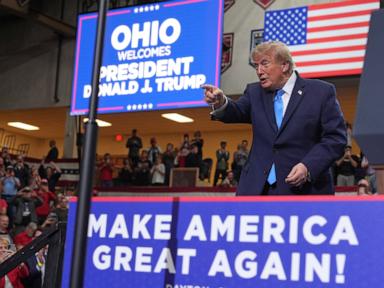
The Associated Press published a piece in October 2026 arguing that disaster relief funding was "creeping" into President Donald Trump's midterm campaign rhetoric, quoting critics who insisted emergency aid has no place in partisan politics.
That framing rests on a comforting fiction. It assumes federal disaster relief used to operate inside an airtight, apolitical vault until a modern campaign broke the seal.
The reality is far messier. Under federal law, disaster declarations have never been purely technocratic exercises. They are discretionary executive decisions baked into the presidency itself, and every administration has faced scrutiny over how timing, geography, and electoral maps intersect when storms hit.
The Myth of the Apolitical Relief Check
In its October 7 report, the Associated Press detailed how Trump paired disaster aid announcements on Truth Social with endorsements for Republican candidates ahead of the 2026 midterms. In one instance, Trump announced $17.9 million in storm recovery funds for Wisconsin alongside a plug for Republican gubernatorial nominee Tom Tiffany—bypassing Democratic Governor Tony Evers' office, which said it had not yet been notified. At a September rally in North Carolina for Senate candidate Michael Whatley, Trump joked that he would withhold remaining Hurricane Helene recovery funds if Whatley lost before immediately walking the remark back.
Former Obama-era FEMA spokesperson Rafael LeMaitre told the AP that even creating the perception of a link between disaster relief and votes was traditionally "out of bounds" and eroded public trust. Urban Institute senior fellow Andrew Rumbach called the White House's approach "unusual and frankly concerning".
Critics treat these moments as an unprecedented breach of sacred norms. Yet the statutory architecture governing FEMA practically invites political friction.
Under the Robert T. Stafford Disaster Relief and Emergency Assistance Act of 1988, the president holds sole, largely unreviewable authority to approve or deny a governor's request for a major disaster declaration. There is no automatic mathematical trigger. No independent board signs off. One person in the Oval Office decides whether a flood or tornado meets the threshold for federal dollars, and when that signature happens.
How Disaster Politics Actually Works
Political scientists have studied this exact dynamic for decades, and their findings dismantle the idea that disaster aid was ever insulated from the ballot box.
Research into presidential disaster declarations—including foundational studies by political scientists Andrew Reeves and Thomas Garrett—has consistently shown that electoral competitiveness and political alignment influence how quickly and frequently presidents approve aid. Swing states receive disproportionate attention. Battleground governors get faster callbacks. Presidential visits to disaster zones routinely spike in election years.
Consider the structural mechanics behind why this happens:
- Discretionary thresholds: FEMA evaluates per-capita damage indicators, yet presidents routinely waive or reinterpret those benchmarks when local political pressure mounts.
- Timing control: An administration can hold pending requests for weeks—leaving governors in limbo—or expedite approvals right before a high-profile regional visit.
- Credit claiming: Presidents and members of Congress of both parties routinely race to issue press releases taking personal credit for federal grants approved through routine agency channels.
Even the numbers cited in the AP's own reporting illustrate how complex the picture is. An Associated Press analysis from July 2026 found that Trump approved more than three-quarters of disaster requests from states he carried in 2024, compared to fewer than half from states he lost. Critics pointed to that gap as proof of partisan favoritism, noting that 15 requests—including two from Democratic-leaning Hawaii following back-to-back hurricanes—remained pending while states like Ohio saw approvals right before a Trump campaign rally.
Meanwhile, White House spokesperson Lauren Bis rejected allegations of politicization, stating there was "no politicization to the president's decisions on disaster relief". A FEMA spokesperson similarly argued that claims of political motivation misrepresented how the agency evaluates requests. Supporters also noted that alongside Wisconsin, Trump quietly approved disaster declarations for West Virginia and Guam without touting them on social media, and skipped answering pending requests in solidly Republican Oklahoma and Nebraska before rallying there.
Why Voters Are Asking the Wrong Question
When headlines frame disaster rhetoric strictly as a violation of etiquette, they miss the deeper policy failure affecting taxpayers in every state.
The real issue is not whether a politician brags about sending federal money at a rally. The real issue is why Washington holds unilateral power over localized recovery in the first place—and what happens when federal disaster spending becomes an open-ended slush fund.
- Moral hazard in state budgeting: When states know federal taxpayers will bail out 75% to 90% of infrastructure damage if a governor lobbies hard enough, local governments have less incentive to enforce strict building codes or maintain reserve funds.
- Executive bottlenecking: Concentrating declaration authority in the White House guarantees that every hurricane, wildfire, and flood becomes a test of political loyalty rather than an objective insurance payout.
- Erosion of institutional credibility: When partisans on both sides weaponize emergency management—whether through campaign-stage rhetoric or internal agency missteps—public trust in first responders suffers long after the news cycle moves on.
The Trade-Off Nobody Wants to Admit
Fixing this system requires confronting an uncomfortable trade-off that neither party wants to own.
If Congress strips the presidency of discretionary declaration power and replaces it with strict, automatic formulas based purely on economic damage and state fiscal capacity, political favoritism disappears overnight. No president could dangle aid before an election, and no governor could accuse the White House of slow-walking a request over party affiliation.
The downside? Rigid formulas are unforgiving. Small, rural communities with low property values often fail to meet strict per-capita damage thresholds even when a tornado wipes out their entire tax base. Presidential discretion exists specifically to rescue towns that formulas leave behind.
You cannot have complete executive flexibility without inviting political theater. Pretending otherwise doesn't protect disaster victims—it just keeps voters focused on the rhetoric instead of the rules.


