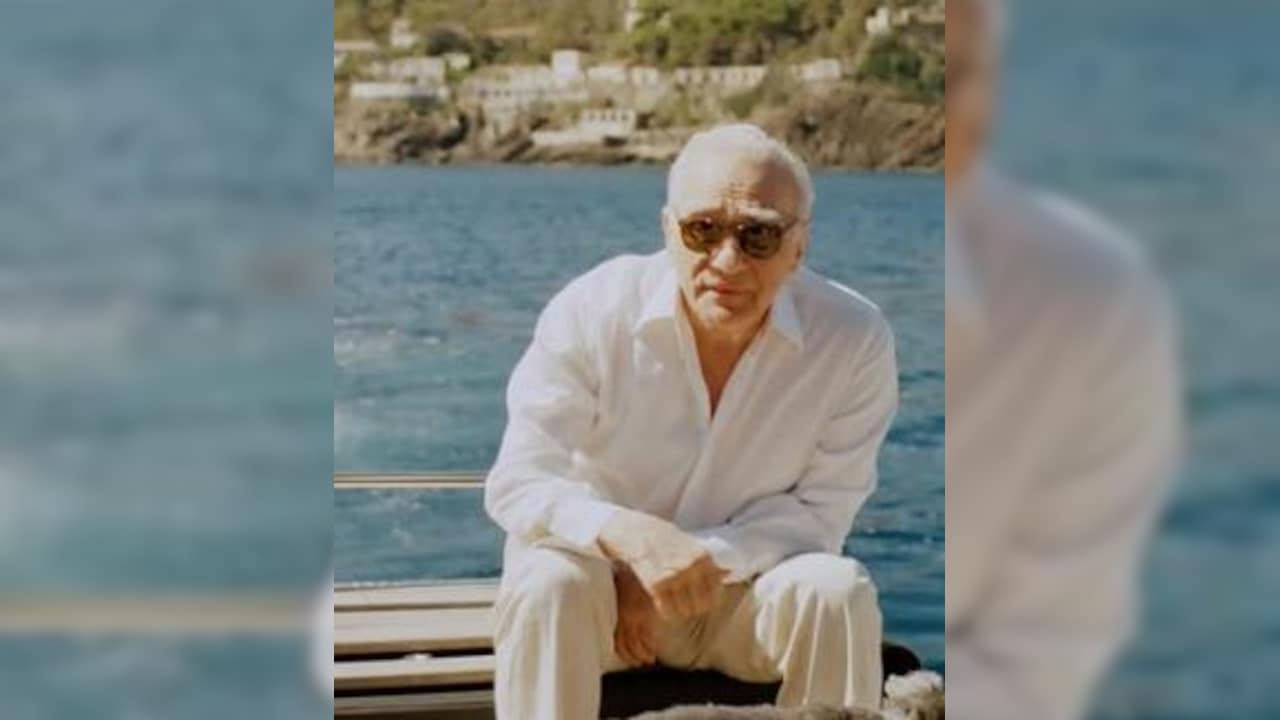
In a darkened screening room in New York, a man sits with his hands clasped beneath his chin. The flickering light from the screen illuminates a face carved by six decades of cinematic warfare. Martin Scorsese is watching a ghost.
On the screen, a younger version of Robert De Niro moves across the frame, the lines of time erased from his skin by a digital brush. This was the magic trick of The Irishman, a multi-million-dollar experiment in digital rejuvenation. For Scorsese, a director who has spent his entire life fighting to preserve old, decaying celluloid from the ravages of time, this moment represented a strange new frontier. The man who dedicated his existence to saving history was suddenly using technology to rewrite the physical reality of aging.
Then came the silicon gold rush.
Almost overnight, the tools used to soften a wrinkle or erase a blemish mutated into something far more volatile. Generative artificial intelligence swept through Hollywood like a sudden, freezing wind. Writers marched. Actors struck. The industry split down the middle, terrified that the human soul of filmmaking was about to be replaced by an endless loop of algorithmic mimicry. To the average moviegoer, the battle lines seemed obvious. On one side stood the technocrats; on the other, the artists.
Yet, the most fierce defender of cinema's past did not join the boycott. He did something far more interesting.
He stepped into the machine.
The Preservationist’s Dilemma
To understand why this matters, you have to understand what it feels like to watch your life's work turn to vinegar.
Decades ago, Scorsese realized that the very medium he loved was dying. Early film stock was highly flammable, unstable, and prone to literal disintegration. He watched in horror as masterpieces faded into blank streaks of plastic. In response, he founded The Film Foundation in 1990, a massive, relentless effort to rescue and restore thousands of endangered films. For Scorsese, preservation is not a hobby. It is an obsession. It is the belief that if we lose our moving images, we lose our collective memory.
Imagine a hypothetical archivist sitting in a climate-controlled vault, meticulously scraping mold off a single frame of a 1930s classic. It takes weeks. It costs a fortune. Now imagine that same archivist being handed a hard drive containing millions of hours of unorganized, deteriorating footage from around the world. The human hand cannot scale to meet that kind of loss. History is rotting faster than we can cure it.
This is where the narrative around artificial intelligence breaks down. We are conditioned to view the technology through a lens of theft and replacement. We see deepfakes of dead actors selling pickup trucks, or algorithmically generated scripts that read like corporate memos. It is easy to hate that version of the future. It feels cold. It feels hollow.
But Scorsese saw a different math.
What if the algorithms could be trained not to replace the creator, but to heal the canvas?
The sheer volume of global cinema currently rotting in archives is staggering. Traditional restoration requires hundreds of hours of manual labor to remove dust, correct color bleeding, and stabilize shaky frames. By embracing advanced computational tools, the process transforms from a grueling marathon into a sprint. The AI doesn't decide what the film should look like; it simply executes the tedious, mechanical labor of cleaning up the damage, acting as a hyper-efficient digital scalpel guided by human hands.
The Battle for the Negative
The fear of technology is nothing new in Hollywood. When sound arrived in the late 1920s, critics wailed that the art of visual storytelling was dead. Musicians who played live accompaniments in theaters found themselves out of work. When color arrived, purists called it garish and cheap. Computer-generated imagery was supposed to kill the stuntman and the set builder.
Every single time, cinema absorbed the shock. The medium changed, but the human heart at the center of it remained the same.
The real danger today is not that computers will start directing movies. The danger is that we will stop valuing the messy, unpredictable nature of human expression. A computer program operates on probability. It looks at what has succeeded in the past and predicts what should come next. It optimizes for safety.
True art is never safe. It is born from mistakes, from sudden bursts of intuition, from a director changing their mind on set because the rain started falling unexpectedly.
Think about the iconic tracking shot in Goodfellas. Henry and Karen walking through the back kitchens of the Copacabana, the camera gliding behind them in one continuous, breathless take. That shot wasn't planned out of creative vanity; it was born out of necessity because the production couldn't get permission to use the front door. A machine optimizing for efficiency would have found a shorter, cheaper way to shoot the scene. It would have missed the magic entirely.
Scorsese’s alliance with technology is born from a desire to protect that exact vulnerability. By allowing technology to handle the heavy lifting of preservation and structural restoration, the human element is shielded. The master negatives are saved so that future generations can see the grain, the texture, and the imperfections of human hands.
The Human Currency
There is an underlying anxiety that runs through every conversation about the future of entertainment. It is the fear of obsolescence. We worry that our unique perspectives, our years of training, and our individual voices can be reduced to a series of ones and zeros.
It is a terrifying thought.
But a tool remains a tool until we surrender our agency to it. A paintbrush can be used to coat a fence, or it can be used to paint the Sistine Chapel. The difference is not the bristles; it is the mind holding the handle.
When Scorsese uses advanced digital tools, he is not bowing to the tech giants of Silicon Valley. He is colonizing their territory for the sake of art. He is showing an industry paralyzed by fear that the only way to defeat a threat is to understand it, master it, and bend it to a higher purpose.
The industry stands at a precipice, looking down into an ocean of automated content. It is incredibly easy to feel despair. It is easy to assume that the battle has already been lost, that the screens will soon be filled with frictionless, algorithmically perfected entertainment designed to keep us staring just a few seconds longer.
But then you remember the man in the dark room.
He is still watching, still editing, still fighting for the survival of a century's worth of human emotion. He knows that a machine can replicate the look of a film, but it can never understand the feeling of regret, the sting of betrayal, or the sudden, overwhelming rush of love. Those are human monopolies.
The light from the screen shifts, casting long shadows across the walls. The reel ends. The screen goes black. In the silence that follows, the machine hums softly, waiting for its next command.