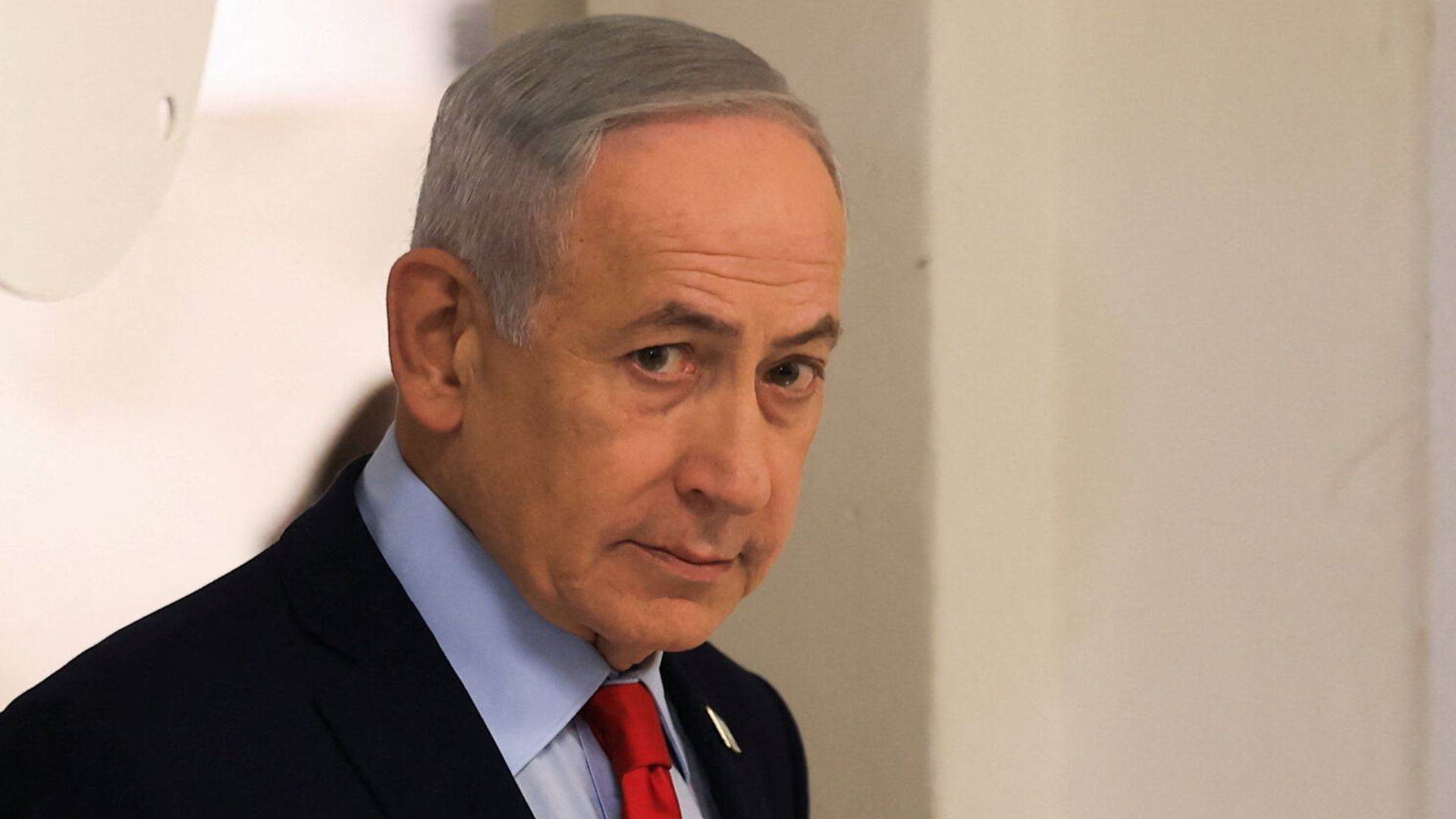
The friction between Benjamin Netanyahu’s office and the United Arab Emirates has moved beyond standard diplomatic disagreement into the territory of open public contradiction. When the Israeli Prime Minister’s circle signaled a high-level, clandestine sit-down with UAE President Sheikh Mohamed bin Zayed Al Nahyan, the response from Abu Dhabi was not a polite "no comment." It was a blunt, categorical rejection. This disconnect reveals a fractured reality where domestic political needs in Jerusalem are crashing headlong into the strategic patience of the Gulf.
The core of the dispute rests on a simple binary. Either the meeting happened and the UAE is covering its tracks to avoid regional blowback, or the meeting never occurred and the Israeli administration is manufacturing proximity to salvage its standing. To understand the gravity of this split, one must look at the specific pressures weighing on both capitals. For Netanyahu, the Abraham Accords are the crown jewel of his legacy. For the UAE, those same accords are a pragmatic tool that becomes a liability if they are perceived as a rubber stamp for Israeli military policy in Gaza and the West Bank. For an alternative perspective, consider: this related article.
The Mechanics of the Denial
In the world of Middle Eastern intelligence and diplomacy, "secret" meetings are the standard operating procedure. They are designed to provide plausible deniability. However, deniability only works when both parties agree to keep the door shut. By leaking the existence of a meeting that the UAE then felt compelled to shoot down, the Israeli side broke the first rule of the quiet game.
The UAE’s denial was uncharacteristically sharp. It did not leave room for "scheduling misunderstandings" or "lower-level delegations." This suggests that Abu Dhabi is no longer willing to provide the political cover that Netanyahu needs for his home audience. The Emirates have spent the last decade positioning themselves as a sophisticated global broker. They view these premature leaks as amateurish or, worse, as a deliberate attempt to use their prestige to bolster a domestic political agenda they do not support. Related coverage on the subject has been shared by BBC News.
The Domestic Incentive for the Leak
Netanyahu is currently fighting on multiple fronts. Domestically, he faces a volatile coalition and a public that is deeply divided over the conduct of the war and the fate of the hostages. Externally, he is under immense pressure from the Biden administration and European allies to produce a credible "day after" plan for Gaza.
A "secret meeting" with the UAE serves a very specific purpose in this context. It suggests that despite the heavy civilian toll in Gaza, the normalization process is not just alive, but thriving at the highest levels. It offers a narrative of regional integration that bypasses the Palestinian issue. When the Prime Minister’s office hints at these talks, they are speaking to the Israeli voter and the American critic, trying to prove that the "Circle of Peace" is widening.
The problem is that the UAE has its own domestic and regional audience. The images coming out of Gaza have made public displays of friendship with Israel politically expensive in the Arab world. Abu Dhabi is committed to the Abraham Accords for the long term, but they are not interested in being a prop for a Prime Minister whose current trajectory they find problematic.
A Relationship Under Strain
The trust between Jerusalem and Abu Dhabi is at its lowest point since the signing of the accords on the White House lawn. This isn't just about one disputed meeting. It is about a fundamental disagreement on the future of regional security.
The UAE has been clear about its conditions for involvement in the reconstruction of Gaza. They require a clear path toward a Palestinian state and the involvement of a reformed Palestinian Authority. Netanyahu’s government has largely rejected these premises. When you have two parties with such divergent views on the most pressing security crisis in the region, the idea of a warm, secretive summit becomes increasingly hard to believe.
Behind the scenes, Emirati officials have expressed growing frustration with what they perceive as a lack of clear strategy from the Israeli cabinet. They see a government that is reactive rather than proactive. In this environment, a "secret meeting" is not a sign of progress; it is a potential trap. If the UAE confirms a meeting, they are seen as complicit in the status quo. If they deny it, they look like they are distancing themselves from a partner. They chose the latter, and they did it with a hammer.
The Intelligence Gap
There is a third possibility that veteran analysts are weighing. It is possible that a meeting occurred between subordinates—intelligence chiefs or special envoys—and this was "upgraded" by the Prime Minister’s office to a head-of-state summit for the sake of the headline.
This happens frequently in international relations. A handshake between advisors is characterized as a "deep dialogue between leaders." But in the hyper-sensitive environment of 2026, these embellishments are dangerous. They force the other party to overcorrect. By claiming a meeting with the UAE President specifically, the Israeli side left the Emirates with no choice but to defend the honor of their head of state.
The Role of the Abraham Accords
We must stop viewing the Abraham Accords as a finished product. They are a living, breathing, and currently struggling diplomatic framework. The accords were built on the idea that economic interests and shared concerns about Iran could outweigh the traditional focus on the Palestinian conflict.
That theory is being tested to its absolute limit. The UAE has not moved to cancel the accords, which shows their commitment to the underlying strategic logic. They still value the technology, the security cooperation, and the direct line to Washington that the relationship provides. However, they are making it clear that this is a cold peace for now. They will cooperate where it serves their national interest, but they will not be used as a political shield for an Israeli government that they believe is acting against the long-term stability of the region.
The Strategic Silence of the Gulf
While the UAE was vocal in its denial, other regional players have remained pointedly silent. Saudi Arabia is watching this play out with a mixture of caution and validation. The Saudis have long maintained that normalization must be tied to tangible concessions for the Palestinians. The current spat between the UAE and Israel reinforces the Saudi position that the "peace for peace" model has significant structural flaws.
If Netanyahu cannot maintain a basic level of public agreement with the UAE—his first and most important partner in the new Middle East—his chances of securing a historic deal with Riyadh are effectively zero. The Saudis are not going to enter a room if they think the door will be kicked open by a press release before they have even sat down.
The Credibility Tax
The fallout from this incident isn't just a 24-hour news cycle issue. It is a credibility tax that will be paid in future negotiations. When a leader’s office is caught in a public lie—or even a significant "misinterpretation"—by a close ally, it makes every future claim suspect.
Foreign ministries in Washington, London, and Paris are taking note. If the UAE says the meeting didn't happen, the international community tends to believe the UAE. They have less of an incentive to lie about a meeting they could have simply ignored. The denial was an act of deliberate distancing. It was a signal to the world that the UAE is not in lockstep with the current Israeli leadership.
The Future of Deniability
Moving forward, we should expect even less transparency in these relationships. The UAE will likely tighten the circle of who is involved in any contact with Israel to prevent further leaks. This isolation is the opposite of what the Abraham Accords were intended to achieve. Instead of bringing the relationship into the light, this friction is forcing it back into the shadows of the intelligence services.
The era of "victory laps" for the Abraham Accords is over. We are now in a phase of gritty, difficult maintenance. The UAE has shown that it has a breaking point regarding its reputation in the Arab world. They will not allow their brand of "moderate, forward-thinking leadership" to be tarnished by the optics of a secret alliance that offers them no tangible strategic gain in the current conflict.
The Israeli administration now finds itself in a difficult position. If they continue to claim the meeting happened, they look desperate. If they stop talking about it, they admit they were caught in an exaggeration. Either way, the "secret meeting" that wasn't has become a symbol of the growing gap between the reality of the Middle East and the narrative being sold in Jerusalem.
Diplomacy requires a shared vocabulary and a shared respect for the "off-the-record" space. When one side decides that the PR value of a leak is worth more than the trust of the partner, the partnership begins to decay. The UAE didn't just deny a meeting; they signaled that they are no longer willing to be a silent partner in a story they didn't help write.
The next time the Israeli government claims a breakthrough in the Gulf, the world will wait for the confirmation from the other side. That delay, that skepticism, is the real damage done by this episode. Trust is built over years and destroyed in a single afternoon press briefing. For the UAE, the cost of the meeting was too high. For Netanyahu, the cost of the denial might be even higher.