Political discourse has a habit of bleeding into science fiction when the real world gets too repetitive.
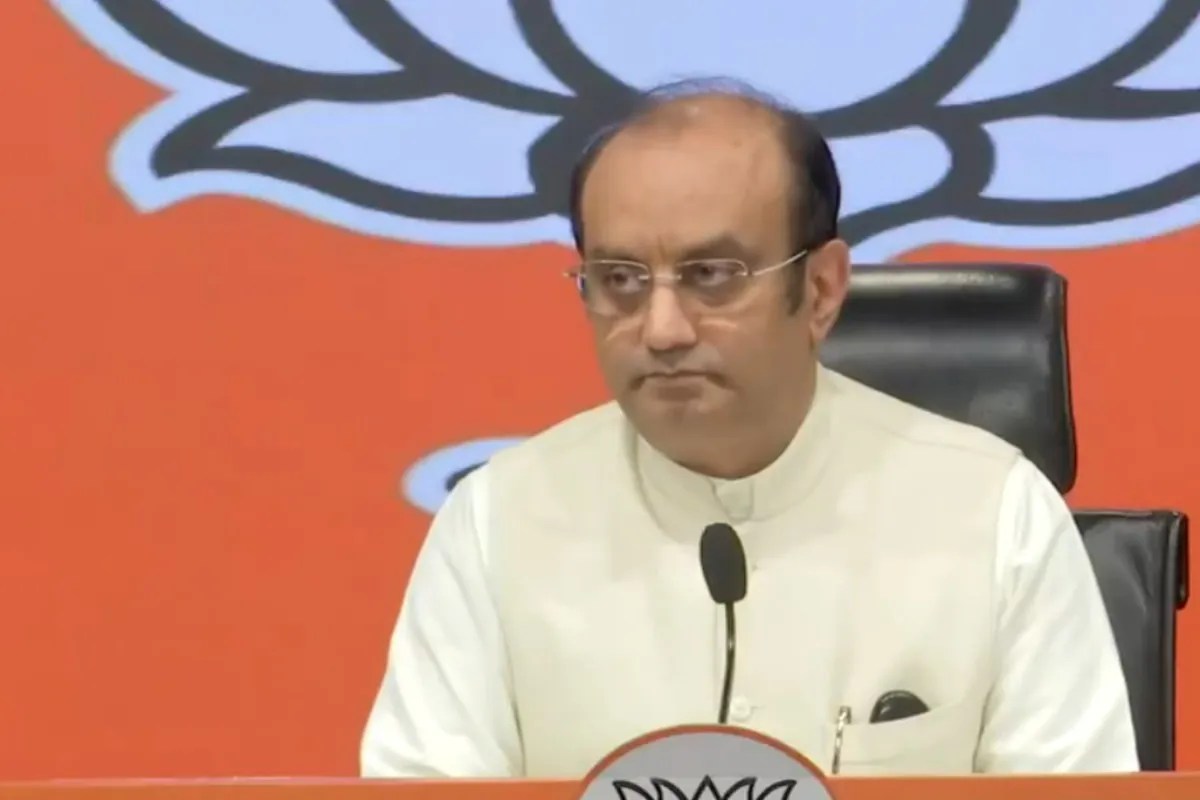
Take a look at the noise coming out of national press rooms lately. BJP spokesperson Sudhanshu Trivedi stood before a wall of microphones and delivered a proposal that sounded less like parliamentary debate and more like a high-concept satire. The core message was sharp: Congress should stop footing the bill for Rahul Gandhi's frequent trips abroad and simply send his AI version instead.
It was meant to be a jab, a clever political quip aimed at questioning the opposition leader's commitment to home turf while highlighting the optics of frequent international travel. Yet, beneath the political theater lies a far more profound, slightly unnerving question about modern leadership, public presence, and the strange ways technology is beginning to blur the boundaries of human connection.
What happens when a public figure becomes a recurring absence?
Every leader faces a constant choice between being present and being visible. In the age of rapid transit and algorithmically curated social feeds, physical location used to be the ultimate proof of dedication. You showed up, shook hands, stood in the dust of village rallies, or sat in high-ceilinged international conference halls. The body was the mandate.
When Trivedi suggested replacing a living politician with an artificial avatar, he accidentally highlighted how thin the line between real presence and synthetic representation has already become. We live in an era where speeches are written by committees, optimized for engagement metrics, and sliced into fifteen-second vertical video clips for instant distribution. The modern politician is already halfway to becoming an algorithm.
Think about the sheer mechanics of international political travel. Jet lag, security detail, closed-door briefings in foreign capitals—all designed to signal global standing and diplomatic reach. But to the average citizen watching from a smartphone screen in a Tier-2 city or a rural village, the physical distance might as well be light-years. Whether a leader is in London, Boston, or a studio in New Delhi generating deepfake broadcasts, the experience for the voter on the receiving end is virtually identical: pixels on glass.
This is where the debate shifts from partisan point-scoring to a human paradox.
The human brain is wired to trust physical proximity. We look for micro-expressions, sweat on the forehead, the spontaneous break in a scripted voice, the sudden unscripted pause when a crowd reacts unpredictably. An AI model can replicate tone, cadence, and even facial twitches with astonishing accuracy, but it operates entirely without risk.
Risk is the invisible currency of leadership. When a person steps onto a stage in front of thousands of critical eyes, they risk failing in real time. They risk misspeaking. They risk being ignored. It is precisely that vulnerability—the knowledge that a live human being is exposed to the elements—that builds genuine connection.
When political opponents urge each other to outsource their presence to code, they are pointing out a real breakdown in trust. The argument isn't really about saved airfare or server costs. It is about whether physical absence signifies a lack of empathy for the everyday struggles of the people back home.
Consider the contrast. On one side, the relentless grind of local door-to-door politics, where feet get muddy and tempers flare in real time. On the other, the polished, elevated sphere of global summits and international lecture circuits. When the gap between those two worlds widens too much, the leader begins to look less like an active participant in their country's daily drama and more like a distant observer.
Technology promises to bridge these distances, but it often just highlights the void.
Imagine an AI avatar taking the podium. It speaks perfect syntax. It answers questions with calibrated diplomacy, drawing from terabytes of policy papers in milliseconds. It never tires, never stumbles, and never experiences a moment of genuine, unscripted doubt. It is flawless. And because it is flawless, it is entirely empty.
Politics without the friction of human imperfection loses its stakes. If we replace the messy, inconvenient, frequently traveling human with a clean digital stream, we haven't solved the problem of representation—we've just surrendered to the noise.
The debate sparked by Trivedi's comments will inevitably fade into the background as the next headline takes over. The political jabs will continue, back and forth, over travel budgets, foreign speeches, and domestic priorities. But the underlying tension remains unresolved.
We are entering a period where leaders across business, politics, and culture will be tempted to let their digital shadows do the heavy lifting. It is easier, safer, and far less exhausting than showing up. Yet the fundamental demand of the governed has never changed: they don't want a perfect signal from a distance. They want to know that someone real is standing in the room with them, bearing the weight of the moment.