There is a specific kind of cold that arrives in late autumn. It does not knock. It simply settles into the floorboards, turns your breath into a momentary ghost in the hallway, and convinces you that summer was a collective hallucination. You wake up before the sun, shuffle across unheated tile, and wrap your hands around a mug of coffee that cools down way too fast.
For most of adult life, November and December become a blur of logistics. You are managing shipping deadlines, RSVP lists, and the quiet, creeping realization that another year has slipped through your fingers like dry sand. We spend these months taking care of everyone else. We buy the gifts, we wrap the boxes, we bake the cookies, and we perform the invisible emotional labor of making the holidays feel magical for the people we love. You might also find this related coverage interesting: Deconstructing Pheromone Maxxing The Biomechanics Of Dating Myths And Odor Optimization.
Then, there is the small rebellion.
Consider a hypothetical buyer named Clara. Clara is thirty-four, works fifty hours a week in data compliance, and hasn't bought herself a single luxury item since her birthday in April. On a rainy Tuesday morning in October, she clicks open a tab on her laptop. She doesn't need another sweater. She certainly doesn't need another scented candle that smells like cedar and regret. As discussed in recent coverage by Refinery29, the implications are notable.
What she is looking for is a pause button.
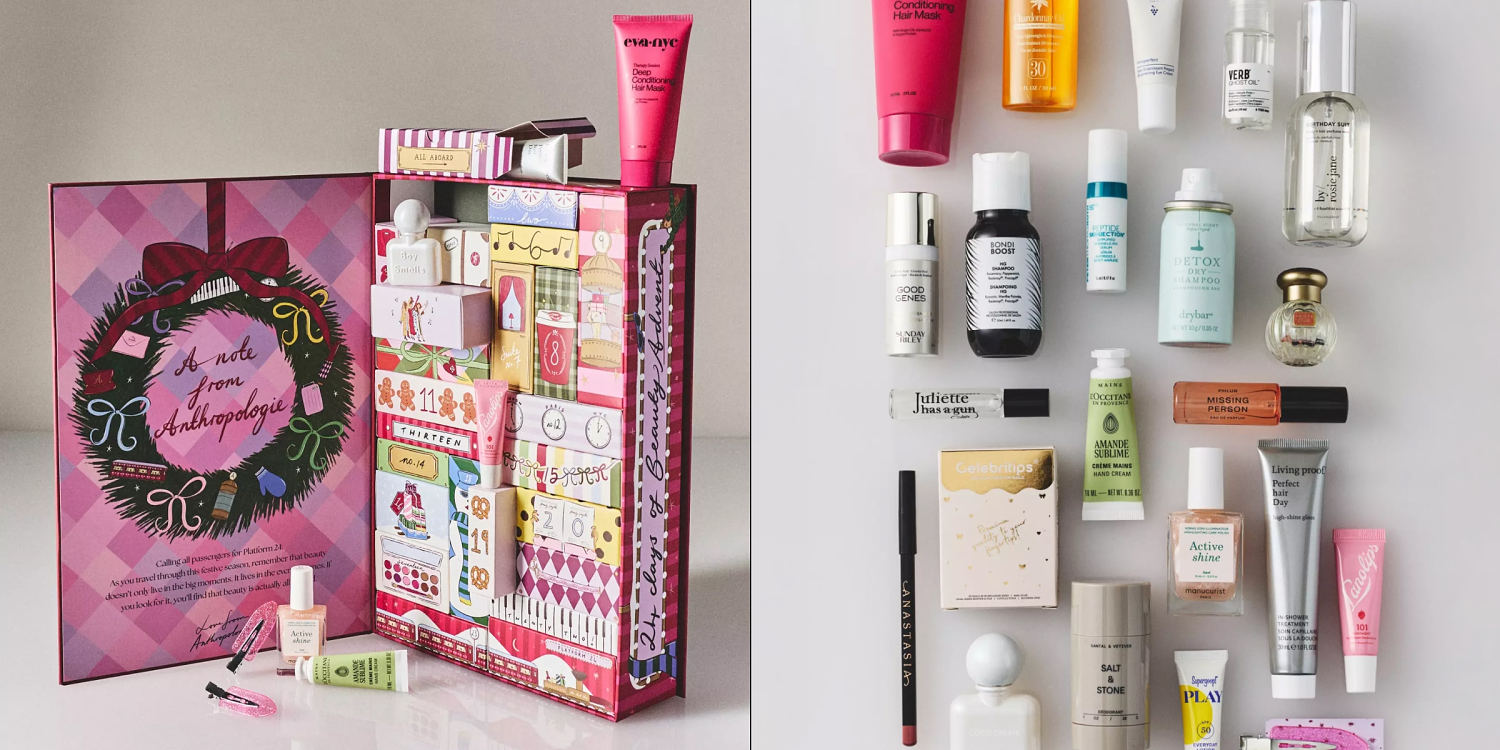
Anthropologie’s viral beauty advent calendar just dropped, and within hours, digital shopping carts across the country are filling up with a desperation usually reserved for concert tickets. To the casual observer, it looks like excess. It looks like marketing hype. Twenty-four little cardboard doors hiding miniature tubes of hand cream, expensive serums, and perfumes you can barely pronounce.
But if you look closer, the calendar is not really about cosmetics at all. It is about reclaiming time.
Think about the psychology of the advent calendar. We give them to children to teach them patience, breaking down the infinite, agonizing wait for Christmas into bite-sized, manageable pieces of chocolate or cardboard toys. But adults need patience, too. Perhaps more so. We live in a world of instant gratification where everything is available on demand, yet we feel chronically starved of anticipation.
When Clara buys that box, she is buying twenty-four tiny moments where she is forced to do something exclusively for herself.
Unboxing the Anthropologie beauty advent calendar has become a ritual because it offers a rare commodity in modern life: a micro-luxury with zero guilt attached. You wake up on a gray Tuesday in December. Instead of immediately checking your work email or scrolling through a doom-scrolling feed, you walk over to the shelf. You press your thumb against a perforated cardboard tab. You pull it open. Inside sits a tiny bottle of French body wash or a gleaming lip tint.
It is silly. It is commercial. It is also deeply, profoundly human to want a daily prize just for surviving another day of winter.
The internet loves to mock these items. Every year, viral holiday products are picked apart by cynics who point out that the combined retail value of the deluxe samples is mathematically lower than buying full-sized products, or that the packaging creates waste. They are not wrong, strictly speaking. The math checks out.
Yet, the cynics miss the point entirely.
People do not stand in virtual queues or set 6:00 AM alarm clocks for a box of samples because they are financially illiterate. They do it because they are buying a mood. They are buying the tactile sensation of unwrapping. They are buying a physical anchor in a digital world that often feels entirely weightless.
When the Anthropologie beauty advent calendar sells out—and it always does, usually with a ruthless efficiency that leaves thousands of latecomers staring at a polite, heartbreaking "Out of Stock" banner—it reveals a collective hunger for tactile joy.
We are tired of screens. We are tired of subscriptions that auto-renew into the ether. We want things we can touch, tear, smell, and hold in the palm of our hand.
There is an art to curation, and that is why this specific box commands such fierce loyalty year after year. It acts as an accidental museum of current skincare and fragrance trends. One morning introduces you to an obscure botanical hair oil from a boutique brand you would never find on your own. The next reveals a highlighter that makes you look like you actually slept eight hours, even when you managed four and a half. It lowers the barrier to entry for luxury, allowing someone to test high-end formulations without committing forty dollars to a full-sized bottle that might just sit in a drawer collecting dust.
Demand spikes because scarcity creates value, sure. But it also spikes because people talk.
Word of mouth in the wellness and beauty space operates on a frequency of shared secrets. A coworker leans over the desk in mid-November and whispers, "Did you see it's back?" A group chat lights up with screenshots of order confirmations. It becomes a shared cultural touchpoint, a tiny, harmless conspiracy of self-care shared among friends who are all collectively white-knuckling their way to the end of the year.
If you manage to secure one before the inevitable sellout, you are not just getting a box of lotions. You are securing a daily ritual. You are making a small, quiet vow to yourself that no matter how chaotic December gets—no matter how many family debates erupt over dinner or how many deadlines pile up before the year-end shutdown—you have carved out thirty seconds in the morning that belong entirely to you.
And sometimes, that is the only gift that matters.
The cardboard box sits on the dresser, waiting for December first. The perforations are still intact. The world outside is cold, busy, and demanding. But for twenty-four days, the morning routine changes from a chore into a small, shining ceremony of discovery.