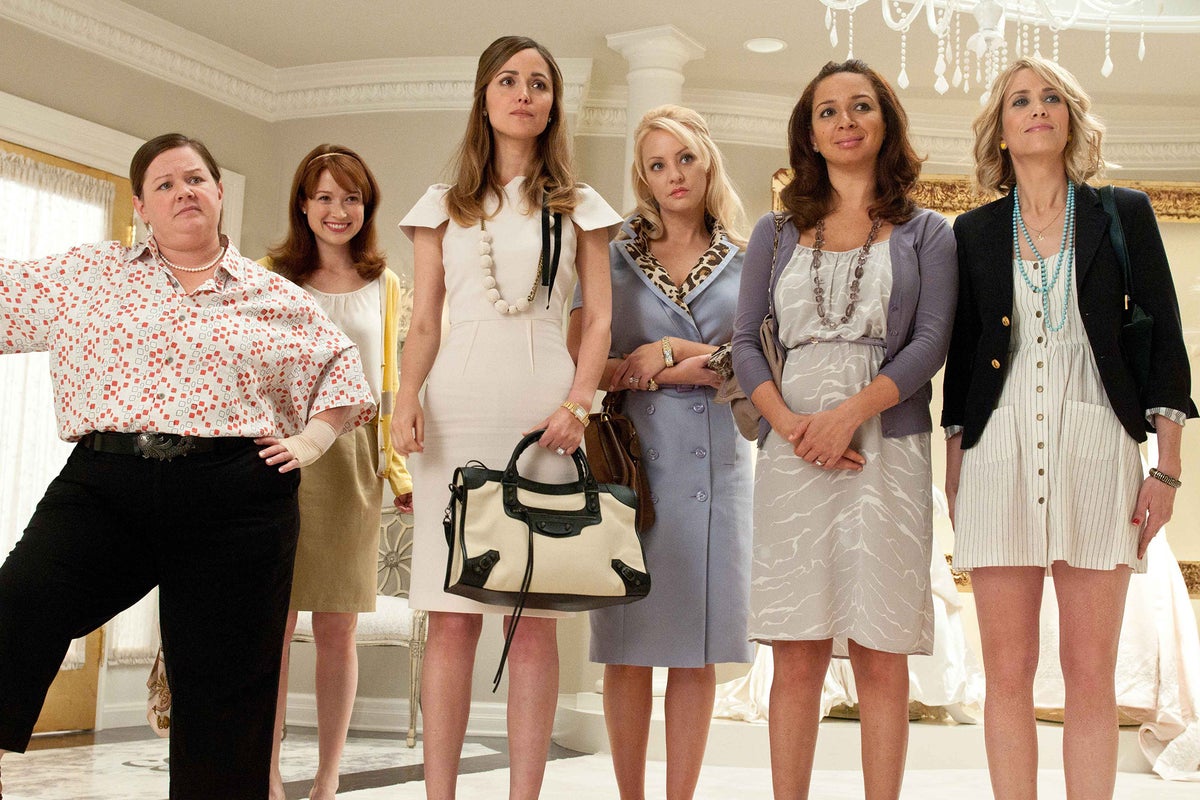
Sarah is staring at a spreadsheet on a Tuesday night. It isn't for her job in marketing. It is for a four-day weekend in Scottsdale, Arizona, three months away. The cell at the bottom of the screen—the one highlighted in a cautionary yellow—reads $1,450. That figure doesn't include the flight from Chicago, the new bikini she felt pressured to buy, or the "mandatory" matching pajamas embroidered with Maid of Honor.
She clicks over to her banking app. The balance is enough to cover the trip, but barely. This was her savings for a new transmission. Now, it is a down payment on someone else’s memories. For another perspective, read: this related article.
This is the modern bachelorette party: a high-stakes, high-cost performance of friendship that has evolved from a night of cheap cocktails into a full-scale luxury production. What used to be a local "last hurrah" has transformed into an unregulated arms race of destination travel, private yachts, and professional-grade aesthetics. We are witnessing the industrialization of the bridal party.
The Instagram Tax
Twenty years ago, a bachelorette party was a Friday night at a karaoke bar. Ten years ago, it was perhaps a weekend in a nearby city. Today, the average bridesmaid spends $1,300 to $1,500 on a single bachelorette weekend. When you account for the wedding gift, the dress, and the travel for the wedding itself, the "honor" of being a bridesmaid can easily top $5,000 in a single year. Further analysis regarding this has been shared by ELLE.
Why did this happen?
The answer lies in the democratization of the "influencer" lifestyle. We no longer just want to celebrate; we want to curate. The private yacht in Cabo or the $8,000 Airbnb in Nashville isn't just about the physical space. It is a stage set. The invisible pressure to produce a "grid-worthy" weekend has turned bridesmaids into unpaid production assistants.
Consider the "welcome bag." In a hypothetical but entirely common scenario, a maid of honor spends $200 per person on personalized tote bags filled with artisanal hangover cures, custom tumblers, and silk eye masks. These items serve a singular purpose: the flat-lay photo. They are the physical manifestation of a "vibe" that must be maintained at all costs.
The Cost of Silence
The real tragedy isn't the price of the yacht; it’s the silence that precedes it.
When the initial group text goes out—usually a flurry of champagne emojis and "OMGGG CAN'T WAIT"—there is a brief window for honesty. But that window is usually slammed shut by social signaling. No one wants to be the "poor friend." No one wants to be the one who suggests a budget-friendly beach house three hours away when the bride is pinning photos of infinity pools in Tulum.
Social psychologists call this "pluralistic ignorance." It occurs when every member of a group privately rejects a norm but assumes everyone else accepts it. Sarah sits at her laptop, sweating over that $1,450, convinced that the other five girls in the thread are comfortably wealthy. In reality, at least three of them are likely putting the deposit on a credit card they won't pay off for six months.
We have replaced emotional intimacy with financial endurance. We prove our love for the bride by how much we are willing to sacrifice, not just in time, but in future stability.
The Nashville-Industrial Complex
Cities like Nashville, Scottsdale, and Charleston have lean-built their entire local economies around this phenomenon. They are "Bachelorette Capitals," where the price of a standard brunch has tripled because it now includes a "balloon arch fee."
In these hubs, the experience is no longer unique. It is a conveyor belt. You see them on Broadway: groups of ten women in identical pink hats, moving in a pack from the pedal tavern to the rooftop bar. There is a strange irony in spending thousands of dollars to achieve a "one-of-a-kind" experience that looks exactly like everyone else’s.
The businesses in these cities know that bridal parties are "price-insensitive." When you are in the middle of a celebration, you don't haggle over a $25 margarita. You pay it because the alternative is being the person who "ruined the mood." The hospitality industry has leveraged this collective guilt into a multi-billion dollar niche.
The Invisible Stakes
Let’s look at the math beyond the spreadsheet. For a woman in her late 20s or early 30s, $1,500 is often the difference between starting an emergency fund and living paycheck to paycheck. It is three months of student loan payments. It is the cost of a certification that could lead to a promotion.
When we talk about the "out of control" world of these parties, we aren't just talking about excess. We are talking about opportunity cost. We are trading the long-term financial health of young women for 72 hours of curated luxury.
But the stakes are also emotional. Resentment is a slow-acting poison. It starts when the maid of honor sends the Venmo request for the "shared groceries" that somehow cost $400. It grows when the bride decides she wants a private chef for one night. By the time the wedding day actually arrives, the bridesmaids aren't looking at their friend with pure joy. They are looking at her through the lens of their own debt.
The "bride-to-be" is often oblivious. She has been told by a decade of media and Pinterest boards that this is her "moment." She doesn't see the spreadsheets or the credit card interest. She sees the balloons.
The New Etiquette of Honesty
How do we break the cycle? It isn't by banning yachts or drinking cheap beer in a basement. It is by reintroducing the concept of "opt-in" culture.
The most radical thing a bride can do in 2026 is offer an exit ramp. A simple sentence in the planning phase: "I love you all, and your presence at my wedding is what matters most; if this trip doesn't fit your budget, please do not feel pressured to come."
But the responsibility also falls on the participants. We have to kill the "Group Chat Performance." True friendship should be a space where you can say, "I can’t afford this," without fear of losing your status in the inner circle. If a friendship can't survive a budget discussion, it certainly won't survive the complexities of marriage, kids, and career shifts that follow the wedding.
The Final Bill
Back in Chicago, Sarah finally hits "send" on the Venmo payment. She feels a brief hit of dopamine—the "it’s handled" feeling—followed by a dull ache in her chest. She thinks about the transmission in her car. She thinks about how she’ll have to skip her own sister’s birthday dinner next month to make the numbers work.
She looks at a photo of herself and the bride from college. They are sitting on a dingy porch, drinking lukewarm coffee, laughing until they can't breathe. That moment cost zero dollars. It was built on time, shared secrets, and the kind of ease that doesn't require a professional photographer.
The yacht is waiting in the desert. The matching swimsuits are in the mail. The "out-of-control" world of the bachelorette party continues to spin, fueled by the fear of being the first one to say no.
We are buying the scenery of a friendship, but we are paying for it with the very thing that makes friendship valuable: the ability to be truly seen, even when the lights are low and the bank account is empty.


