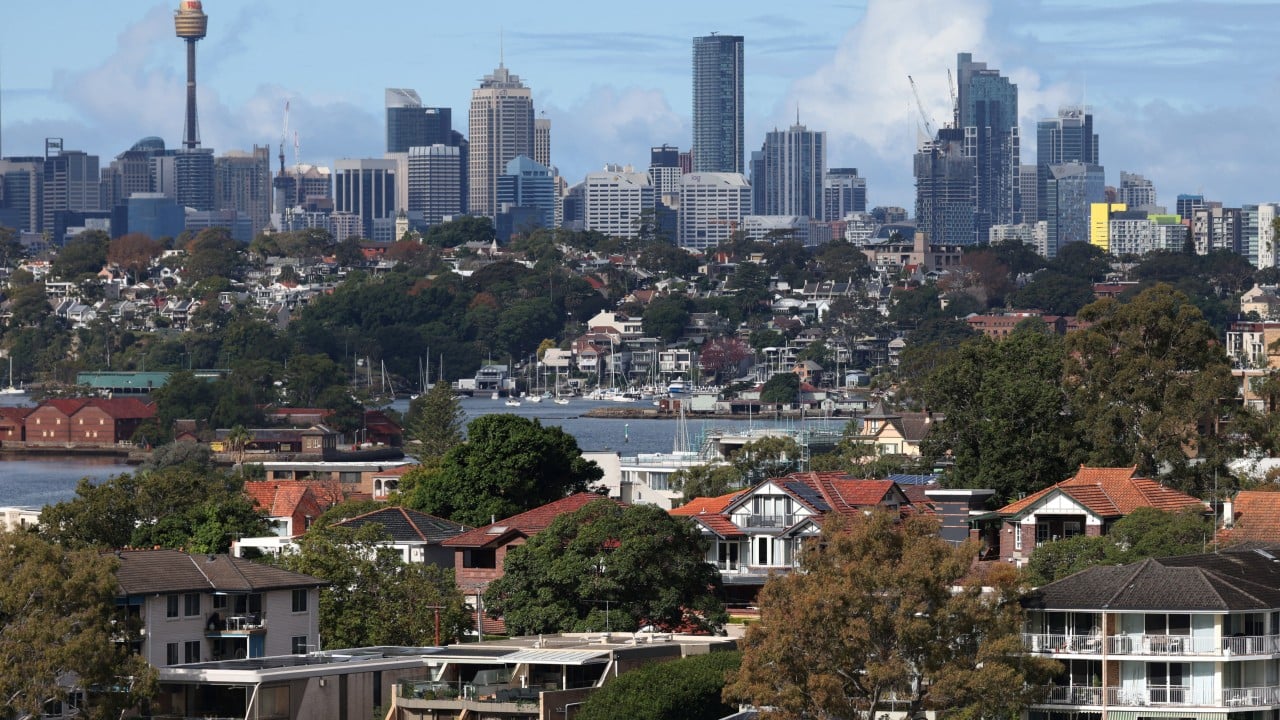
Every Saturday morning across Australia, a familiar ritual plays out. It begins with the scent of burnt espresso and the rustle of oversized newspaper inserts spread across kitchen islands. By noon, quiet suburban streets are choked with European SUVs parked haphazardly on nature strips. Neighbors gather on manicured lawns, clutching colorful brochures, their eyes darting between each other and the clipboard-wielding auctioneer.
For half a century, this was more than a weekend hobby. It was a secular religion.
In Australia, property was never just shelter. It was the ultimate, infallible vehicle for wealth creation. Parents passed this gospel down to their children alongside advice on sunscreen and superannuation. Buy a house. Leverage it to buy an apartment. Use the tax breaks to pay off the debt. Watch the market climb. Repeat until wealthy.
But the music is stopping. A sweeping tax overhaul is quietly dismantling the entire architecture of the Australian property myth, and millions of everyday investors are about to watch their financial safety nets transform into liabilities.
The House That Tax Breaks Built
To understand how deep this cuts, you have to meet people like David and Sarah. They are not corporate tycoons or shadowy billionaires. David teaches high school history; Sarah manages a regional logistics firm. In 2014, with a modest inheritance and some equity from their family home in Melbourne, they bought a two-bedroom brick villa in the outer suburbs for $450,000.
They did it because the system practically begged them to.
Australia’s tax code contained a potent, twin-engine engine designed to supercharge property investment: negative gearing and the capital gains tax discount.
Think of negative gearing as a government subsidy for a losing business. If David and Sarah’s rental income failed to cover the mortgage interest, maintenance, and council rates—which it did, by about $8,000 a year—the tax system allowed them to deduct that loss directly from their salaried income. It reduced their income tax bill. They lost money on the property on paper, but they won at tax time.
Why would anyone willingly lose money every year?
Because of the second engine: the 50 percent capital gains tax discount. The federal government promised that when David and Sarah eventually sold that villa, they would only pay tax on half of the profit. If the property doubled in value over a decade, they would pocket a massive, lightly taxed windfall that would fund their retirement.
It was a beautiful arrangement. Until it wasn't.
The problem with a system that rewards losing money to chase capital growth is that it requires prices to rise forever. It turns housing from a human right into a speculative asset class. While David and Sarah built their nest egg, a generation of first-home buyers was systematically priced out of the market. Auction by auction, bid by bid, young families were defeated by investors wielding tax write-offs like shields.
The Turning Tide
The shift did not happen overnight, but the cracks are now too wide to ignore. The federal government, facing a brutal housing deficit and an electorate furious about affordability, has begun rolling back the very concessions that fueled the property boom.
The new legislative framework targets the core incentives. Negative gearing is being restricted. No longer can an investor offset unlimited property losses against their regular salary. Instead, those losses can only be quarantined against future rental income. The immediate tax refund—the cash injection that kept so many middle-class portfolios afloat—is evaporating.
At the same time, the capital gains tax discount is being slashed from 50 percent to a mere 25 percent.
The math changes instantly.
Let us look at what happens to that villa in the outer suburbs under the new rules. If David and Sarah sell the property today for a $300,000 profit, they no longer get to shield half of that money from the tax collector. Their tax bill on the sale effectively doubles. When combined with higher interest rates and stricter bank lending criteria, the traditional wealth-building machine begins to grind, spark, and stall.
It is a psychological shock to a nation that has used real estate as a cultural security blanket. For decades, Australians looked at volatile stock markets with suspicion and turned to the solidity of brick and mortar. You can touch a house. You can paint its walls. It feels real in a way a digital stock portfolio never can.
But bricks are not liquid. You cannot sell a spare bedroom to pay for groceries when interest rates rise.
The Human Cost of a Soft Landing
Policy makers in Canberra talk about these changes in clinical terms. They use phrases like "structural adjustment," "fiscal repair," and "macroprudential regulation." They speak of cooling an overheated market and creating a level playing field for renters.
But out in the suburbs, the reality is messy, emotional, and fraught with anxiety.
Consider the rental market. Australia is already gripped by a historic rental crisis, with vacancy rates hovering near zero percent in major capital cities. As the tax benefits vanish, many mom-and-pop investors—who own roughly 80 percent of Australia's rental stock—face a grim choice.
They can absorb the higher costs, which many cannot afford to do as their own mortgages reset to higher rates. They can try to pass the costs onto their tenants by hiking rents, pushing desperate families further to the margins. Or they can simply sell up.
If thousands of individual investors exit the market simultaneously, it creates a paradox. While a flood of properties hitting the market might briefly depress prices and allow some wealthy renters to buy their first homes, it simultaneously shrinks the pool of available long-term rental properties. The very people the policy aims to help—the vulnerable, the young, the mobile workforce—find themselves trapped in an even fiercer scramble for a place to live.
The entire ecosystem is reordering itself. The era of the casual investor, the suburban mom and dad owning two or three investment properties as a substitute for a traditional pension, is drawing to a close.
Replacing them are large corporate entities. Institutional landlords, backed by massive superannuation funds, are stepping into the void with "build-to-rent" schemes. They offer professionalized tenancy, long-term leases, and communal amenities. But they also signal a fundamental shift in the Australian identity. The relationship between landlord and tenant is transforming from a personal, sometimes friction-filled neighborhood dynamic into a cold transaction with a multinational balance sheet.
A New Definition of Prosperity
We are witnessing the unraveling of a foundational belief system.
For generations, the metric of Australian success was simple: a quarter-acre block, a Hills Hoist clothesline in the backyard, and a growing portfolio of titles held in a manila folder in the study. It was a tangible, visible marker of security in an uncertain world.
That certainty is gone. The tax overhaul effectively tells the nation that housing must return to its original purpose: shelter, not a speculative bank account. Wealth creation will have to find new pathways, whether through the global share market, digital assets, or clean energy industries.
It is a necessary correction, perhaps. A fairer society rarely emerges from an economy that rewards debt over productivity.
But logic does not cure the sting of a broken promise. On Saturday afternoons, the crowds at the auctions are thinning out. The frantic bidding wars that once pushed modest family homes millions of dollars over reserve are giving way to tense silences and passed-in properties. The auctioneers still shout, their voices echoing down the asphalt, but the energy has shifted.
People are no longer looking at these houses and seeing a golden ticket to an early retirement. They are looking at them and seeing what they always were: timber, concrete, and a very expensive roof over someone else's head.