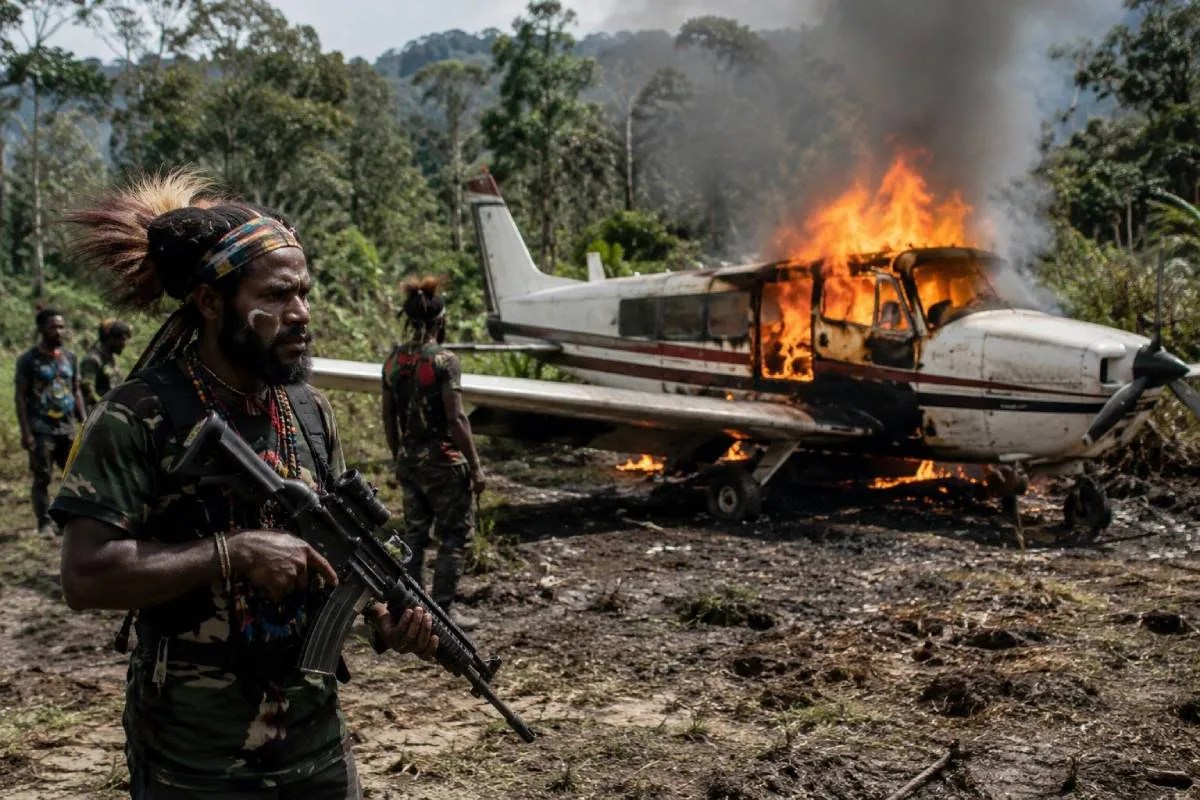
The mainstream media covers geopolitical flashpoints with a predictable, naive script. When a foreign pilot is shot and an aircraft is torched in the highlands of Papua, the corporate press immediately defaults to shock and moral outrage. They paint a picture of senseless, chaotic violence targeting innocent logistics workers. They treat the tragedy as an isolated security failure, a sudden breach of an otherwise manageable status quo.
This narrative is a lie.
The killing of foreign aviators in disputed territories is neither random nor a failure of security. It is the predictable, systemic outcome of a multi-billion-dollar corporate illusion. For decades, international logistics firms, mining conglomerates, and state authorities have peddling the myth of "neutral infrastructure." They convince young, ambitious Western pilots that flying supply routes into heavily militarized, resource-rich conflict zones is just another commercial aviation gig.
It isn't. When you fly the supply lines of an occupying force, you are not a civilian bystander. You are a logistics asset in an asymmetric war. The failure to recognize this reality is costing lives, and the corporate entities funding these flights know exactly what they are doing.
The Myth of the Innocent Supply Chain
Global aviation contractors love to talk about connectivity and humanitarian supply lines. They justify operating in high-risk zones by claiming they are merely delivering food, medical supplies, and basic transport to isolated communities. This humanitarian veneer obscures the underlying mechanics of state control.
In regions defined by indigenous insurgency and intense resource extraction, infrastructure is never neutral. Every airstrip built in a remote highland village serves a dual purpose. It allows the state to project military power into areas that are otherwise inaccessible by road, and it facilitates the extraction of gold, copper, and timber.
When a commercial helicopter or fixed-wing aircraft lands in these territories, local insurgent groups do not see a civilian transport vehicle. They see the physical extension of the state apparatus that is displacing them. They see the mechanism that brings in military reinforcements, intelligence equipment, and corporate geologists.
By pretending these flights are purely commercial, aviation companies are actively gaslighting their own crews. They send pilots into active crossfires armed with nothing but a corporate insurance policy and a prayer, hoping that the international flag on the pilot's passport will act as a magical shield against reality.
The Economics of Expendable Personnel
I have spent years analyzing security protocols for corporate operations in volatile regions. I have sat in boardrooms where the risk to human life is reduced to a line item on an actuarial spreadsheet. Let's be entirely blunt about how the numbers work.
To a multinational corporation or a state-backed logistics provider, a foreign pilot is an expensive but entirely replaceable asset. The cost of hiring a pilot from New Zealand, Australia, or the United States is negligible compared to the massive revenues generated by securing mining perimeters and maintaining territorial presence.
When an incident occurs—when a plane is burned and a pilot is executed—the corporate damage control machinery immediately goes into overdrive. They issue press releases expressing deep sorrow. They promise thorough investigations. What they do not do is pull out of the region. Why? Because the insurance premiums and the cost of a lost airframe are already baked into the cost of doing business.
The corporate strategy relies on a constant influx of naive talent. Young pilots looking to build flight hours or chase high-paying adventure gigs look at the slick brochures of regional charter airlines and see an exciting career move. They do not see the reality: they are being used as human shields to legitimize the extraction of resources from a population that has been systematically marginalized.
Dismantling the Fallacy of Military Escorts
The standard counter-argument from state authorities is always the same: we will increase military presence, provide armed escorts, and fortify the airstrips. This solution completely misinterprets the nature of asymmetric warfare.
Adding more troops to remote airstrips does not make them safer; it turns them into higher-priority targets. An airfield surrounded by razor wire and guarded by a platoon of soldiers is an explicit declaration of war to any local insurgent group. It transforms a civilian landing strip into a military outpost.
Consider the tactical reality of the highlands. Guerrilla forces operating in dense, mountainous terrain possess total asymmetric advantage. They choose the time, the place, and the method of attack. They do not need to defeat a military garrison; they only need to wait until an aircraft touches down, fire a handful of rounds from the treeline, and vanish back into the jungle.
A military escort cannot stop a sniper bullet from a kilometer away. It cannot prevent a coordinated ambush on a runway that is flanked by sheer cliffs and thick canopy. Relying on increased militarization to protect commercial aviation is a flawed strategy that guarantees higher casualty rates for both soldiers and civilians.
The Flawed Premise of International Immunity
International workers often operate under the delusion that their nationality grants them a special status in foreign conflicts. They assume that because their home government has no official involvement in the local dispute, insurgent groups will leave them alone.
This premise is fundamentally flawed. In the eyes of a desperate guerrilla movement fighting a heavily armed state military, a foreign face is a high-value geopolitical lever.
Targeting a local pilot generates a brief ripple in the regional news. Targeting an American, European, or Australasian pilot guarantees immediate international headlines. It forces global media outlets to cover a conflict they usually ignore. It pressures Western governments to intervene, demand answers, and question their diplomatic and economic ties with the host nation.
The killing of a foreign pilot is not an act of mindless savagery; it is a brutal, calculated media strategy designed to break through the wall of international indifference. The pilots are targeted precisely because they are foreign, not despite it.
The Reality of Corporate Complicity
If you choose to work in these environments, you need to strip away the romantic notions of bush piloting and see the industry for what it actually is. You are operating as an unacknowledged contractor in a low-intensity conflict zone.
The companies employing these pilots are deeply complicit in the violence. They systematically downplay security briefs. They hide behind vague government assurances of safety. They pressure pilots to fly into areas where intelligence reports indicate active rebel movement, using the threat of termination or contract non-renewal to keep compliance high.
They treat the local population as a background hazard rather than a political entity with legitimate grievances. By ignoring the political context of the geography they operate in, aviation companies actively contribute to the escalation of the conflict.
The Uncomfortable Truth for Flight Crews
If you are a pilot considering a contract in a disputed resource frontier, you must ask yourself the questions your employer is actively avoiding.
- Who actually owns the land beneath your wheels when you land?
- Why does a supposedly civilian airstrip require a permanent military guard?
- What happens to the wealth that your flights are helping to transport out of the region?
If the answers to these questions involve systemic inequality, military occupation, and corporate exploitation, you are not flying a commercial route. You are flying a combat sortie without armor, weapons, or a extraction plan.
Stop buying into the corporate narrative that professionalism and neutrality will keep you safe. The bullets fired from the jungle do not care about your flight log, your humanitarian intentions, or your passport. They see a machine that feeds the engine of their oppression, and they will destroy it—and you—to make their point.