The ink on a treaty doesn’t dry with a bang. It fades, quietly, under the fluorescent lights of committee rooms where bureaucrats turn off the lights at 5:01 PM.
For three generations, a specific kind of faith kept the lights on in Washington. It was the belief that an American handshake was the ultimate insurance policy. If you were an ally, your security was woven into the fabric of the American taxpayer's bank account. Money flowed, weapons shipped, and a global umbrella of deterrence kept the chaos at bay.
Then, the money stopped. Not because of a sudden war or a dramatic betrayal, but because a long-standing partner decided they didn't need the check anymore.
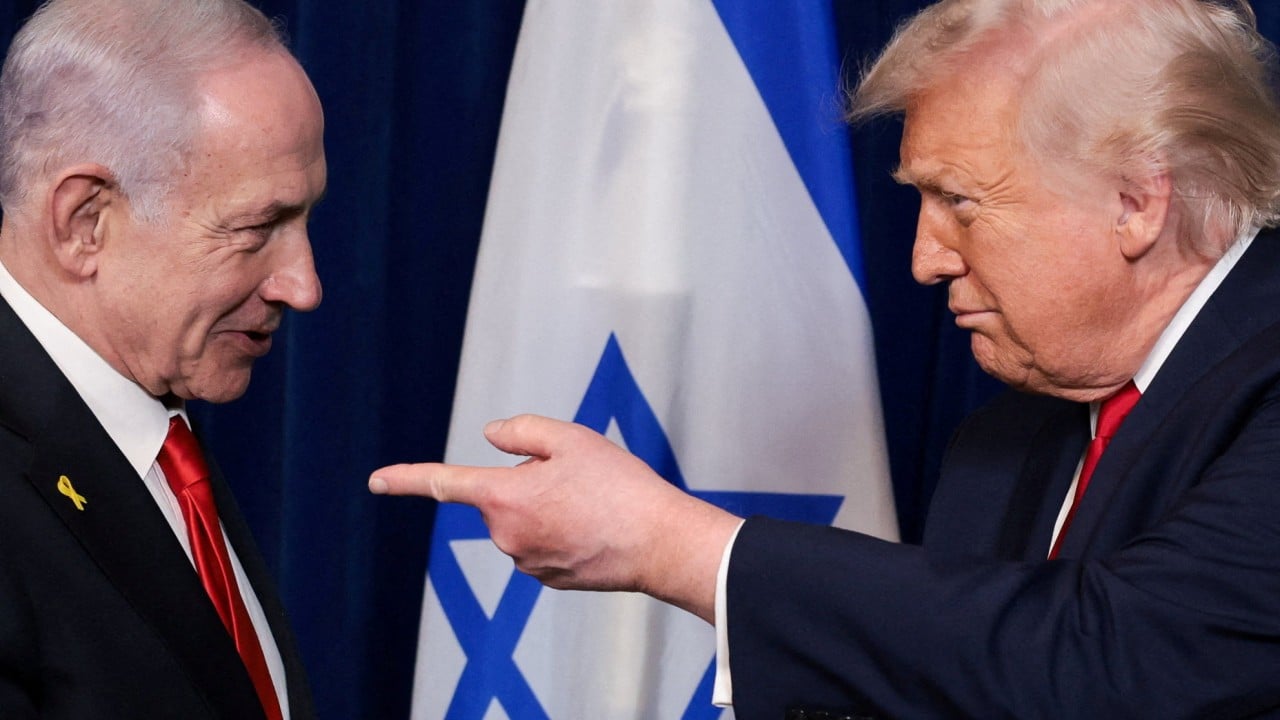
When Israel—traditionally the largest cumulative recipient of US foreign assistance since World War II—began charting a course away from direct American financial aid, the shift was treated by defense analysts as a localized policy pivot. It wasn't. It was the first loud crack in a glacier that had been freezing solid since 1945. When the most prominent beneficiary of Washington’s global alliance network signals that dependence is no longer a viable long-term strategy, the rest of the world watches. And they learn.
The Ghost in the War Room
Let’s step away from the podiums and the press briefings. Consider a hypothetical diplomat named David. He has spent thirty years in the state departments of Western Europe, watching the world through the prism of American stability.
For decades, David’s job was simple. When a crisis flared up in his region, he called Washington. The American response was a predictable machine: a deployment of carriers, a congressional appropriation bill, a flurry of diplomatic cables. This wasn't charity; it was a transaction. Washington bought stability and geopolitical leverage; allies bought survival.
Lately, David sits in rooms where the air feels different. The conversations are no longer about what America will do, but what happens when America cannot do anything.
The shift away from US aid isn't born out of sudden hostility. It stems from a cold, calculated realization. When a nation relies on another country’s legislative whims for its core defense budget, its sovereignty is on a leash. If Congress gridlocks, the security architecture stalls. If the American public grows weary of foreign entanglements—as polling consistently shows they are—the pipeline dries up.
By initiating a departure from this financial umbilical cord, a nation isn't just saying "we are strong enough to stand alone." They are saying "we can no longer afford the risk of relying on you."
The Arithmetic of Exhaustion
The numbers tell a story that rhetoric tries to hide. For decades, the United States maintained a defense posture designed to fight two major regional wars simultaneously. Today, the national debt creeps past figures that defy human comprehension, interest payments on that debt outpace the actual defense budget, and domestic infrastructure crumbles.
The American voter looks at a bridge collapsing in the Midwest and then looks at a multi-billion-dollar aid package headed overseas. The math of empire no longer computes at the kitchen table.
This domestic exhaustion changes the behavior of allies overnight.
Think of a global alliance like an aging insurance company. For fifty years, the company paid out every claim on time. The premiums were high—allies had to align their foreign policies with Washington, vote with the US at the UN, and buy American-made hardware—but the payout was guaranteed.
Now, the insurance company is arguing over its own internal budget. The claims take longer to process. The adjusters are questioning whether the policy even covers certain types of modern conflict.
What happens next is entirely predictable. The policyholders start looking for alternative coverage. Or worse, they decide to self-insure.
The Rise of the Self-Insured World
When the reliance on Washington fades, nations do not suddenly embrace pacifism. They build their own military-industrial complexes. They forge awkward, transactional partnerships with regional rivals. They do what they must to survive in a world without a global sheriff.
This self-insurance manifests in several distinct ways across the globe:
- Localized Defense Production: Nations that once bought off-the-shelf American fighters are now investing heavily in domestic drone technology, cyber warfare suites, and indigenous missile systems.
- Ad-Hoc Coalitions: Instead of permanent, treaty-based alliances like NATO, countries are forming temporary, issue-specific marriages of convenience. These partnerships lack ideological alignment; they exist purely to counter immediate threats.
- Strategic Ambiguity: Allies who once stood shoulder-to-shoulder with US foreign policy are now hedging their bets, keeping communication lines open with Washington's primary global competitors.
This isn't a future projection. It is happening in real-time. The departure from aid is merely the economic manifestation of a deeper psychological divorce.
The Quiet Rooms of Tokyo and Seoul
The ripples of this shift extend far beyond the Middle East. In Tokyo, planners look at the shipping lanes of the South China Sea. In Seoul, strategists watch the horizon. They see an America stretched thin, trying to deter adversaries in Europe, Asia, and the Levant simultaneously, all while battling a civil cold war at home.
The question asked in these quiet rooms is devastatingly simple: If the Americans cannot sustain financial solidarity with their most deeply entrenched partners, what happens to us when the shooting starts?
The answer has arrived in the form of massive, unprecedented increases in domestic defense spending across Asia and Europe. Germany's Zeitenwende—the historic turning point in its defense policy—and Japan's abandonment of its traditional defense spending caps are not signs of a surging, confident Western alliance. They are the frantic actions of nations realizing they might soon be on their own.
They are learning to speak the language of self-reliance because the old language of extended deterrence is losing its meaning.
The Cost of the Invisible String
Every dollar of foreign aid comes with an invisible string attached. It dictates where a country can sell its technology, who it can trade with, and how it must conduct its internal affairs. For a long time, that trade-off was worth it. The umbrella was wide enough to justify the loss of autonomy.
But the string has begun to feel more like a noose.
When an ally walks away from the aid table, they are cutting that string. They gain the freedom to strike deals with Beijing, to trade with New Delhi, to police their borders without needing clearance from a sub-committee in the US House of Representatives.
The United States loses its greatest asset in this process: leverage. You cannot dictate terms to a partner who doesn't owe you anything. You cannot threaten to pull a plug that has already been unplugged.
The Final Shift
The old world order was comfortable for those inside the tent. It provided a neat, binary clarity. There was Washington, there were its enemies, and there was the vast network of protected states in between.
That clarity is gone.
We are entering an era of geopolitical friction, where alliances are fluid, temporary, and deeply unsentimental. The decline of the classic American alliance system isn't marked by a dramatic surrender or the tearing down of a wall. It is marked by a nation quietly thanking Washington for its past service, declining the next shipment of subsidized hardware, and closing the door to write its own future.
The guard on the Potomac hasn't been overthrown. The rest of the world has simply walked past the watchtower, realizing the sentry is too tired to look down.