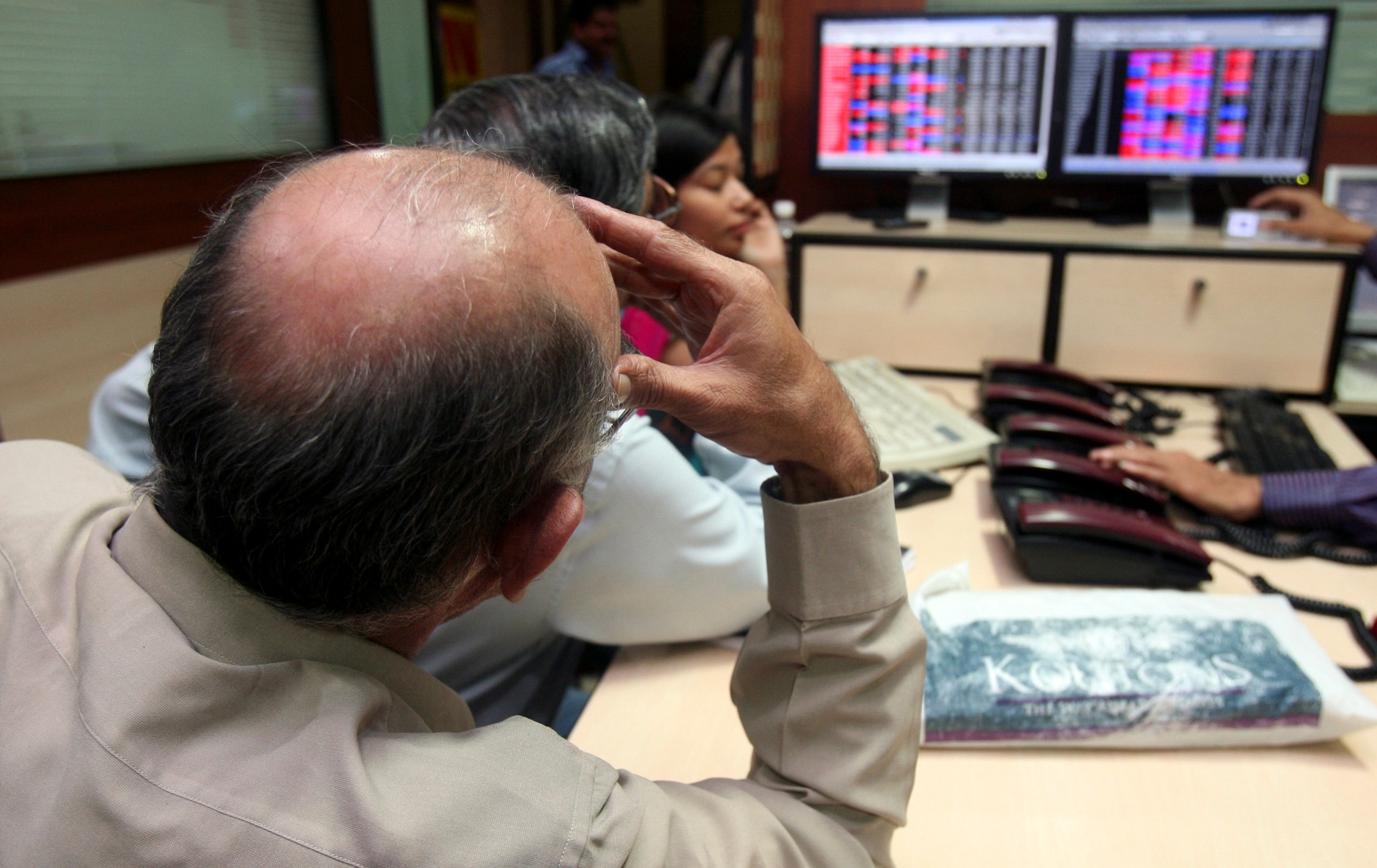
The coffee hadn't even cooled before the panic set in.
It starts with a soft, persistent vibration in your pocket. A notification. Then another. By 9:45 AM, the vibration transforms into a steady, anxious hum. On the trading floors of Manhattan and in the quiet, sunlit home offices of Austin, thousands of people are staring at the exact same thing: a sea of flashing crimson numbers.
We call it a market correction. We call it a tech selloff. But those are antiseptic words, sterilized for press releases and evening news broadcasts. They obscure the actual human toll of a day when the financial plumbing of the world springs a leak. When billions of dollars evaporate into the ether over the course of a few hours, it doesn't feel like an abstract economic chart. It feels like a punch to the gut.
Sarah Miller, a fictional composite of the thousands of independent retail investors who joined the market over the last decade, sat at her kitchen table watching her portfolio shrink. For three years, tech stocks had been her financial bedrock. Companies making microchips, designing artificial intelligence, and building software-as-a-service platforms seemed invincible. They were the engine of the modern world.
Then came the rising yields.
To understand why Sarah’s screen turned into a digital bloodbath, you have to look away from the flashy tech campuses of Silicon Valley and focus instead on a much duller, vastly more powerful building in Washington, D.C.
Money, like water, always seeks the path of least resistance. For years, interest rates were scraping the floor. Keeping your cash in a bank account or a government bond paid next to nothing. If you wanted your savings to grow, you were forced to take risks. You pumped your capital into high-flying tech companies because they promised massive growth in the future. Investors were happy to wait for those profits because there was no alternative.
But the economic climate shifted. The yield on the 10-year US Treasury bond—the benchmark for global finance—began to climb.
Suddenly, the math changed. Why bet on a volatile tech company whose biggest profits are ten years away when you can get a guaranteed, historically high return from the United States government?
Think of it like gravity. Low interest rates are a state of zero gravity; companies can float to astronomical heights on pure potential. High yields are a sudden, violent restoration of Earth's gravitational pull. The heavier and more speculative the company, the harder it crashes back to the dirt.
When Treasury yields ticked upward that morning, institutional fund managers didn't hesitate. They pressed the button. They pulled their money out of the future and locked it into the present.
The dominoes fell with terrifying speed. Apple, Microsoft, Nvidia, Alphabet—the titans that single-handedly carried the major indexes to record highs—began to slide. And because these behemoths make up such a massive percentage of the S&P 500 and the Nasdaq, when they stumble, they pull the entire market down into the abyss with them.
By noon, the selloff had mutated from a calculated reallocation of capital into a full-blown rout. Panic is contagious. It bypasses the rational brain and triggers a primal survival instinct.
Retail investors logged into their brokerage apps only to find the systems lagging under the weight of sheer volume. Forums on Reddit and Discord, usually filled with bravado and memes about "going to the moon," fell eerily quiet, replaced by threads of genuine anxiety. People watched their down payments for houses, their kids' college funds, and their retirement timelines recede into the distance.
The confusion is the hardest part to swallow. It feels deeply unfair that a tech company can report stellar earnings, announce groundbreaking new products, and still see its stock price crater by 8% in a single afternoon. How can a business be doing everything right and still lose billions in market value?
The brutal reality of the stock market is that price and value are not the same thing. Price is merely what someone is willing to pay today. And today, everyone was terrified of what tomorrow might cost.
As the closing bell neared, the selling volume reached a crescendo. The financial analysts on television spoke in grave, measured tones about "valuation compression" and "macroeconomic headwinds." They flashed charts showing the worst single-day percentage drop in months.
But behind those charts are people like Sarah, staring at a screen, wondering if they should cut their losses or hold on through the storm.
The market always closes at 4:00 PM. The trading halts, the tickers stop blinking, and the frantic noise of the day dies down to a dull murmur. The money lost doesn't magically reappear, and the anxiety doesn't vanish when the opening bell rings the next morning.
We like to believe that finance is a game of pure logic, dictated by algorithms, spreadsheets, and cold, hard data. It isn't. At its core, the market is a chaotic, living breathing psychological experiment. It is a massive, interconnected web of human fear and human greed, constantly trying to find a balance between the certainty of today and the promise of tomorrow.
And on days like today, fear simply had the louder voice.

.full.3529161.png)
