We built the machine with iron and lightning. Then we sat back, blinking against the glare of terminal screens, and waited for it to tell us what it meant.
For years, the story of artificial intelligence was told in isolation. It was written in the sterile glow of high-priced server rooms, guarded by corporations whose balance sheets rivaled small nations. If you wanted to build a mind, or at least something that could mimic the frantic rhythm of human thought, you paid the toll. You bought the silicon. You rented the cluster. You bowed before the gods of compute. Expanding on this idea, you can find more in: The Trojan Horse Sitting in Your Driveway.
(Note: This entire historical dynamic is a factual reflection of the heavy hardware gatekeeping that defined machine learning research prior to the open-source wave.)
Then came the commons. Observers at Engadget have also weighed in on this situation.
Down a quiet digital alleyway, a group of developers did something radical. They didn't lock their models in a vault. They threw the doors wide open. They called it Hugging Face, a whimsical name for what would become the beating heart of a global rebellion. Suddenly, a teenager in a cramped apartment in São Paulo and a veteran researcher in Tokyo were sharing the same weights, the same biases, the same raw potential. Code stopped being a proprietary weapon and started becoming a language.
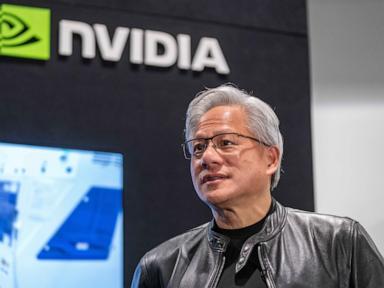
Grind the gears forward to the present. The ground beneath the tech industry just shifted, and the epicenter is a staggering twelve-point-nine billion dollar transaction. Nvidia, the undisputed titan of the hardware throne, is moving to acquire the very platform that taught its chips how to connect with the world.
It is a marriage of fire and clay.
To understand why this price tag matters—why millions of developers who once cheered for the independence of open-source platforms are now holding their breath—you have to look at the human cost of creation.
Imagine Elena, a machine learning engineer who spends her days trying to teach an open-source model to understand rare dialects of indigenous languages. She isn't chasing stock options. She is trying to make sure her grandmother’s tongue doesn't vanish into the digital ether. Before Hugging Face, Elena’s workspace was a graveyard of broken dependencies and prohibitive cloud bills. She would spend three weeks fighting infrastructure just to spend three hours testing an idea.
When the repository became her home, everything changed. She could pull down a model trained by someone else, tweak a few parameters, and watch a machine suddenly understand the inflection of a fading phrase. It felt like magic. But it was just community.
Now, the titan of hardware is stepping into the village square.
The announcement sent a tremor through Slack channels and GitHub issues across the globe. The anxieties are palpable, sharp, and entirely justified. Can a corporate giant, driven by quarterly earnings and shareholder demands, truly preserve the chaotic, anarchic beauty of an open ecosystem? Or are we watching the enclosure of the digital commons, where the tools that built the modern AI revolution are quietly fenced off behind corporate APIs?
To make sense of this, we have to look past the financial ticker tape. We have to examine the anatomy of power in the age of intelligence.
Nvidia does not merely sell chips; they sell the very air that modern software breathes. Their graphics processing units are the silicon engines powering every major breakthrough in deep learning. But hardware without models is like a Stradivarius violin left in a damp basement—exquisite, expensive, and entirely silent.
Hugging Face, conversely, is the sheet music. It is the repository where tens of thousands of pre-trained models live, waiting for a developer to breathe life into them. It is the directory, the library, and the town hall rolled into one.
When you control both the orchestra and the instruments, the nature of the music changes.
Skeptics point to history. They remember every time a benevolent platform was swallowed by a monopoly, its open ethos slowly strangled by monetization strategies and closed gardens. They worry that the search bar will become biased, that the free tiers will shrink, and that the independent voices will be drowned out by enterprise-grade white noise. These are not paranoid delusions. They are the hard-earned scars of an industry that has watched open-source ideals bend to commercial gravity time and time again.
Yet, look closer at the machinery of the deal.
The engineers inside the green-and-black empire know something crucial: you cannot force creativity. If you crush the community, the platform dies. The value of Hugging Face was never its server racks or its database schemas. Its value was the chaotic, brilliant, unpredictable swarm of human ingenuity that inhabited it.
If Nvidia tries to cage the bird, it will simply fly away to the next decentralized fork. The code is already out of the bottle. The weights are downloaded on millions of local hard drives from Berlin to Bangalore.
Consider what happens next: a delicate, high-stakes dance.
The integration of these two giants will either create an unstoppable engine for human progress—making advanced AI accessible, safe, and lightning-fast for every garage startup on Earth—or it will mark the day the internet's most vibrant laboratory was paved over for a parking lot.
We are standing on the razor's edge.
The twelve-point-nine billion dollars is just a number, a tally of chips and ledgers. The real currency being traded here is momentum. It is the speed at which a human idea can transform into a running algorithm that changes a life, heals a patient, or translates a forgotten language.
Elena sits at her desk tonight, staring at her glowing monitor. The notification bell on her dashboard rings. A new model has been pushed to the repository. Her fingers hover over the keyboard, ready to test, ready to build, ready to see what happens when the machine speaks next.