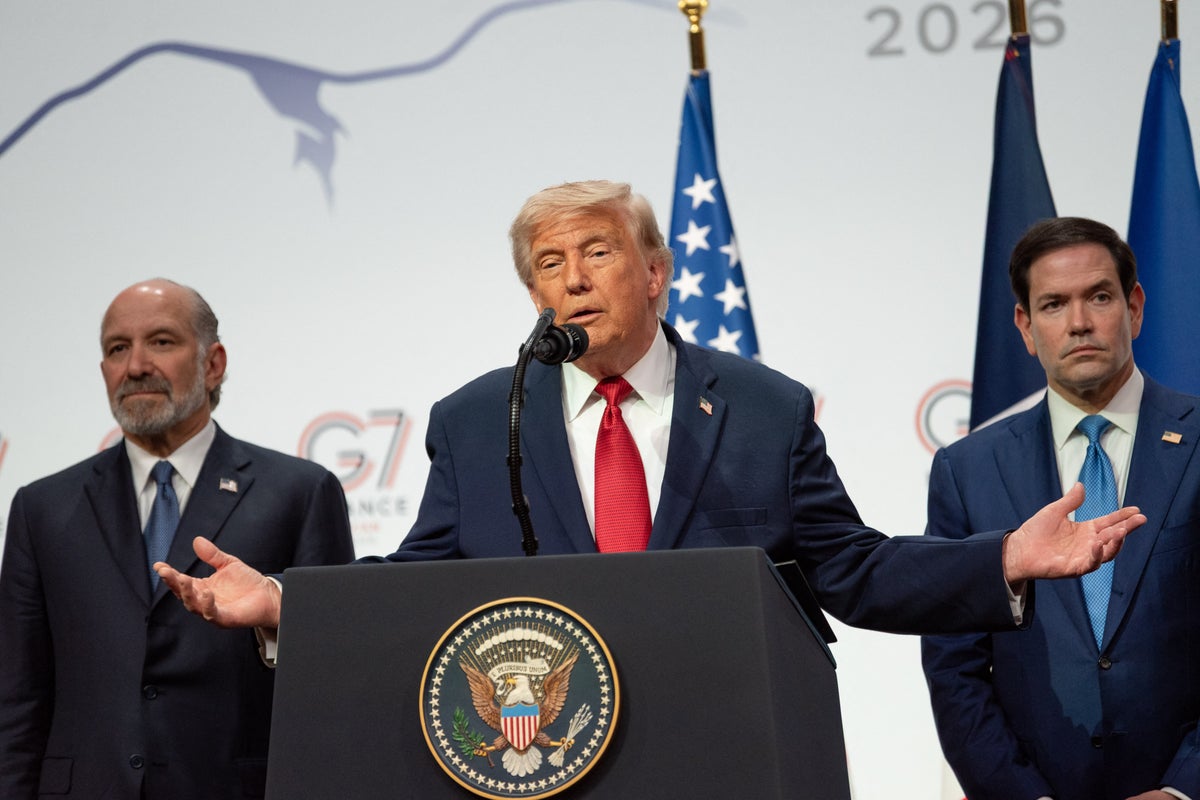
Global opinion polls are the comfort food of the foreign policy establishment.
Every time a major polling institution drops a dataset showing that international trust in the United States has plummeted, the corporate media apparatus goes into an orchestrated panic. The latest outrage machine claims that a survey of 36 nations proves America is suddenly a rogue actor, untrustworthy and isolated on the world stage.
It is a neat, comforting narrative for critics. It is also entirely wrong.
These massive international surveys do not measure strategic reliability, institutional stability, or the actual strength of military alliances. They measure vibes. They track how much a specific, highly vocal segment of foreign publics dislikes the rhetoric coming out of Washington. They mistake a necessary, overdue friction in international relations for structural collapse.
The cold truth of geopolitics is that international trust is not a popularity contest. Nations do not form alliances because they like a president's tone at a press conference. They form alliances because of shared structural threats, hard power capabilities, and mutual self-interest. When an administration forces a hard conversation about defense spending or trade imbalances, global poll numbers drop. But strategic clarity increases.
Stop looking at global approval ratings as a scorecard for foreign policy success. A feared or respected superpower is infinitely more stable than one that bankrupts its own credibility just to be cheered at Davos.
The Flawed Premise of Global Sentiment Tracking
To understand why these international polls are functionally useless for predicting geopolitical outcomes, you have to look at what they actually ask. They ask citizens in foreign capitals if they have confidence in the American president to do the right thing in world affairs.
This is a fundamentally flawed metric. The average citizen in Berlin, Tokyo, or Paris judges American policy through the lens of local media consumption and immediate domestic interests. They prefer an American leadership that guarantees their security for free, keeps trade completely asymmetric in their favor, and never makes waves in international forums.
When a populist or realist administration disrupts this cozy arrangement, public confidence drops. The media calls this a crisis of trust. In reality, it is a sign that the United States is finally acting like a rational actor instead of a global charity.
Consider the historical precedent. International approval of the United States routinely fluctuated during the Cold War. European publics marched in the hundreds of thousands against the deployment of American Pershing II missiles in the 1980s. Intellectuals declared that Washington was reckless, aggressive, and completely untrustworthy. Yet, those very same defense policies broke the Soviet Union and secured Western Europe for a generation. The elite consensus was panicked, but the strategy worked.
The current panic over global polls relies on the same superficial analysis. It assumes a direct correlation between public affection and geopolitical compliance. There is none.
Dictating Terms Is Not Betrayal
The core argument of the poll-driven panic is that Washington is abandoning its allies. This claim willfully misunderstands the difference between abandoning an alliance and renegotiating its terms.
For decades, American foreign policy operated on a model of appeasement disguised as leadership. Washington absorbed massive trade deficits and carried the overwhelming burden of Western defense while allies chronically underfunded their own militaries.
- The NATO Reality: For years, the vast majority of NATO members treated their commitment to spend 2% of GDP on defense as an optional suggestion.
- The Power Shift: When Washington explicitly threatened to condition security guarantees on allies meeting their financial obligations, the establishment screamed that trust was dead.
- The Actual Result: European defense spending surged. Nations that had spent decades ignoring their own militaries suddenly found the budget to purchase hardware.
Did public approval of the United States drop in those countries during the renegotiation? Absolutely. Nobody likes it when the free ride ends. But did the alliance become weaker? No. It became functionally stronger because the burden began to shift toward a more sustainable equilibrium.
Trust in statecraft is built on predictable national interests, not unconditional subservience. When America states clearly that it will no longer subsidize the defense of wealthy nations that refuse to defend themselves, it establishes a transparent, credible boundary. That is the definition of reliability.
Public Opinion vs State Action
We need to separate the noise of public polling from the signal of state behavior. While foreign citizens complain to pollsters about American unilateralism, their governments continue to buy American weapons, peg their economic fortunes to the US dollar, and rely on the American nuclear umbrella.
Look at the hardware. Look at the intelligence sharing agreements. Look at the joint military exercises. These are the true indicators of international trust.
- Defense Procurement: European and Asian allies are not canceling contracts for American fighter jets or air defense systems because of a poll. They are buying more.
- Economic Integration: Despite rhetoric about decoupling or moving away from dollar hegemony, global capital flows back to American markets whenever global instability rises.
- Strategic Alignment: When push comes to shove in critical maritime corridors like the South China Sea or the Red Sea, regional powers still look to the US Navy to keep shipping lanes open.
Governments operate on realpolitik, not public opinion surveys. A foreign prime minister might denounce Washington's trade policies to appease their domestic base, but behind closed doors, they are signing intelligence-sharing protocols that protect their national survival. The public poll captures the theater; state action reveals the reality.
The High Cost of Being Universally Liked
There is a massive, unacknowledged downside to pursuing high international approval ratings. To be universally liked by foreign nations, an American administration must essentially surrender its strategic leverage.
A foreign policy engineered to maximize global poll numbers looks like this:
- Signing symbolic climate accords that lack enforcement mechanisms for major polluters while handicapping domestic energy production.
- Entering into multilateral trade agreements that hollow out domestic manufacturing sectors in the name of global harmony.
- Refusing to enforce red lines or project hard power because it might upset regional players or international bodies.
This approach creates an illusion of stability while structural vulnerabilities build up beneath the surface. It trades long-term strategic advantage for short-term editorial praise in foreign newspapers.
When Washington breaks this cycle, the initial reaction is always a spike in global disapproval. The international community reacts like a cartel facing a member who refuses to fix prices anymore. The disruption is loud, uncomfortable, and intensely unpopular. But it forces a return to a balance of power based on reality rather than diplomatic politeness.
Dismantling the Premise of Global Trust
The media often asks: "How can America lead the world if other nations do not trust us?"
The question itself is broken. It assumes that leadership requires permission or affection. True geopolitical leadership is about setting the parameters of international security and commerce through undeniable economic and military gravity.
If a nation relies entirely on the goodwill of others to maintain its global position, it is not a superpower; it is a client state waiting to happen. The United States does not derive its international authority from a high score on a European opinion poll. It derives its authority from its position as the ultimate guarantor of global maritime trade, its unmatched innovation engine, and its status as the world’s consumer of last resort.
When foreign publics report low trust in America, they are usually expressing anxiety over the fact that Washington is focusing on its own national interest rather than catering to theirs. That anxiety is a natural consequence of a multipolar rebalancing. It should be observed, analyzed, and ultimately dismissed as a factor in strategic decision-making.
The obsessed fixation on international approval ratings is a luxury of an era that is officially over. In a world defined by intensifying competition, the obsession with being liked is a liability. Stop treating international polls like a report card on American power. They are merely a thermometer measuring the temperature of global discomfort with American sovereignty.
Execute policy based on national interest, maintain a credible deterrent, and let the poll numbers fall where they may.