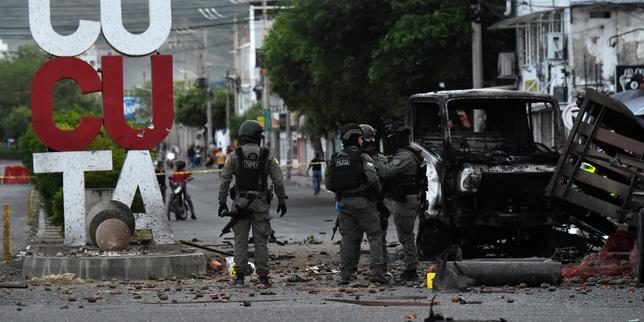
Violence struck the border city of Cúcuta again. A truck packed with explosives tore through the area near a police station, injuring at least 11 people. It happened just six days before the scheduled inauguration of incoming president Abelardo de la Espriella.
Timing matters in conflicts like this. When an attack hits right before a major political handover, it is rarely random. It sends a message. Armed groups want to test the new administration before it even takes office. Recently making headlines recently: Where the Sea Divides Us All.
The Anatomy of the Attack in Cúcuta
The blast shook neighborhoods and left emergency services scrambling. Cúcuta sits on a volatile border region heavily contested by various illegal armed factions, drug trafficking networks, and dissident groups.
Unpacking why this region remains a hotspot reveals deep systemic issues. Border zones provide easy escape routes, smuggling corridors, and fertile ground for extortion. Security forces face constant pressure. When a vehicle loaded with explosives gets close to a police installation, it exposes serious intelligence gaps and vulnerabilities in urban defense. Further information regarding the matter are covered by Reuters.
Local authorities immediately secured the perimeter, rushing the injured to nearby hospitals. Yet, the psychological impact lingers far longer than the physical damage. Residents live on edge. They know that peace deals and political promises rarely translate instantly to safety on the ground.
Political Turbulence and Security Challenges
The incoming government faces an immediate baptism by fire. Governing Colombia means dealing with fragmented guerrilla remnants, criminal cartels, and deep-seated rural insurgencies.
People often ask why these attacks keep happening despite heavy military spending. The answer lies in the adaptability of these criminal networks. They morph into decentralized cells rather than unified armies. Traditional military strategies struggle against localized cells that blend into civilian populations.
Abelardo de la Espriella steps into power under an intense spotlight. His administration will have to choose between aggressive military escalation or attempting renewed dialogue. Neither option guarantees safety. Hardline crackdowns often trigger retaliatory bombings in urban centers like Cúcuta, while negotiations give armed groups time to re-arm and regroup.
What Happens Next on the Ground
For everyday citizens in Cúcuta and across the border corridors, daily life revolves around risk management. Curfews, increased military checkpoints, and heightened surveillance become the new normal.
If you are following the security situation in Latin America, look past the initial casualty numbers. Pay attention to how the new cabinet structures its defense strategy in the crucial first hundred days. The response to this explosion will set the tone for the entire presidential term. Security forces must overhaul intelligence sharing to intercept vehicle-borne improvised explosive devices before they reach urban targets.
The road ahead remains fraught with danger. Real security requires dismantling the financial networks funding these operations, not just sweeping the streets after the smoke clears.
Colombie : Au moins 6 morts et 71 blessés dans un attentat au camion piégé
This video provides visual context on recent truck bomb attacks and urban security responses in Colombia.