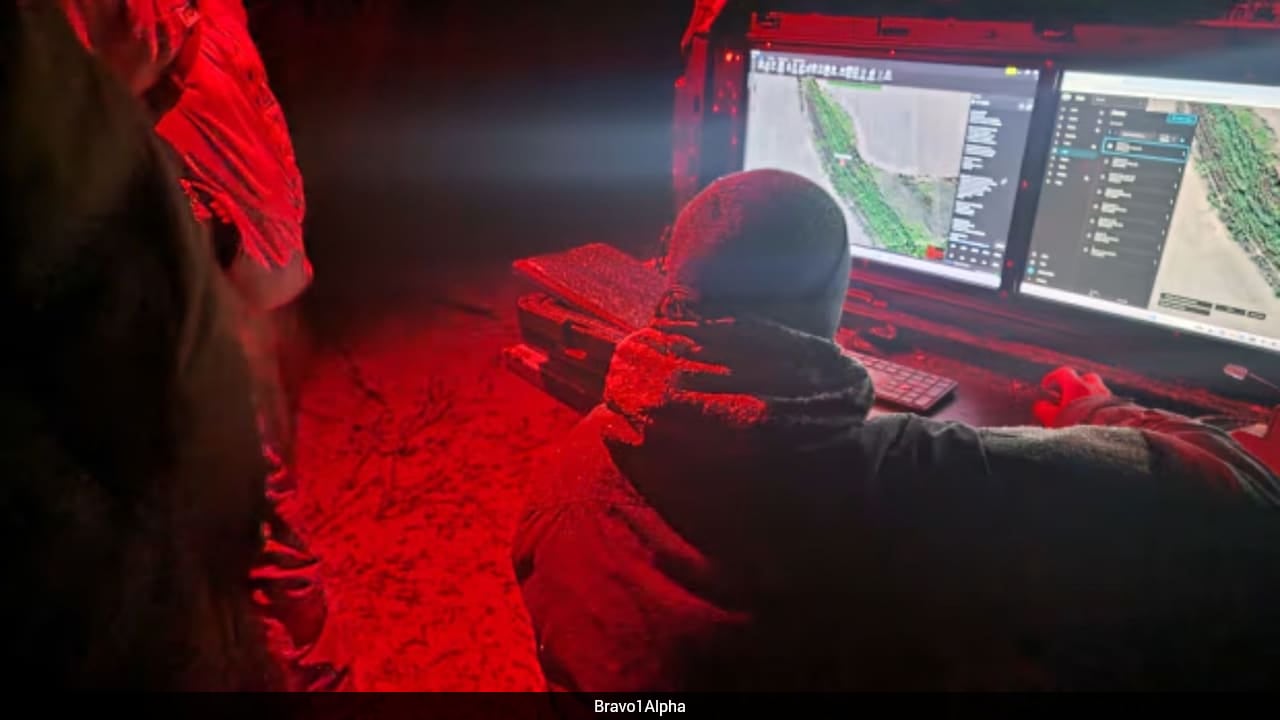
When a Ukrainian TV host launched a massive crowdfunding drive to buy three Turkish attack drones, nobody expected the manufacturer to turn around and hand them over for free. Suddenly, a charity foundation was sitting on 600 million Ukrainian Hryvnias—roughly 15 million American dollars—with no immediate home for the cash. Instead of buying more frontline hardware, they bought a satellite.
People laughed. The public wanted exploding drones on their screens, not a piece of space junk orbiting hundreds of miles above the earth. Critics called it a waste.
They were wrong. That single purchase completely flipped the intelligence balance in Eastern Europe. Buying dedicated, un-throttled orbital access didn't just save money. It kept soldiers alive, cut sensor-to-shooter loops down to hours, and obliterated billions of dollars in enemy hardware. Space used to belong exclusively to superpowers. Now, a crowdfunded radar array is teaching the Pentagon a lesson in how to fight a modern war on a budget.
The Weather Problem
Traditional reconnaissance satellites are basically giant flying cameras. They rely on sunlight. If a cloud rolls over a target, or if the sun goes down, those cameras are useless. In Ukraine, the sky is overcast for months at a time. Relying on optical images meant waiting days for a clear window, by which time the target had already packed up and moved.
The Serhiy Prytula Charity Foundation bypassed this entirely by striking a deal with Finnish aerospace firm ICEYE. Instead of optical lenses, ICEYE uses Synthetic Aperture Radar.
SAR satellites don't care about clouds. They don't care about smoke, fog, or pitch-black darkness. They bounce microwave pulses off the ground and measure how long it takes for the signal to return, building a highly detailed, three-dimensional map of the surface.
[Satellite in Orbit] ---> Sends Microwave Pulse ---> Passes through clouds/smoke
                                                                |
[Ground Target Revealed] <--- Echo Returns to Satellite <-------+
When you own the hardware, you get to choose exactly where those pulses point. Before this deal, Ukraine relied heavily on handouts from Western allies. While helpful, that data came with massive caveats. Intelligence was scrubbed, delayed by bureaucratic red tape, or restricted to avoid escalations inside Russian territory.
By taking operational control of an orbiter already in place, Ukraine's Defense Intelligence began calling the shots directly. They could peer across international borders, scan Russian airbases, and monitor staging grounds deep inside enemy territory without asking for anyone's permission.
Turning Microwave Echoes Into Burning Tanks
The investment paid off almost instantly. Within the first 48 hours of the satellite going live under Ukrainian command, it uncovered 60 pieces of heavily camouflaged Russian military equipment hidden in woodlands across the Kharkiv and Donetsk regions. The target coordinates went straight to artillery teams.
Before the weekend was over, the value of the destroyed armor exceeded the entire 15 million dollar purchase price of the satellite.
The numbers disclosed by the Main Intelligence Directorate of Ukraine paint a staggering picture of operational efficiency. Over its initial years of deployment, the system captured more than 5,900 radar images. The data allowed intelligence analysts to map out:
- 370 enemy airfields
- 238 air defense positions and radar sites
- 153 fuel depots and warehouses
- 17 distinct naval bases
Roughly 38% of every single image collected went directly into planning active strikes. This isn't passive monitoring; it's an orbital targeting pipeline.
Consider the high-profile strike on the Sevastopol shipyard. Ukrainian planners used radar imagery to bypass heavy electronic warfare defenses and track the exact positions of two high-value targets inside dry docks: the landing ship Minsk and the Kilo-class submarine Rostov-on-Don. Both were written off. The submarine alone was worth an estimated 400 million dollars. A 15 million dollar crowd-funded satellite made it happen.
Shifting From Strategic To Tactical Space
For decades, the military establishment viewed space as a strategic domain. Satellites were massive, multi-billion-dollar machines used by generals in Washington or Moscow to monitor nuclear treaties and long-term troop movements. Decisions based on satellite data took days to trickle down to the mud.
That paradigm is dead. Space is now a tactical layer of defense.
When an army can task a commercial SAR satellite and receive crisp, 25-centimeter-per-pixel resolution images within a few hours, space becomes an asset for the squad leader. It tells engineers exactly which bridge is still standing, shows artillery crews where electronic warfare units are emitting signals, and lets command staff monitor active logistics bottlenecks in near-real-time.
This speed changes everything. In modern conflict, a target that stays stationary for more than twelve hours is a dead target. By slashing the time between detecting a target and pulling the trigger, commercial orbital arrays have made heavy, slow-moving armored columns a liability rather than an advantage.
Navigating The New Rules Of Orbital Warfare
This hyper-efficient setup hasn't gone unnoticed by adversaries. Recent orbital tracking data reveals that Russia has begun moving its own military satellites—specifically from the Kosmos series—into orbits that directly shadow the commercial radar units feeding data to Kyiv. It's an alarming development that highlights a messy legal gray area in modern international law.
Can a state legally target a commercial satellite owned by a Finnish company if a third party uses it for military targeting? Under traditional rules of conflict, the answer leans toward yes. If a piece of equipment provides an effective contribution to military action, it becomes a legitimate target.
But kinetic strikes in space create debris clouds that threaten everyone's hardware, including Russia's. Instead of blowing things up, the threat manifests as blinding, electronic jamming, or dangerous close-proximity maneuvers designed to intimidate commercial operators.
Setting The New Standard For Defense Procurement
The lesson here stretches far beyond the borders of Ukraine. Traditional Western defense procurement is broken, bogged down by decades of corporate lobbying and bloated development cycles. Governments spend ten years and hundreds of millions developing bespoke military tech that is often obsolete by the time it launches.
The Ukrainian experience proves you don't need a superpower budget to build a world-class intelligence apparatus. You need agility. By utilizing commercial off-the-shelf technology, crowd-funding capital, and bypassing bureaucratic gatekeepers, a nation under siege built an orbital intelligence network faster than most Western defense departments can draft a request for proposals.
If you're a defense strategist, policymaker, or tech founder looking at the future of security, stop looking at massive legacy defense programs. The real innovation is happening at the intersection of commercial space constellations and decentralized funding models.
The immediate next step for modern ministries of defense isn't to build bigger, more expensive proprietary spy satellites. It's to secure guaranteed, fractional, rapid-tasking rights across existing commercial SAR networks. The infrastructure is already up there. You just need the ambition to buy into it.