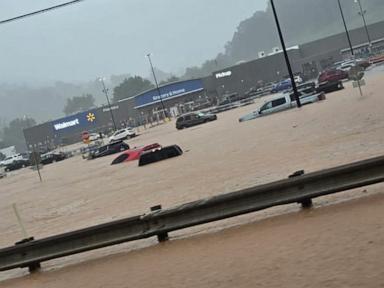
The sound of water in the mountains is usually a comfort. It trickles over river rocks, hums through deep hollows, and whispers peace to anyone listening on a porch at dusk.
Then comes the night the whisper becomes a roar.
In West Virginia, the topography creates a unique vulnerability. Steep hillsides slope dramatically down into narrow valleys—places locals call hollows. When torrential rain hits these inclines, gravity performs a terrifying bit of physics. The water cannot soak into the saturated soil fast enough. It rushes downhill, gathering velocity, mud, uprooted oak trees, and debris. Small streams that a child could leap across in dry weather transform into torrents capable of moving thousands of gallons of water per second.
Within minutes, normal life washes away.
The Water Rising in the Dark
To understand what happened when flash floods recently struck West Virginia, you have to look past the cold headlines detailing emergency declarations. You have to picture a living room where the water starts seeping under the doorframe at three in the morning.
Consider a hypothetical resident—let us call him Marcus—living along a creek bed in Kanawha County. Marcus wakes up not to the alarm on his phone, but to the unnatural sound of churning mud against his front porch steps. He steps out of bed, and his bare feet hit ice-cold water flowing over his hardwood floors. There is no time to gather photo albums or legal documents. There is only enough time to grab a flashlight, wake the children, and head for the highest point in the house.
Outside, the darkness is thick, punctuated only by the flash of lightning and the strobe lights of responding volunteer firefighters.
Flash flooding is fundamentally different from riverine flooding. A river rises predictably over days, giving emergency managers time to issue warnings, stage resources, and evacuate towns block by block. A flash flood strikes with sudden violence. The rain falls in hyper-localized downpours, dropping several inches of water in mere hours. The geography of Appalachia accelerates this process, funneling immense volumes into tight corridors where homes, roads, and local businesses sit closely packed together.
By the time the sun creeps over the ridge, the familiar streets look unrecognizable. Asphalt roads have been torn apart like wet cardboard. Sedan cars hang suspended from low-lying tree branches. Storefronts in small downtown corridors stand gutted, their inventory floating out toward the main river channel.
When Citizen Soldiers Arrive
When natural disasters outpace local emergency services, state governors call upon the National Guard. It is an act that signals both severity and relief.
These soldiers are not strangers dropped in from a distant military base. They are teachers, mechanics, accountants, and neighbors who live in these same counties. When they put on their uniforms and step into high-water vehicles, they are serving their own communities.
Deploying military personnel into a flood zone requires meticulous precision. High-clearance tactical vehicles—machines designed to traverse hostile terrain—become lifelines capable of pushing through six feet of standing water to reach trapped families. Helicopters equipped with hoist systems hover over rooftops, lowering crew members to pull stranded residents out of upper-story windows.
Behind the dramatic rescues lies a massive logistics operation. Guard members work alongside local first responders to establish mobile command centers, set up temporary water distribution points, and clear critical roadways so power companies can restore electricity.
Yet, as essential as the heavy machinery is, the human interaction matters most. Imagine being pulled onto a boat in the pitch black of night, terrified and soaked to the bone, only to look up and see a neighbor in uniform extending a hand. That moment of human connection transforms overwhelming panic into a feeling of safety.
The Hidden Cost After the Mud Settles
The media spotlight often dims once the rescue boats are packed away and the initial floodwaters recede. But for the people living through the aftermath, the true struggle is only beginning.
When the water leaves, it leaves behind mud. Heavy, silt-laden, foul-smelling mud that coats everything it touches. It sits three inches thick on carpets, inside kitchen cabinets, and deep within electrical outlets.
Recovery from a disaster like this is exhausting work. Every piece of furniture, every family keepsake, every drywall panel touched by floodwaters must be stripped away to prevent dangerous mold from taking root. Walk down any street in an inundated West Virginia neighborhood in the days following a flood, and you will see mountains of ruined lives stacked along the curb: soaked mattresses, waterlogged toys, ruined appliances, and water-damaged photographs drying in the sun.
The economic hit to small communities is severe. A local hardware store or family diner that takes four feet of water may not have the financial buffer to rebuild. Insurance coverage for flash floods is notoriously complex; standard homeowners policies rarely cover rising water, leaving residents dependent on specialized federal programs or personal savings that may already be stretched thin.
Beyond the financial destruction lies psychological trauma. Long after the mud is swept away and the walls are rebuilt, the psychological impact lingers. Every time thunder rumbles over the hills or heavy rain begins to hammer against a tin roof, hearts beat faster. Parents look out the window at the rising creek, wondering if they will have to run again.
The Power of a Community That Refuses to Break
If there is a defining characteristic of West Virginia, it is resilience. It is a pride forged through generations of enduring hard times and harsh terrain.
When disaster strikes these hollows, something remarkable happens alongside the destruction. Neighbors do not wait for official aid before helping each other. Church basements instantly convert into distribution centers filled with donated blankets, bottled water, and hot meals. Volunteers show up with chainsaws to clear fallen trees from elderly neighbors' driveways. People who lost their own possessions stand side-by-side with rescue crews, shoveling mud out of a friend's kitchen.
Disasters strip away the superficial divisions of daily life. They reduce existence to basic human truths: safety, shelter, survival, and compassion.
The deployment of the National Guard provides the critical muscle and machinery needed to pull people from the immediate danger. But the spirit that rebuilds a town belongs to the people who choose to stay, clean the mud from their floors, and plant their feet firmly on the ground they call home.
The water will eventually flow down the river and out to sea. The mud will dry and be swept away. Roads will be patched, power lines restrung, and doors reopened. What remains behind, long after the emergency vehicles turn off their lights, is the quiet, enduring resolve of a community that knows how to weather the storm together.


