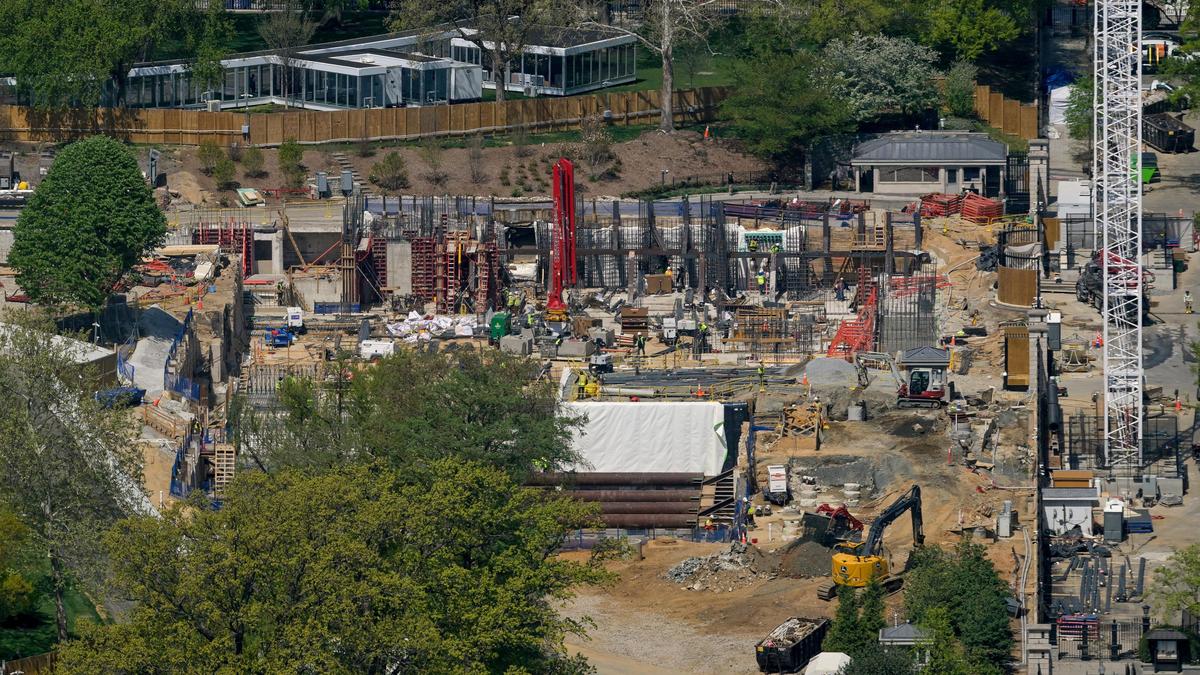
The D.C. Circuit Court of Appeals has cleared the way for construction to proceed on the controversial White House ballroom project, at least for the immediate future. This decision marks a significant, if narrow, legal victory for the Trump administration’s efforts to modernize the executive mansion’s hosting capabilities. By staying a lower court’s injunction, the appellate judges have signaled that the procedural hurdles raised by preservationists may not be enough to halt the hammers and saws permanently.
This project is not just about floor space. It represents a fundamental clash between the functional needs of a modern presidency and the rigid protections afforded to national landmarks. The administration argues that the current facilities are woefully inadequate for hosting world leaders and large-scale state events, forcing the government to rely on expensive, temporary tenting or off-site venues. Opponents, however, view the construction as a permanent scar on the historical integrity of the White House grounds, one that bypasses the oversight typically required for such significant alterations.
The Legal Maneuver Behind the Stay
The appellate court’s decision to allow construction to continue hinges on the concept of "irreparable harm." In most cases involving historical preservation, once a building is altered or a site is excavated, the damage is considered permanent. However, the Trump legal team successfully argued that the government faces its own form of irreparable harm—namely, the financial drain of idle contractors and the security risks associated with a stalled construction site at the heart of the executive branch.
The court did not rule on the merits of the case. They simply decided that the project shouldn't sit in limbo while the legal teams argue over the National Historic Preservation Act. It is a tactical win. By the time the full case is heard, the foundation may already be poured, making any future ruling to "restore" the site a logistical and financial nightmare.
The Preservationist Argument
Critics led by various historical societies contend that the administration skipped the necessary consultation phases. Under federal law, major changes to the White House are supposed to undergo a rigorous review process involving the Commission of Fine Arts and the National Capital Planning Commission. The argument here is that the administration used executive shortcuts to fast-track a project that will forever change the "backyard" of the American people.
They aren't just worried about the aesthetics. They are worried about the precedent. If a ballroom can be fast-tracked today, what happens to the rest of the historical footprint tomorrow?
Infrastructure Needs versus Historical Weight
Walking through the current White House during a state dinner is an exercise in managed chaos. The East Room, while grand, has strict capacity limits that often force guest lists to be trimmed to the point of diplomatic snubbing. When the guest list exceeds 140 people, the logistics turn into a nightmare of cramped tables and obstructed views.
The proposed ballroom aims to solve this by providing a dedicated, high-tech space specifically designed for the 21st-century presidency. From an industry perspective, the move makes sense. Modern diplomacy requires more than just a nice room; it requires secure communications, advanced acoustics, and the ability to move large groups of people and press corps members without grinding the rest of the West Wing to a halt.
The Budgetary Black Hole
Construction at 1600 Pennsylvania Avenue is never cheap. Security clearances for every worker, specialized materials, and the need for constant surveillance drive costs into a different stratosphere compared to a standard commercial build.
- Security Premiums: Every nail and beam is scanned.
- Logistical Constraints: Work must often stop for high-level meetings or security events.
- Specialized Labor: The pool of contractors cleared to work on the White House is small, driving up bid prices.
Estimates for the project have fluctuated, but the reality is that taxpayer money is being burned every day the site sits empty. This financial pressure was a key pillar in the administration's push to get the stay lifted. They framed the delay not as a legal pause, but as a waste of public funds.
The Role of the D.C. Circuit
The D.C. Circuit Court of Appeals is often called the second most important court in the country because it handles the bulk of cases involving the federal government. Their decision to stay the injunction is a hint at their current philosophy regarding executive agency power. They are increasingly hesitant to let lower courts micromanage the operational decisions of the White House unless there is a clear, egregious violation of statutory law.
In this instance, the court seems to be leaning toward the idea that the President has a certain degree of latitude in managing the "office" space of the presidency. While the White House is a museum and a park, it is first and foremost a working office.
A Project Under the Microscope
The optics of a "ballroom" during times of economic or political tension are always difficult to manage. However, from an analytical standpoint, this is an infrastructure project long overdue. Most major world powers have grand, dedicated spaces for state functions that don't involve moving furniture out of a dining room. The French have the Élysée Palace; the British have the state rooms at Buckingham Palace.
The U.S. has been making do with a 19th-century layout for a 21st-century job. The ballroom is the administration's attempt to close that gap. The legal battle currently unfolding is essentially a debate over whether the White House is a living, evolving tool of governance or a static monument frozen in time.
What Happens if the Project Finishes Before the Appeal
This is the "fait accompli" strategy. If the construction reaches a point of no return—where the structure is essentially complete—the courts are notoriously reluctant to order a "teardown." Judges hate ordering the destruction of millions of dollars in completed work. By winning the right to continue construction now, the administration is effectively running out the clock on their opponents.
The preservationists know this. Their only hope now is an expedited hearing that can prove the administration violated the law before the roof goes on. It is a race against the concrete trucks.
The Oversight Gap
One of the more jarring aspects of this development is the lack of transparency regarding the final design and total cost. Because it is a project within the White House grounds, much of the detail is shielded by security concerns. This creates a vacuum of information that is filled by speculation and political grandstanding.
A veteran analyst looks at this and sees a failure of communication. If the administration had been more open about the functional necessity and the specific ways they were honoring historical guidelines, they might have avoided the initial injunction. Instead, the "move fast and break things" approach has led to a protracted legal fight that has probably added 20% to the total project cost in legal fees and delay-related overhead.
Managing the Historical Footprint
The White House has undergone massive changes before. Truman famously gutted the entire interior because the building was literally falling down. That was a necessity of safety. This ballroom is a necessity of function. The challenge for the architects is to make the new structure feel like it belongs, rather than an awkward appendage.
The current ruling allows them to keep trying to meet that challenge. The trucks are moving again, and the workers are back on site. The legal cloud remains, but for the men and women with the blueprints, the green light is all that matters.
The government’s legal team must now prepare for the full merit hearing. They have won the battle for the timeline, but the war over the law is still very much alive. They need to prove that the "Executive Residence" is not just a title, but a mandate to adapt the building to the needs of the person living in it.
If they fail, they may find themselves in the bizarre position of having a half-finished, multi-million dollar shell that no one is allowed to touch. That would be the ultimate failure of both preservation and progress. For now, the sound of construction remains the dominant note on the South Lawn. The court has decided that the risk of stopping is greater than the risk of moving forward.
Finality in these matters is rare. Every stone laid is a fact on the ground that the law will eventually have to reconcile with. The stay isn't a final approval, but in the world of high-stakes construction, it's the only permission that counts.