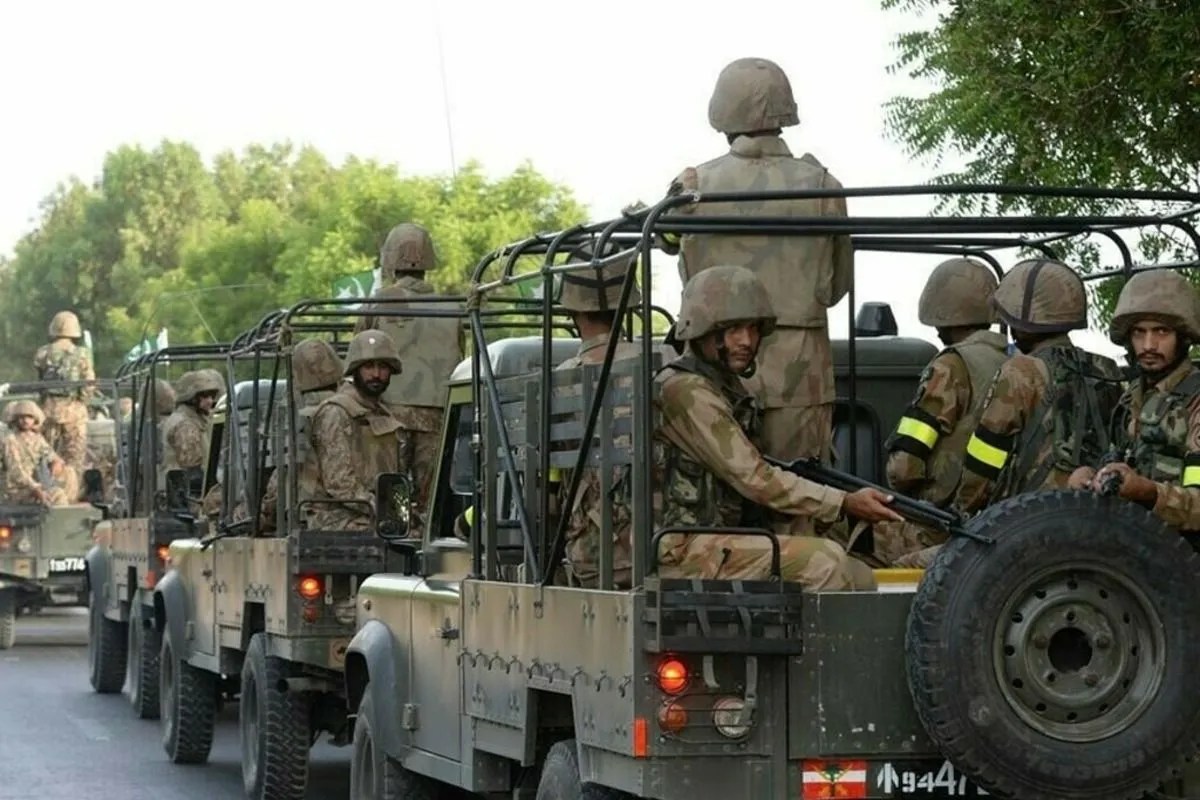
Every time a news ticker flashes with a headline about seven militants neutralized in a remote frontier clash, the applause track starts right on cue. We get the predictable statements, the official press releases, and the collective sigh of relief from analysts who should know better. It is the oldest and laziest script in security reporting. The military killed seven. Victory is declared. Order is restored.
Except it is not.
I have watched this exact theater play out for decades across fractured borderlands from the Hindu Kush down to urban safehouses. If body counts equaled stability, this region would be the most peaceful patch of earth on the map. Yet, the same valleys keep bleeding, the same recruitment pipelines keep churning, and the same structural rot remains completely untouched.
Let us dismantle the core misconception driving the mainstream narrative: the belief that tactical kinetic operations translate directly to strategic success.
The Arithmetic of Attrition Is a Trap
When state machinery focuses its entire energy on counting body bags, it commits a fatal conceptual error. Insurgencies are not traditional standing armies. They operate more like decentralized biological networks than corporate hierarchies. Cut off one tentacle, and two more sprout in environments where state legitimacy is fragile and economic alternatives are practically nonexistent.
Consider the mathematics. If a militant network loses seven fighters in a morning raid, the conventional press treats it as a devastating blow. But look at it from the recruiter's desk in a marginalized district where youth unemployment hovers near catastrophic levels. Those seven casualties instantly transform into martyrs. Their funerals become recruitment seminars. Their families receive local sympathy and informal compensation that money from a distant capital could never buy.
By treating a symptom as the disease, counter-terrorism apparatuses trap themselves in an endless loop of whack-a-mole. You can secure tactical victories every single day of the week and still lose the strategic war over governance, narrative, and trust.
Why the Wrong Questions Dominate the Discourse
If you look at public discourse surrounding border skirmishes, the questions asked by commentators are almost comically naive. People ask: How many terrorists were killed? Which specific commander was targeted? Did the security forces suffer any casualties?
These are the wrong questions entirely.
The questions we should be asking are far more uncomfortable. What conditions made those seven individuals willing to pick up rifles in the first place? How much local intelligence was gathered voluntarily versus coerced? And most importantly, does the civilian population in that district view the soldier as a protector or an occupier?
When security policy ignores these institutional realities, every tactical success merely buys a temporary illusion of calm. The underlying grievances—ranging from resource extraction without local benefit to the complete absence of independent judicial recourse—remain completely unaddressed. You cannot shoot your way out of a crisis of governance.
The Cost of Operational Myopia
There is a dirty secret that defense contractors and career bureaucrats rarely say out loud: permanent low-intensity conflict is an institutional comfort zone. It justifies budgets, validates standing doctrines, and ensures that hard questions about state reform never have to be answered on the floor of parliament.
When every security incident is framed purely through the lens of kinetic valor, structural failure becomes invisible. I have seen billion-dollar counter-insurgency strategies collapse overnight not because the troops lacked courage, but because the state failed to win the basic administrative loyalty of the population it claimed to defend. Bullets do not build schools. Checkpoints do not create supply chains. And a successful raid does not establish a working tax base or a fair court system.
If the state wants to break this cycle, it has to abandon the narcotic of the daily body count press release. It requires shifting resources away from reactive kinetic sweeps and pouring them into proactive institutional integration, economic enfranchisement, and the tedious, unglamorous work of local policing built on community trust rather than suspicion.
Until that shift happens, those headlines about neutralized threats will keep repeating on an endless, tragic loop. Stop counting the dead and start looking at why the living keep taking up arms.