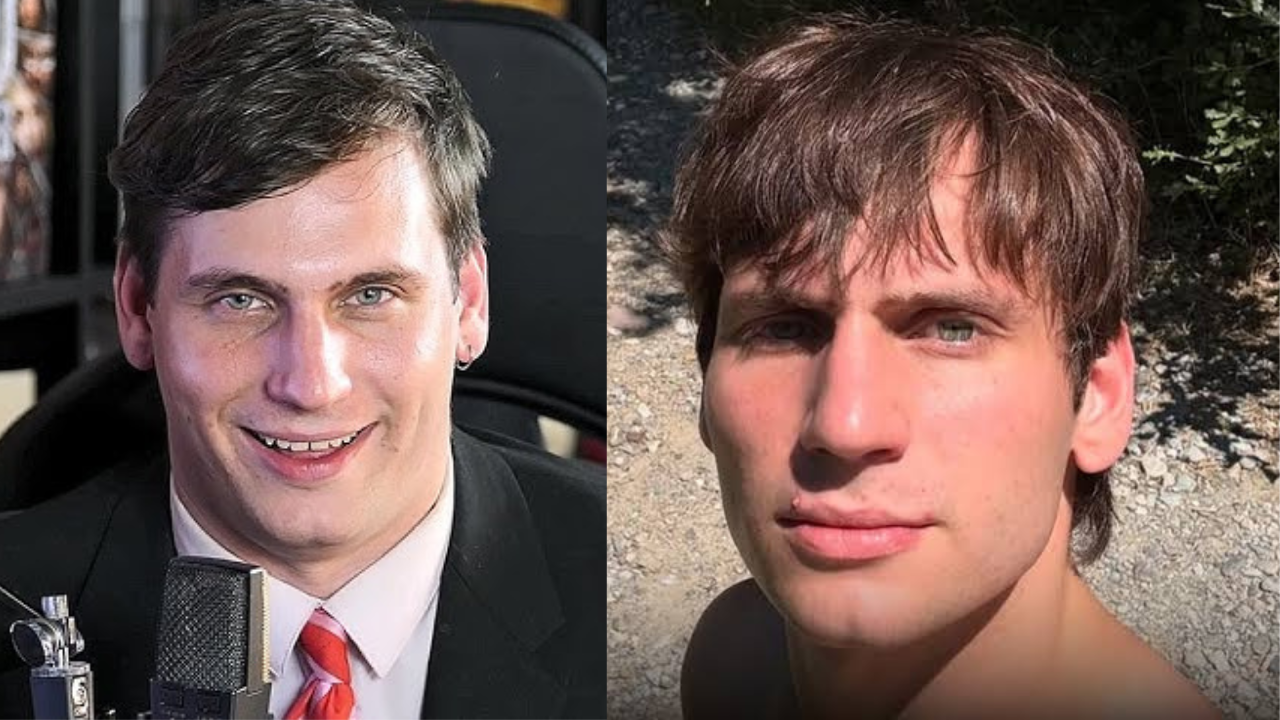
American alternative-pop musician and internet personality Oliver Tree Nickell, known globally as Oliver Tree, died Sunday morning following a mid-air helicopter collision in Rio de Janeiro, Brazil. The 32-year-old artist was among six people killed when two aircraft collided over the western neighborhood of Recreio dos Bandeirantes and plummeted into an electric vehicle dealership parking lot. Local authorities confirmed Tree was listed on the official flight manifest. The tragedy cut short his ambitious global tour promoting his 2026 album Love You Madly Hate You Badly, leaving the music world scrambling to process the sudden loss of one of its most eccentric performance artists.
While initial media reports framed the incident as a standard aviation accident, the disaster exposes a systemic, loosely regulated culture of private air travel heavily relied upon by international celebrities and wealthy elites navigating South American metropolises. Also making waves in this space: Stop Crying Over the Toronto Banana Man and Face the Real Music Business Crisis.
The Recreio dos Bandeirantes Disaster
At approximately 9:00 AM local time, two private helicopters operating in the congested airspace west of downtown Rio de Janeiro made contact mid-flight. Witness accounts paint a terrifying picture of the final moments. Ground observers reported seeing one aircraft burst into flames immediately after the impact. Eyewitness Fernandes de Freitas, a local tire repair worker, noted that the severity of the collision left occupants with zero chance of survival, describing one passenger attempting to leap from the falling wreckage before it slammed into a BYD electric vehicle dealership.
The impact and subsequent explosion ignited a massive fire fueled by the lithium-ion batteries of roughly 20 parked electric vehicles. Firefighters from Rio de Janeiro's Military Fire Department managed to contain the blaze, but rescue officials quickly confirmed there were no survivors. Additional details on this are detailed by Entertainment Weekly.
The passenger manifest obtained by Brazilian aviation authorities revealed a devastating cross-section of regional and international creative talent. Traveling alongside Tree in the primary helicopter were:
- Gaspar Prim Díaz (Gaspi), a 23-year-old Argentine YouTube star and influencer boasting over three million subscribers.
- Lucas Vignale, a prominent Argentine filmmaker and music video director.
- Lucas Frota, a well-known Brazilian electronic music producer and DJ.
- Charles Marsillac, the veteran pilot commanding the aircraft.
The second aircraft involved in the collision carried only its pilot, Alexandre Souza, who also perished in the crash. Because of the intense post-impact fire, local civil police stated that formal forensic identification of the remains will require extensive testing, though the flight logs and passenger lists leave no doubt regarding who was on board.
The Secret Aerial Highway of the Ultra Rich
To understand why Oliver Tree was in a helicopter over western Rio on a Sunday morning requires looking at the geography of wealth in Brazil. Rio de Janeiro features some of the worst traffic congestion in the Southern Hemisphere. For touring musicians, wealthy executives, and high-tier influencers, sitting for three hours in armored SUVs on the Linha Amarela highway is unacceptable.
Helicopters are not a luxury in Rio; they are an everyday transit choice for those who can afford them.
The wealthy frequently use these flights to commute from corporate hubs to beachside enclaves like Recreio and Barra da Tijuca. This immense demand has turned Rio’s airspace into a dense, chaotic web of low-altitude flight paths. Aviation experts have repeatedly raised red flags about the proximity of these routes. Mid-air corridors are heavily trafficked, and visual flight rules often rely entirely on the reflexes of individual pilots rather than rigid air traffic control intervention.
Initial indicators from the Rio de Janeiro Civil Police suggest human error played a defining role in the collision. Flying close to other aircraft to capture social media footage or expedite arrival times is an unspoken, hazardous norm in the regional charter industry. When two private operators share a tight visual corridor without rigorous oversight, the margin for error drops to zero.
The Death of an Anti Pop Icon
The tragedy brings a sudden, jarring end to a career built entirely on subverting the expectations of modern celebrity. Born and raised in Santa Cruz, California, Oliver Tree first gained traction as a teenage electronic music collaborator before engineering a hyper-stylized, satirical persona that conquered the internet. With his signature bowl haircut, oversized retro ski jackets, and ubiquitous kick scooters, he walked a fine line between genuine musical innovator and Dadaist internet troll.
His commercial numbers were undeniable. Tracks like "Life Goes On" and "Miss You" achieved massive viral status, soundtracking millions of videos across platforms like TikTok and gathering billions of streams.
Yet, his entire artistic output was a critique of the very industry that enriched him. He staged public feuds with his record labels, announced his retirement multiple times as marketing stunts, and treated press interviews as long-form performance art. His latest project, Love You Madly Hate You Badly, was meant to be the centerpiece of a grueling 70-date tour spanning seven continents. He had just completed a high-energy performance in São Paulo on June 6 and was documenting his exploration of local Brazilian neighborhoods just 24 hours before his death.
The shockwaves of his passing hit the music community instantly. Industry peers expressed profound grief, balancing memories of his comedic exterior with praise for his sharp creative mind.
"Oliver is one of the most talented people on earth and usually that comes with an ego, but Oliver is pure love and the best version of what an artist can and should be," comedian Whitney Cummings shared publicly. "We lost a giant."
The Broken System of Celebrity Logistics
When international management teams map out stadium tours, safety logistics focus heavily on crowd control, venue security, and ground transport. Private air charters are frequently outsourced to local providers with minimal vetting from the artist's domestic representation.
This creates a dangerous gap in oversight. A charter company operating in South America or Southeast Asia may comply with local baseline regulations while failing to meet the strict safety protocols demanded by major Western insurers or corporate entities. Management agencies routinely book flights based on availability and speed rather than investigating a local operator's safety history or airspace density risks.
The investigation by Brazil's Center for Investigation and Prevention of Aeronautical Accidents will likely take months to produce a final report. Investigators will analyze the wreckage, communication logs, and transponder data to determine exactly how two experienced pilots failed to see each other in clear morning conditions.
The structural issue, however, will remain unaddressed by any official report. The insatiable demand for rapid, friction-free movement among international stars ensures that risky aerial corridors will continue to fill up. Oliver Tree spent his life mocking the polished, hyper-managed realities of modern fame, making it a bitter irony that his life was cut short by the dangerous logistical shortcuts designed to sustain it.