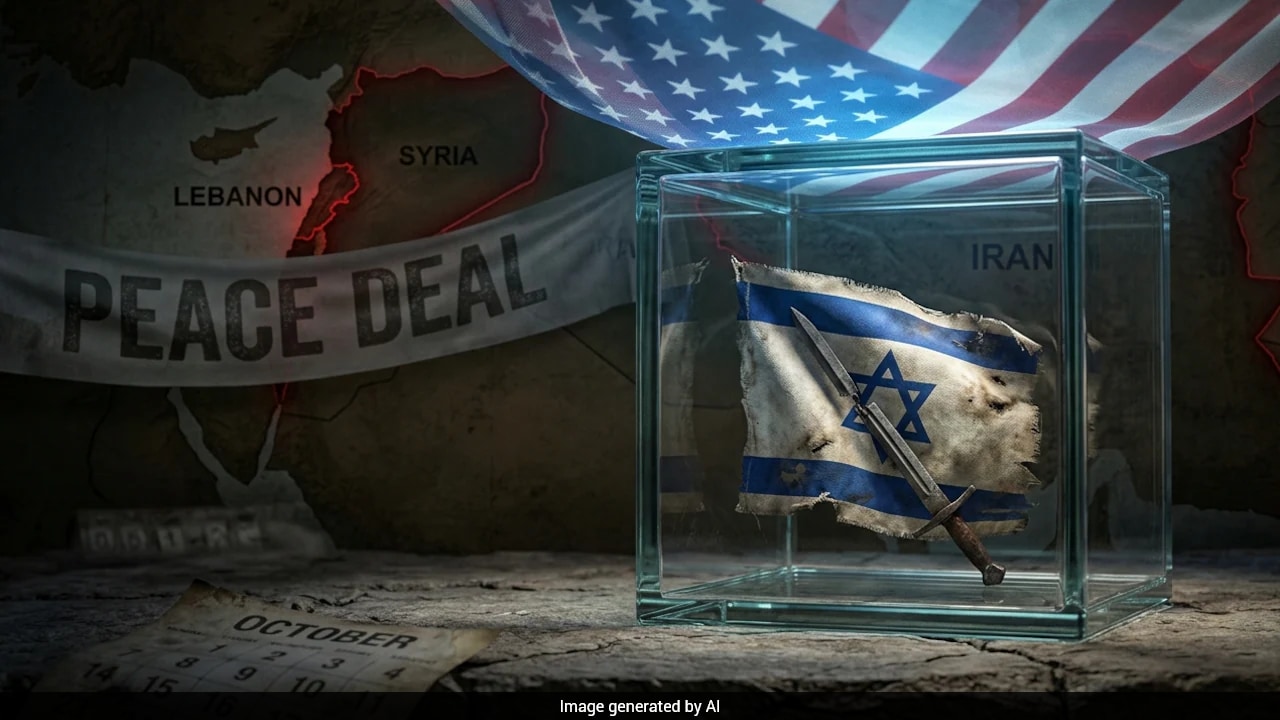
The signing of the Islamabad Memorandum of Understanding in Versailles on June 17, 2026, has fundamentally altered the strategic reality for Israel, forcing Prime Minister Benjamin Netanyahu into a precarious political position just weeks before the Knesset election deadline. By establishing an interim ceasefire that halts the short, devastating war ignited on February 28, the United States has effectively wound down its naval blockade and opened the door to easing restrictions on Iranian oil exports. This sudden diplomatic pivot by the Trump administration leaves the Israeli government marooned, holding an unfinished military campaign in southern Lebanon while facing an electorate that increasingly views the deal as a strategic failure. For a leader who staked his multi-decade career on the twin pillars of absolute American alignment and the permanent neutralisation of the Iranian nuclear threat, the Versailles agreement represents a stark systemic shock.
Jerusalem now faces a reality it spent a generation trying to prevent. The accord guarantees billions of dollars in sanctions relief for Tehran while leaving its core nuclear infrastructure and ballistic missile capabilities largely intact. This outcome is causing severe friction within Israel's ruling coalition, exposing deep rifts between security officials and far-right cabinet ministers. With the Knesset already dissolved and potential snap election dates ranging from September 8 to late October, the domestic political clock is ticking rapidly, converting a foreign policy setback into an existential domestic crisis for the Likud leadership.
The Mechanics of the Versailles Bypass
The diplomatic track that led to the Islamabad MoU succeeded precisely because the United States chose to treat Israeli objections as secondary to domestic economic priorities. Facing global trade bottlenecks and spiking energy costs driven by the closure of the Strait of Hormuz, Washington prioritized an immediate stabilization of global oil markets. The resulting 14-point framework provides Iran with a phased lifting of sanctions and the gradual release of frozen assets. In exchange, Tehran committed to facilitating commercial shipping and refraining from developing nuclear weapons, though the agreement conspicuously omits the intrusive, permanent verification mechanisms Jerusalem has long demanded.
+-----------------------------------------------------------------+
|               THE ISLAMABAD MoU DE-ESCALATION LOOP               |
+-----------------------------------------------------------------+
|                                                                 |
|   [U.S. Priorities]       --> End Blockade & Stabilize Energy  |
|          |                                                      |
|          v                                                      |
|   [Versailles Accord]     --> Phased Sanctions Relief to Iran   |
|          |                                                      |
|          v                                                      |
|   [Tehran's Concession]   --> Reopen Hormuz & Halt Enrichment   |
|          |                                                      |
|          v                                                      |
|   [Israeli Dilemma]       --> Left with an Unfinished Campaign  |
|                               in Southern Lebanon               |
+-----------------------------------------------------------------+
This structural architecture leaves Israel facing an asymmetrical security equation. While the formal hostilities between Washington and Tehran are winding down, the regional proxy network remains highly volatile. The text of the memorandum calls for a permanent end to the war on all fronts, explicitly referencing Lebanon. Yet, Israeli defense forces remain heavily engaged in southern Lebanon, an operation launched after Hezbollah targeted northern towns during the opening week of the conflict. The divergence in objectives is stark. Washington wants the region quiet to ensure trade liquidity, whereas the Israeli defense establishment views a premature withdrawal from Lebanon without the complete dismantling of Hezbollah's border infrastructure as a direct threat to long-term deterrence.
Coalition Friction and the Security Rift
The domestic fallout inside the Israeli security cabinet was instantaneous, cracking open a long-simmering divide between political pragmatists and ideological hardliners. Finance Minister Bezalel Smotrich and National Security Minister Itamar Ben-Gvir have publicly lambasted the deal, demanding that Israel ignore the American-led diplomatic architecture and expand unilateral military operations. This ideological pressure places Netanyahu in a tightening vice. To appease his far-right partners and preserve his government until the polling stations open, he must maintain a hawkish rhetoric. Conversely, to maintain what remains of his critical relationship with a transactionally minded U.S. president, he cannot afford to actively sabotage the Versailles framework.
This political tightrope is further complicated by a rare alignment between the political opposition and senior military figures. Defense Minister Israel Katz and IDF Chief of Staff Lt. Gen. Eyal Zamir have reportedly characterized the agreement as a profound strategic setback. The concern among professionals is not merely tactical; it is institutional. The defense establishment operates on the assumption that the relief funds flowing into Tehran will rapidly find their way back to the borders of Israel through re-engineered proxy logistics.
Opposition figures have moved quickly to capitalize on this vulnerability. Former Prime Minister Ehud Barak and center-left leader Yair Golan have framed the current situation as a direct consequence of strategic hubris, arguing that the prime minister misjudged the true geopolitical appetite of his American counterpart for a protracted land war in Asia. By tying Israel's long-term defense strategy entirely to the personal guarantees of a single foreign leader, the current administration left itself without a viable fallback position when those priorities inevitably shifted.
The October Referendum
The impending legislative election is rapidly transforming into a referendum on the core concepts of Israeli security doctrine. For years, the electoral argument presented by Likud was simple: only its leadership possessed the international stature to dictate terms to Washington and keep regional adversaries permanently constrained. The Islamabad MoU shatters that narrative. It demonstrates that when major global powers decide to negotiate, secondary states are routinely presented with a completed arrangement rather than a seat at the table.
+-----------------------------------------------------------------+
|                   THE 2026 ELECTORAL PRESSURE                   |
+-----------------------------------------------------------------+
|                                                                 |
|   [September 8 - October 20]                                    |
|   The window for the snap Knesset vote.                         |
|                                                                 |
|   [The Security Question]                                       |
|   Can Netanyahu project strength while the U.S. winds down      |
|   the anti-Iran economic blockade?                              |
|                                                                 |
|   [The Coalition Rift]                                          |
|   Ultra-Orthodox conscription crises hit the government just    |
|   as the foreign policy framework collapses.                    |
+-----------------------------------------------------------------+
The timing of this international reversal could not be more challenging for the ruling coalition. Simultaneously, the government is reeling from severe domestic instability stemming from the ultra-Orthodox conscription crisis. The Supreme Court's insistence on enforcing army recruitment orders for yeshiva students has triggered massive street protests and alienated vital Haredi political partners, such as Shas chairman Aryeh Deri. Deri has actively pushed for an ultra-early election date in mid-September, hoping to clear the political air before the High Holy Days. Netanyahu, conversely, favors delaying the vote until the absolute last legal deadline in late October, gambling that a prolonged period of diplomatic maneuvering might yield a tangible security success to present to an angry public.
The Limits of Unilateralism
With the naval blockade lifted and international trade returning to the Gulf shipping lanes, Israel's capacity for unilateral action has narrow structural boundaries. A senior member of the security cabinet noted that while the baseline assumption in Jerusalem is that the current U.S. administration has lost interest in a kinetic confrontation with Iran, acting entirely alone presents massive logistical and intelligence hurdles. The concept of striking hardened nuclear sites without American electronic warfare support, mid-air refueling infrastructure, and post-strike diplomatic cover remains a high-risk proposition that many within the IDF general staff are hesitant to endorse.
The immediate battlefield remains southern Lebanon. The Versailles agreement seeks to freeze positions, but a freeze leaves thousands of Israeli citizens unable to return to their homes in Galilee due to the lingering presence of anti-tank guided missile teams near the Blue Line. If Jerusalem chooses to defy the spirit of the Islamabad MoU by launching a deeper offensive into Lebanon to clear these positions, it risks a public and damaging fracture with its primary source of resupply in Washington. If it complies, it enters an election cycle having accepted a status quo that offers no permanent solution to the northern border threat.
The strategic room for maneuver has rarely been this restricted. The coming weeks will reveal whether decades of political survival instincts can fashion a viable domestic narrative out of an international isolation that is rapidly solidifying on the ground.


