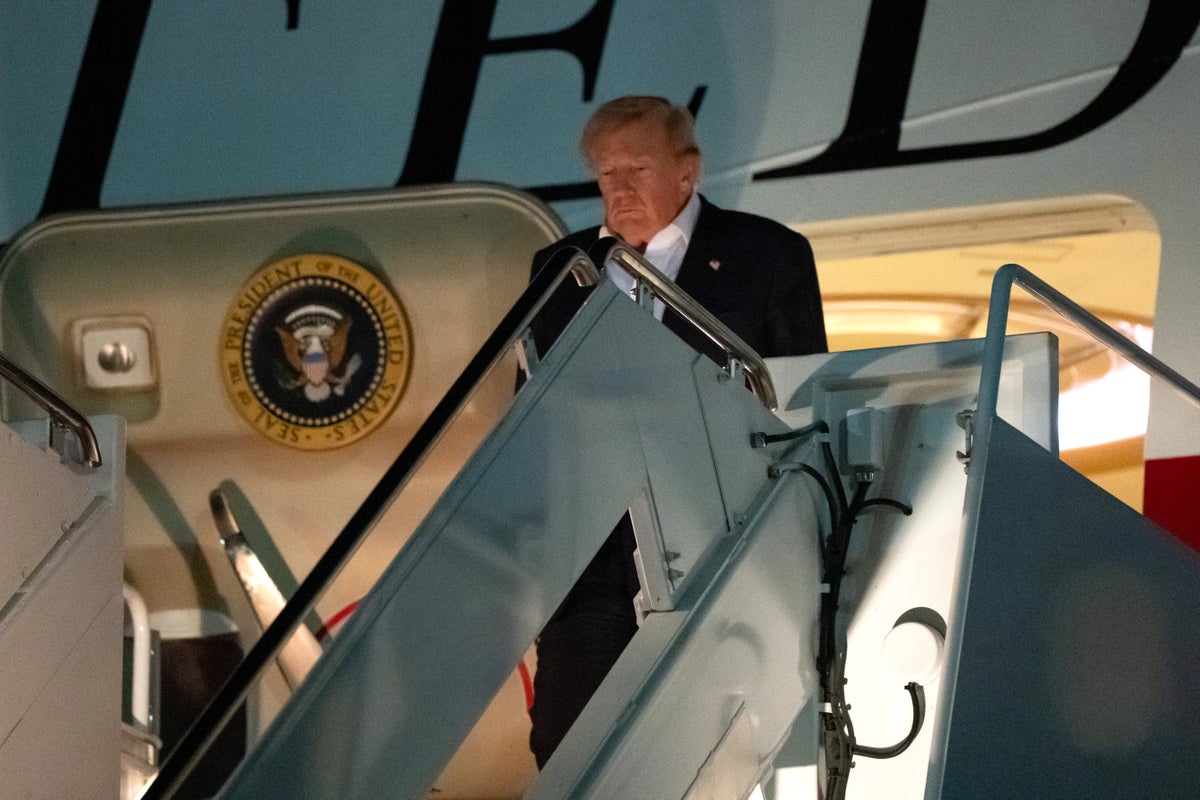
The Department of Justice’s issuance of grand jury subpoenas to five New York Times journalists—Julian E. Barnes, Eric Lipton, Tyler Pager, Eric Schmitt, and Adam Goldman—representing a highly coordinated escalation in the federal government’s campaign against unauthorized disclosures. The legal action stems from an investigative report detailing security deficiencies in a newly acquired, Qatari-gifted Air Force One aircraft, which reportedly lacked essential defensive features, such as antimissile capabilities. By demanding that journalists testify under oath before a grand jury in Manhattan, the executive branch is attempting to force a choice between journalistic ethics and incarceration.
To understand this conflict, one must look past the standard political rhetoric and analyze the underlying mechanics of leak investigations, the legal precedents governing reporter privilege, and the strategic calculus of information control.
The Economics of Leak Suppression: A Strategic Framework
A government trying to stop unauthorized disclosures operates under a basic cost-benefit calculation. Leaks occur when the perceived public benefit (or personal incentive) of a disclosure outweighs the risk of retaliation. When the state cannot easily find the original source using internal investigative tools, it shifts its focus toward increasing the operational costs for the intermediary: the publisher.
This strategy relies on three main tactics:
[Targeted Suppression] ---> [Source Decoupling] ---> [Systemic Friction]
(Direct Legal Costs)        (Bypassing Reporters)     (Chilling Potential Sources)
1. Targeted Suppression
By issuing subpoenas directly to reporters' homes, prosecutors shift the legal and financial burden onto the news organization. Even for an institution with substantial resources like the New York Times, defending five parallel subpoenas before a federal grand jury requires significant legal capital.
2. Source Decoupling
Historically, prosecutors built leak cases by analyzing a suspect's digital footprint (such as toll records, metadata, and badge logs). Directly targeting reporters represents a shortcut. If a court forces a reporter to name a source under threat of contempt, the government bypasses the need for complex, circumstantial digital forensics.
3. Systemic Friction
The broader goal of this strategy is to create a chilling effect. By showing that talking to a reporter leads to FBI visits and grand jury subpoenas, the state increases the personal risk for future whistleblowers. This raises the cost of leaking, effectively shutting down pipelines of unauthorized information without needing to prosecute every single occurrence.
The Legal Landscape: The Shield That Isn't There
The primary vulnerability of American investigative journalism is the lack of a federal shield law. While 49 states and the District of Columbia offer some form of statutory or common-law protection allowing reporters to protect confidential sources, these protections do not apply to federal grand jury subpoenas.
The Branzburg Precedent
The governing legal framework remains the Supreme Court’s 1972 decision in Branzburg v. Hayes. In a 5-4 ruling, the Court held that the First Amendment does not relieve a journalist of the obligation to respond to a grand jury subpoena. Justice Byron White’s majority opinion asserted that the public interest in law enforcement and in ensuring effective grand jury proceedings outweighs the burden on newsgathering.
The lone concurring opinion by Justice Lewis Powell, however, suggested a balancing test:
$$T = f(I_{public}, I_{law})$$
Where:
- $T$ represents the constitutional protection afforded to the reporter.
- $I_{public}$ represents the public interest in the free flow of information.
- $I_{law}$ represents the government's specific law enforcement necessity.
Under Powell's framework, if a subpoena is issued not for legitimate law enforcement purposes but to harass or disrupt a reporter's work, the court should quash it. This ambiguity has led to decades of inconsistent rulings across different federal circuits, leaving journalists without a clear, predictable standard of protection.
Policy Volatility at the Justice Department
Because federal law lacks a statutory shield, press protections depend heavily on internal Justice Department guidelines. These rules have shifted back and forth depending on the administration in power:
- The Garland Memo (2021): Attorney General Merrick Garland issued a historic memo that largely banned the use of compulsory legal processes (subpoenas, warrants, court orders) against journalists seeking information in the course of newsgathering, with very narrow exceptions.
- The Bondi Rescission (2025): Attorney General Pam Bondi reversed this policy, restoring prosecutors' authority to use subpoenas and search warrants against journalists, provided they are "narrowly drawn" and give presumptive advance notice.
This policy shift drastically changed the risk profile for investigative journalism. It transformed what was once a highly restricted, last-resort prosecutorial tool into an active part of the government's leak-investigation strategy.
Tracking the Escalation: A Timeline of Investigative Intimidation
The subpoenas issued to the New York Times reporters are not isolated incidents. They represent the culmination of a series of escalations over the course of 2026:
| Date | Target Institution | Investigative Action | Subject Matter |
|---|---|---|---|
| January 2026 | The Washington Post | FBI search of reporter Hannah Natanson's home; seizure of personal and professional electronic devices. | Internal restructuring of federal agencies and administrative governance. |
| June 2026 | The Washington Post & The Wall Street Journal | Subpoenas issued to compel grand jury testimony; later withdrawn after significant legal resistance. | Unauthorized disclosures within federal departments. |
| July 2026 | The New York Times | Five reporters subpoenaed at their homes by the U.S. Attorney for the Southern District of New York. | Security vulnerabilities of the newly retrofitted, Qatari-gifted Air Force One aircraft. |
This progression shows a clear pattern. The government first tested its boundaries by seizing devices from a single reporter. It then issued—and later withdrew—subpoenas to journalists at other major newspapers. By July, it was willing to issue five concurrent subpoenas to a single reporting team. This suggests a deliberate strategy to normalize the practice of hauling journalists before grand juries.
Operational Impact: Managing Source Vulnerabilities
For modern newsrooms, this legal pressure means they must rethink how they interact with sources. When the DOJ can easily bypass constitutional protections by threatening reporters with jail time, traditional promises of confidentiality are no longer enough. Newsrooms must move from legal promises to operational security.
To protect their sources, news organizations should focus on reducing the amount of data they collect and keep:
[Input: Source Interaction]
       │
       ▼
[Operational Security: Metadata Minimization]
  - Use of ephemeral, end-to-end encrypted channels (Signal, SecureDrop).
  - Regular, automated deletion of message histories.
  - Avoidance of corporate networks for sensitive communications.
       │
       ▼
[Legal Defense: Strategic Litigation]
  - Systematic challenges to quash broad or retaliatory subpoenas.
Metadata Minimization
In modern leak investigations, prosecutors rarely need to tap a phone. Instead, they rely on metadata—logs of who called whom, when, and for how long. Newsrooms must adopt strict communication protocols, ensuring that initial contacts occur through out-of-band, ephemeral, end-to-end encrypted channels like SecureDrop or Signal, with automated message deletion policies enabled by default.
Institutional Isolation
Reporters covering sensitive national security beats must separate their investigative activities from their employers' corporate networks. Using dedicated, air-gapped hardware and non-attributable internet connections prevents a compromise of corporate IT systems from exposing their entire source network.
Strategic Litigation
When a subpoena is issued, publishers must be prepared to challenge it at every level of the court system. By fighting these demands, news organizations force the government to use up time and resources, while creating opportunities to establish better legal precedents in higher courts.
The immediate step for the New York Times legal team is to file a motion to quash the subpoenas in the Southern District of New York. Their argument should focus on the lack of narrow tailoring in the government's demands, the public interest value of the reporting, and the executive branch's failure to exhaust other investigative avenues before targeting the press. If they lose at the district court level, they must quickly appeal to the Second Circuit, aiming to limit the scope of the grand jury's questions and protect their reporters from being forced to reveal confidential sources under threat of contempt.