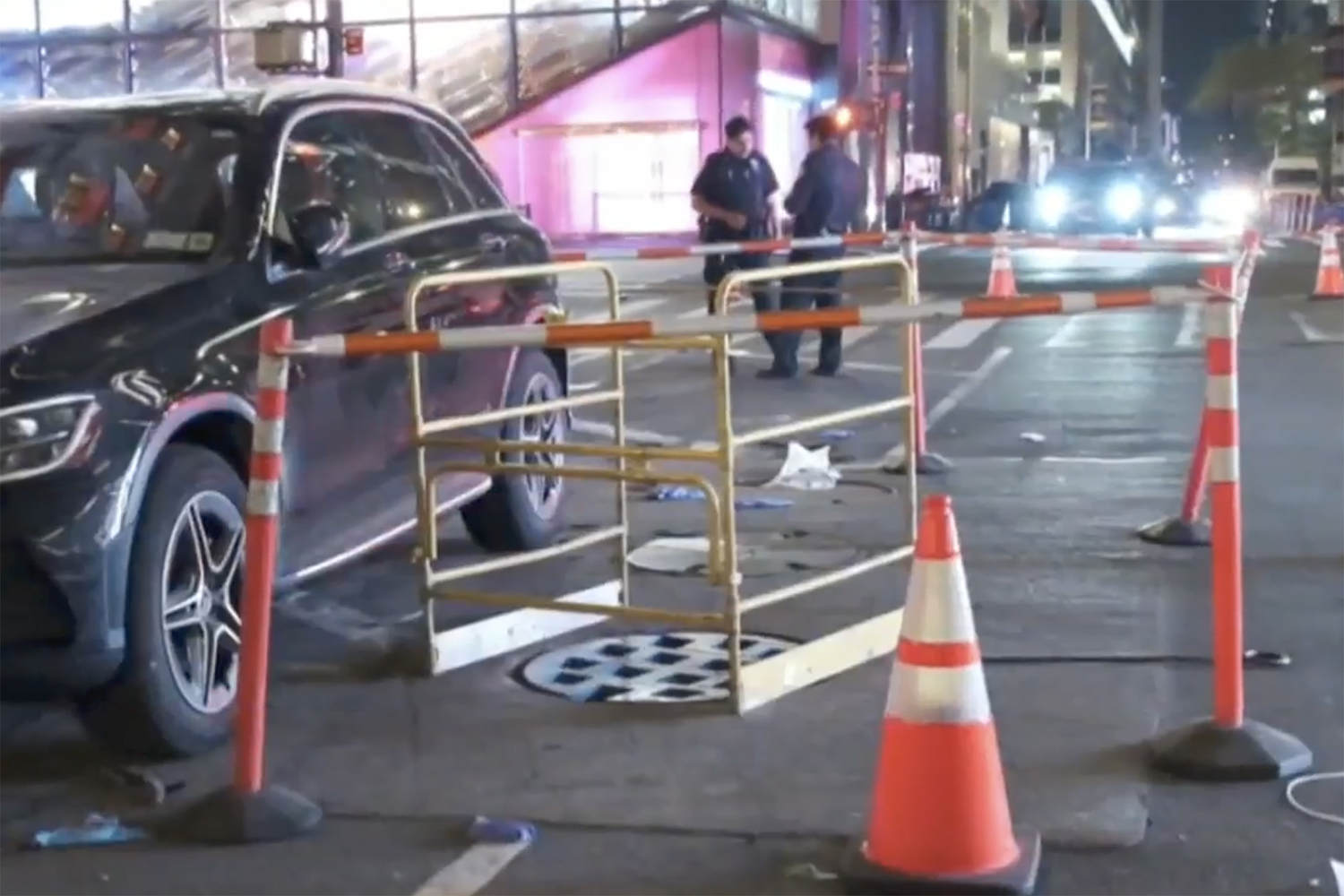
The wrongful death lawsuit filed in the New York Supreme Court against Consolidated Edison Company of New York, Inc. exposes a critical vulnerability in municipal infrastructure management: the structural failure of subsurface utility access security. The litigation stems from the May 18, 2026, fatality of 56-year-old Donike Gocaj, who fell into an open, ten-foot-deep subterranean vault at the intersection of West 52nd Street and Fifth Avenue in Manhattan. While media narratives frequently categorize such occurrences as freak accidents, an operational and legal analysis reveals that this event is a predictable outcome of systemic risk-mitigation failures within dense urban centers.
To evaluate the liability, structural exposure, and financial risk facing public utilities under these conditions, the situation must be dissected through precise legal and engineering frameworks rather than emotional reporting.
The 12-Minute Teleological Disconnection
The core defense mechanism initiated by Consolidated Edison relies on a timeline established by local surveillance footage. The utility states that a multi-axle commercial truck traveled over the manhole cover, mechanically dislodging it from its collar exactly 12 minutes prior to Gocaj exiting her vehicle. From a public relations perspective, this represents an intervening external force, framing the unsealed vault as a real-time anomaly outside immediate operational control.
From a structural engineering and legal framework, however, this timeline serves as prime evidence of a design flaw or maintenance failure. The plaintiff’s claim relies on the legal doctrine of res ipsa loquitur—the principle that the occurrence of an accident implies negligence. A cast-iron manhole cover, typically weighing between 250 and 300 pounds, is engineered to withstand immense dynamic loads from heavy urban traffic.
The immediate structural cause-and-effect chain can be mapped across three distinct failure points:
- Collar Degeneration: The seating ring or frame hosting the cover accumulates asphalt erosion and debris, preventing the cover from sitting flush and allowing vertical displacement under asymmetric tire pressure.
- Mechanical Fastener Omission: The failure to utilize lockable, bolt-down, or latching mechanisms on high-traffic thoroughfares transforms a permanent barrier into a loose lid.
- The 12-Minute Warning Gap: The absence of telemetry or passive mechanical failsafes means a critical failure in the pedestrian right-of-way remains completely invisible to the utility until a catastrophic event occurs.
If a standard multi-axle vehicle can displace a 300-pound component within seconds, the system possesses a latent vulnerability. The 12-minute window does not absolve the utility; it demonstrates that the infrastructure lacked the physical resilience required for predictable urban use.
The Infrastructure Risk Matrix: Scale vs. Systemic Inaction
Consolidated Edison operates and maintains approximately 246,000 manholes and service boxes across the New York metropolitan area. Managing an asset inventory of this scale presents a clear statistical distribution of risk. However, the filed complaint transforms this statistical reality into a liability driver by utilizing historical notice data.
The lawsuit explicitly cites more than 3,200 municipal complaints regarding manhole hazards submitted to New York City within the first two months of 2026 alone. This volume establishes what the law defines as constructive notice. The utility cannot argue that a dislodged cover is an unforeseeable event when the historical baseline indicates thousands of localized structural failures annually across the asset network.
[Systemic Hazard Notice] -> [Failure to Inspect/Secure] -> [Structural Dislodgement] -> [Pedestrian Fatality]
The underlying conflict sits between operational expenditure allocation and life-safety systems. High-density commercial zones require secondary defense mechanisms. The legal complaint emphasizes that despite a known history of thermal and mechanical hazards within these subsurface vaults—where scalding steam and high-voltage distribution lines are common—the utility did not deploy standard industry mitigations:
- Secondary Safety Grates: Netting or steel secondary grates installed beneath the primary cast-iron cover prevent a human body from dropping into the vault even if the heavy cover is dislodged.
- Locking Cam Systems: Mechanical arms that latch onto the underlying collar structure, requiring a specialized tool to rotate and release, eliminating displacement by vehicular tires.
- Telemetry Sensors: Internet-of-Things (IoT) tilt switches or proximity sensors that instantly broadcast an automated alert to a central dispatch center the moment a cover moves beyond its designated parameters.
The strategic decision to bypass these upgrades across the broader asset network establishes the groundwork for punitive damages, as it indicates a calculated acceptance of systemic risk over targeted capital expenditure.
Subsurface Vault Microclimates and Injury Severity
The severity of the outcome in this specific litigation is directly tied to the internal environmental mechanics of the subsurface utility vault. The New York City steam distribution network operates at high pressures and temperatures exceeding $180^\circ\text{C}$ ($356^\circ\text{F}$). When a vault encloses compromised steam infrastructure or high-energy electrical cables, it creates a deadly localized microclimate.
The medical examiner's determination of death via scald burns, thermal inhalation injuries, and blunt force trauma outlines the catastrophic nature of these interior spaces. Upon breach of the surface layer, an individual is immediately subjected to high-temperature vapor. This causes rapid thermal degradation of the respiratory tract and severe tissue damage.
The presence of this severe environmental hazard within the vault elevates the utility’s standard of care. Because the interior environment is known to be immediately dangerous to life and health, the threshold for securing access to that space must be correspondingly higher than that of a standard storm drain or shallow utility conduit.
The Strategic Defense Blueprint and Damages Exposure
In defending against this action, Consolidated Edison's legal team must address a multi-layered liability model. The utility will likely attempt to shift a portion of the comparative negligence to third parties or exploit municipal administrative structures.
The first strategic maneuver involves the commercial vehicle that dislodged the cover. By identifying the fleet operator through local traffic cameras, the utility will seek to implead the trucking company as a third-party defendant, arguing that the vehicle’s operating weight, speed, or tracking path exceeded lawful parameters, directly causing the structural failure.
The second defense strategy involves the open work permit active at the location. Although city officials confirmed that active maintenance was not underway at 11:19 p.m. on the night of the incident, the presence of an active permit implies that independent contractors may have accessed the vault recently. If a third-party contracting firm failed to properly seat or bolt the cover after a shift, the primary liability may shift from the utility to the contractor’s general liability insurance policy.
However, these strategies face clear constraints:
- Non-Delegable Duty: Under New York premises liability law, a utility provider maintains a non-delegable duty to keep its public-facing infrastructure in a reasonably safe condition. Contracting out the labor does not dissolve the primary asset owner's liability.
- Foreseeable Use: Thoroughfares must accommodate heavy commercial transport. Arguing that a standard city-permitted multi-axle truck caused the failure reinforces the plaintiff's point that the cover design was insufficient for its operating environment.
The economic damages exposure in this case is exceptionally high. Beyond the standard compensatory survival actions for conscious pain and suffering—which are maximized here due to the duration and nature of the injuries sustained prior to death—the financial risk includes the severe physical and psychological injuries suffered by Gocaj’s domestic partner during his failed rescue attempt. This places the total exposure well into eight-figure territory, making a prolonged trial highly dangerous to the utility’s balance sheet.
Systemic Infrastructure Hardening Protocols
The resolution of this litigation will require Consolidated Edison to pivot from reactive damage control to a structural, network-wide asset hardening initiative. Continuing to rely on heavy, unlatched cast-iron covers in high-density urban zones is no longer a viable risk strategy.
The utility must implement a programmatic retrofitting schedule prioritizing high-density commercial zones, bus routes, and areas with active steam infrastructure. This involves replacing standard covers with mechanical bolt-down or impact-resistant latching variations. Simultaneously, installing secondary poly-composite or steel safety nets beneath every cover within Manhattan's core grid provides a redundant mechanical barrier against accidental falls.
Finally, managing a 246,000-node network requires moving away from manual, complaint-driven monitoring. Integrating low-power, wide-area network (LPWAN) tilt sensors into the underside of high-risk manhole covers creates a real-time tracking grid. This allows operational dispatchers to identify a displaced cover within seconds, deploying emergency crews to secure the site before a pedestrian encounters the open hazard. Without these integrated engineering controls, public utilities will remain exposed to massive liability from systemic infrastructure failures.