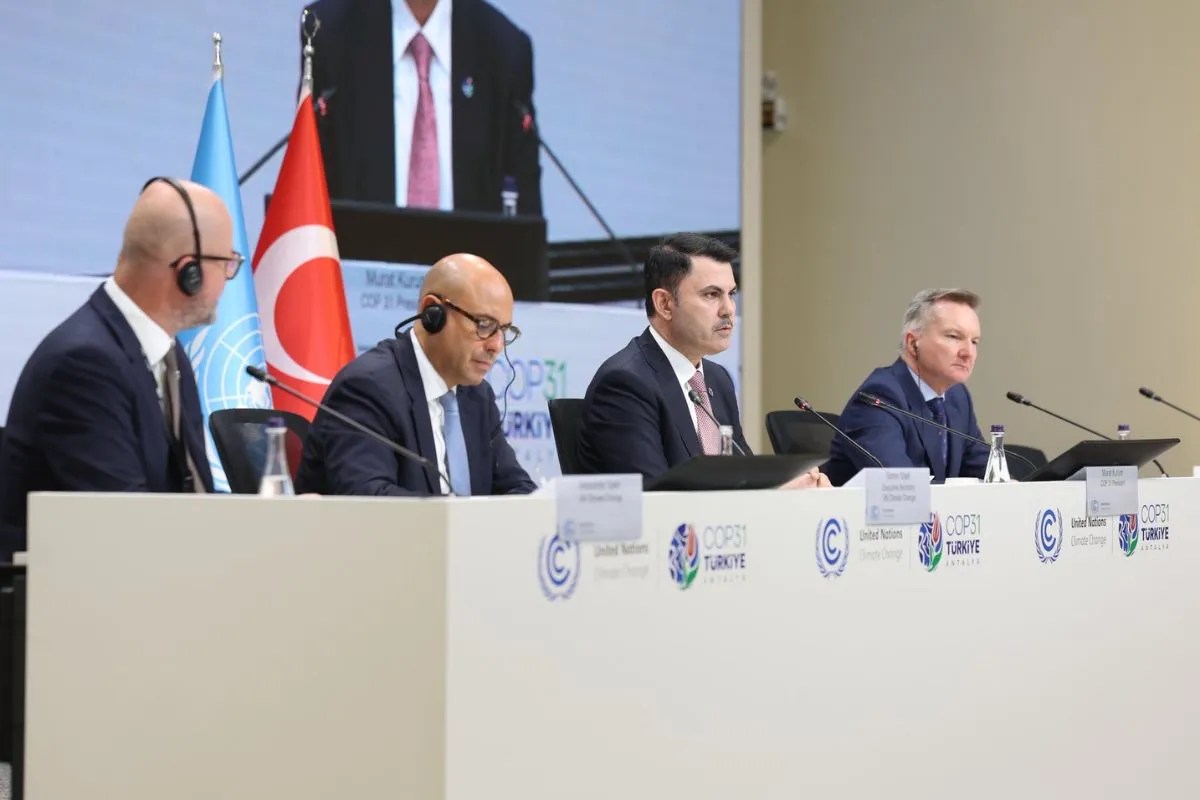
Multilateral climate negotiations fail not because delegates misread atmospheric physics, but because sovereign balance sheets diverge when abatement shifts from pledges to enforceable cash flows. The breakdown at COP31—marked by failure to reach a climate agreement amid sharp European Union accusations directed at oil- and gas-exporting states—exposes a structural collision between asset-stranding timelines and fiscal survival. To understand why talks stalled and what comes next, negotiators and market strategists must map the incentives of major hydrocarbon producers, evaluate the regulatory pressure exerted by Brussels, and trace the second-order trade distortions that turn summit rhetoric into geopolitical friction.
The Architecture of a COP31 Deadlock
A multilateral climate summit operates as a high-stakes bargaining table where voluntary commitments must eventually collide with domestic political economy. In an ideal economic model, global greenhouse gas reduction follows a least-cost marginal abatement curve: emissions are cut wherever the cost per ton of carbon dioxide equivalent is lowest, regardless of geography. In practice, sovereignty interrupts that optimization. Countries price risk according to their own exposure to physical climate damage, transition costs, and export revenues.
At COP31, friction intensified around binding language on fossil fuel phase-outs, transition timelines, and accountability mechanisms. Surface-level coverage often frames these clashes as a moral contest between climate virtue and petro-obstinacy. That framing obscures the mechanics of sovereign risk. For an economy heavily reliant on crude oil, liquefied natural gas, or refined products, an aggressive timetable to wind down hydrocarbon extraction is not merely an environmental adjustment; it is a direct threat to state solvency, currency stability, and domestic social spending.
Two structural forces drive this impasse:
- Asymmetric balance-sheet exposure: Fossil fuel exporters hold massive geological reserves whose present value depends on long-dated demand, whereas net energy importers like the EU face high import bills and supply-chain vulnerabilities that cleaner domestic or diversified energy can mitigate.
- Enforcement versus flexibility: The EU favors codified targets, ratcheting mechanisms, and measurable compliance rules, while producer coalitions resist binding mandates that lock in domestic economic contraction without guaranteed financial or technological compensation.
When a negotiation demands that one bloc accept near-certain revenue compression in exchange for diffuse, long-term global stability, consensus breaks down unless side payments or credible market substitutes bridge the gap. Without a clearing mechanism for those costs, summit communiques default to ambiguity or collapse into public blame.
Why Brussels Accuses Oil Producers of Obstruction
European negotiators have repeatedly pointed to major hydrocarbon exporters when draft texts weaken language on fossil fuels or delay peak-consumption milestones. From Brussels' perspective, the logic is straightforward: atmospheric carbon budgets do not negotiate, and incrementalism leaves the global economy on a trajectory toward severe physical damages, supply shocks, and escalating adaptation expenses.
The EU's critique rests on three operational arguments. First, European policymakers contend that some producer states use procedural rules—such as consensus decision-making and slow-rolling technical annexes—to dilute actionable text while claiming participation in the process. Second, Brussels argues that continued expansion of upstream oil and gas capacity conflicts directly with scientific pathways aligned with limiting warming well below two degrees Celsius, let alone toward 1.5 degrees. Third, European officials view resistance to clear phase-out schedules as an attempt to protect incumbent rents at the expense of vulnerable climate states and global stability.
Yet the EU's own position is not free of internal tension. European industry operates under high energy costs, intense industrial competition from Asia and North America, and uneven member-state appetites for strict green mandates. Furthermore, EU energy security has required pragmatic sourcing arrangements—including liquefied natural gas—whenever pipeline supplies were disrupted or weather conditions strained renewables. Critics among exporting nations point to this gap between declaratory ambition and commercial purchasing as evidence of hypocrisy or selective burden-sharing.
Whether European accusations reflect accurate diagnosis of obstruction or strategic positioning in a tough diplomatic room depends on how negotiators weigh intent against structural constraint. What is observable is the diplomatic consequence: public finger-pointing hardens negotiating positions. Once accusations become headline diplomacy, concessions look like surrender rather than compromise.
The Fiscal Calculus of Hydrocarbon Exporters
To analyze oil-producing nations accurately, treat them not as monolithic villains or victims, but as sovereign entities managing concentrated rentier or semi-rentier portfolios. In many major exporting states, hydrocarbon revenues fund a large share of public budgets, infrastructure, subsidies, and sovereign wealth allocations. When export prices fall or demand expectations soften, the fiscal shock hits quickly unless offset by deep non-oil tax bases and diversified tradable sectors.
This creates a classic stranded-asset dilemma. Proven reserves sitting underground only generate wealth if extracted and sold before substitutes erode their value or regulations block their use. Agreeing to strict, time-bound phase-out language at a UN climate summit can accelerate market pessimism, raise the cost of capital for energy projects, and shorten the commercial runway for existing assets. From the viewpoint of a finance ministry in an exporting capital, signing onto an aggressive global phase-out without ironclad compensation is tantamount to volunteering for a balance-sheet write-down.
Consider how a typical exporting state evaluates a draft COP31 text:
- Near-term revenue certainty: Does the text preserve current export volumes and investment approvals over the next election or budget cycle?
- Technology and carbon capture carve-outs: Does the agreement treat carbon capture, utilization, and storage, blue hydrogen, or efficiency improvements as legitimate pathways rather than banning the underlying fuel?
- Financial and market reciprocity: Are consuming nations offering predictable capital flows, technology transfer, or fair market access, or are they simultaneously building unilateral trade barriers?
Educated hypothesis suggests that many exporting governments understand long-term energy diversification is inevitable; several have already launched sovereign wealth initiatives, renewable power tenders, or petrochemical pivots. Their resistance at COP31 is frequently about pace, sequencing, and governance rather than outright denial of energy transition. They want transition rules written on timelines that allow domestic fiscal adjustment rather than abrupt external shocks.
Carbon Borders, Trade Friction, and Unilateral Leverage
Climate diplomacy no longer happens in isolation from trade policy. Over recent years, the EU has paired domestic emissions trading with external instruments such as the Carbon Border Adjustment Mechanism (CBAM), designed to equalize carbon costs between domestic production and imports in carbon-intensive sectors like steel, aluminum, cement, fertilizers, and electricity.
In theory, carbon border pricing solves a leakage problem: if a strict jurisdiction raises the cost of carbon at home, energy-intensive production might simply move to places with weaker rules, leaving global emissions unchanged while hurting local industry. In practice, unilateral border measures reshape diplomatic leverage at summits like COP31.
When the EU presses exporting nations for stronger climate commitments while simultaneously applying or expanding carbon-linked trade charges, exporting states perceive a double squeeze. First, they are asked to curb their core economic engine in multilateral negotiations. Second, they face commercial friction or compliance burdens when selling goods into one of the world's largest consumer markets.
This dynamic alters the bargaining game in three measurable ways:
- Retaliatory and defensive framing: Exporting states can argue in UN forums that unilateral trade measures violate equity principles or burden developing economies, using multilateral pushback to counter bilateral commercial pressure.
- Supply-chain rerouting: Rather than overhauling domestic production immediately, exporters may redirect high-carbon goods toward markets without carbon border tariffs, while shipping lower-carbon variants to the EU—creating accounting complexity without necessarily cutting global emissions.
- Industrial policy arms races: Major economies increasingly pair green subsidies, domestic content rules, and tariffs, turning decarbonization into a contest for manufacturing market share rather than purely cooperative public-goods provision.
Trade friction does not automatically doom climate progress, because price signals on carbon can still incentivize cleaner industrial inputs over time. However, it changes the tone of negotiations from shared stewardship to hard-nosed commercial bargaining.
Why Consensus Models Struggle With High-Stakes Transitions
The COP process relies heavily on consensus—a rule intended to give every nation ownership and legitimacy, yet one that also grants veto power or strong blocking leverage to coalitions whose core interests are threatened. When stakes are low or commitments are aspirational, consensus works smoothly. When commitments touch trillions of dollars in energy infrastructure, sovereign revenues, and industrial competitiveness, consensus becomes a bottleneck.
A common misconception in public commentary is that a single diplomatic breakthrough or a stronger communique can override these structural incentives. Diplomacy can clarify text, build coalitions, and sequence compromises, but it cannot erase a fiscal deficit or replace export tax receipts overnight. Equally flawed is the assumption that public shaming by a major bloc will force reluctant capitals to sign away vital economic interests. Shaming often triggers domestic rally-around-the-flag effects in targeted countries.
There are also real limits to what any single negotiation round can resolve:
- Implementation gaps: Even when countries agree on targets at a summit, domestic legislation, permitting, grid build-out, and capital allocation determine whether emissions actually fall.
- Data and verification challenges: Measuring lifecycle emissions, methane leaks, and carbon offsets reliably across diverse jurisdictions remains technically demanding and politically contested.
- Geopolitical volatility: Energy price spikes, regional conflicts, and shifting alliances can temporarily push short-term affordability and security ahead of long-term climate targets in national capitals.
Recognizing these constraints is essential for sound analysis. A strategy built on wishful thinking about diplomatic goodwill fails the moment energy markets tighten or domestic voters push back against higher costs.
A Practical Playbook After the COP31 Impasse
For policymakers, corporate planners, and institutional investors navigating the aftermath of a stalled COP31, waiting for the next summit to magically reconcile competing interests is a poor allocation of attention. Real-world shifts happen through bilateral deals, industrial standards, capital markets, and domestic policy execution.
Three concrete actions offer a disciplined path forward:
- Decouple sector-specific deals from stalled plenary text: Instead of chasing universal consensus on broad phase-out language, negotiators and industry coalitions can advance targeted agreements on high-return levers—such as curbing methane emissions from oil and gas operations, expanding grid interconnections, and setting verifiable standards for low-emissions steel and hydrogen.
- Pair transition timelines with credible fiscal and investment bridges: Exporting economies are far more likely to accept clear demand-transition milestones when paired with concrete mechanisms for economic diversification, grid and clean-energy co-investment, and transparent rules around carbon pricing—provided those mechanisms include strict verification so public funds do not subsidize delay.
- Stress-test corporate and sovereign plans against dual-track scenarios: Decision-makers should model both policy-driven acceleration (tighter border carbon rules, faster clean-tech cost curves, stricter disclosure) and fragmented friction (slower global treaties, regional trade barriers, prolonged fossil-fuel price volatility), avoiding over-concentration in assets that only work under one narrow outcome.
None of these moves is a silver bullet. Methane abatement faces measurement and enforcement hurdles; industrial agreements can stall over market-share disputes; scenario planning adds analytical cost without guaranteeing forecast accuracy. Yet moving from grand rhetorical standoffs to targeted, verifiable mechanics is the most reliable way to turn diplomatic gridlock into measurable progress.


