Mainstream reporting on Israeli ground operations in central Gaza consistently reduces a complex, multi-dimensional military and political reality into a binary map of territorial advancement. Standard breaking news dispatches rely on predictable tropes: armored columns crossing a boundary, incremental kilometer gains, and surface-level assessments of tactical momentum. According to military analysts, humanitarian organizations, and regional historians, treating a ground incursion into central Gaza as a traditional maneuver warfare campaign obscures the actual strategic, logistical, and political dynamics governing the conflict.
When news outlets frame an operation in central Gaza strictly around the movement of brigades and the capture of specific urban corridors, they miss the core strategic mechanism at play. Central Gaza—encompassing areas such as Deir al-Balah, Nuseirat, Bureij, and Maghazi, alongside the Netzarim Corridor—is not merely a geographic waypoint between northern and southern Gaza. Analysts at defense think tanks, including the Institute for the Study of War (ISW) and the International Crisis Group, note that central Gaza functions as the demographic, logistical, and administrative hinge of the entire territory. You might also find this related article useful: Inside the Pacific Deep-Sea Mining Auctions Threatening US Territories.
The Myth of Linear Territorial Control
Conventional war reporting borrows its vocabulary from twentieth-century state-on-state conflicts, where holding ground equates to victory and clearing a grid square means neutralizing an adversary. In dense urban environments characterized by asymmetric warfare, that metric fails.
Military theorists and counterinsurgency practitioners emphasize that in Gaza, terrain exists in three distinct layers: As discussed in recent articles by NPR, the effects are widespread.
- The Surface Layer: Dense residential blocks, refugee camps built over decades into permanent concrete neighborhoods, and narrow transit arteries.
- The Subterranean Layer: Extensive tunnel networks engineered for command, control, logistics, and survivability against aerial bombardment.
- The Human and Information Layer: Over one million displaced civilians concentrated into shrinking humanitarian zones, alongside global diplomatic scrutiny.
According to assessments by urban warfare specialists such as John Spencer of the Modern War Institute at West Point, clearing surface structures in central Gaza does not automatically sever an insurgent network's operational capacity. Militants operating in small, decentralized cells utilize subterranean infrastructure to bypass armored formations, re-emerge in previously cleared sectors, and conduct hit-and-run ambushes. When media coverage reports that forces have "entered" or "secured" a sector in central Gaza, it mistakes physical presence for durable control.
Why Central Gaza Dictates the Strategic Equation
To understand why operations in central Gaza carry disproportionate weight compared to other sectors, observers must look beyond tactical skirmishes to geography and demography.
The Netzarim Corridor as a Chokepoint
Strategically, the east-west axis running from the Israeli border to the Mediterranean coast—commonly referred to as the Netzarim Corridor—splits the Gaza Strip in two. According to military briefings and satellite imagery analyses published by international media and research institutions, establishing and expanding fortified infrastructure along this belt serves a dual purpose. First, it restricts the north-south movement of armed fighters and weapons smuggling. Second, it creates a forward operating base from which raids can be launched into adjacent central camps without maintaining a permanent, static occupation inside every densely populated alley.
Demographic Compression
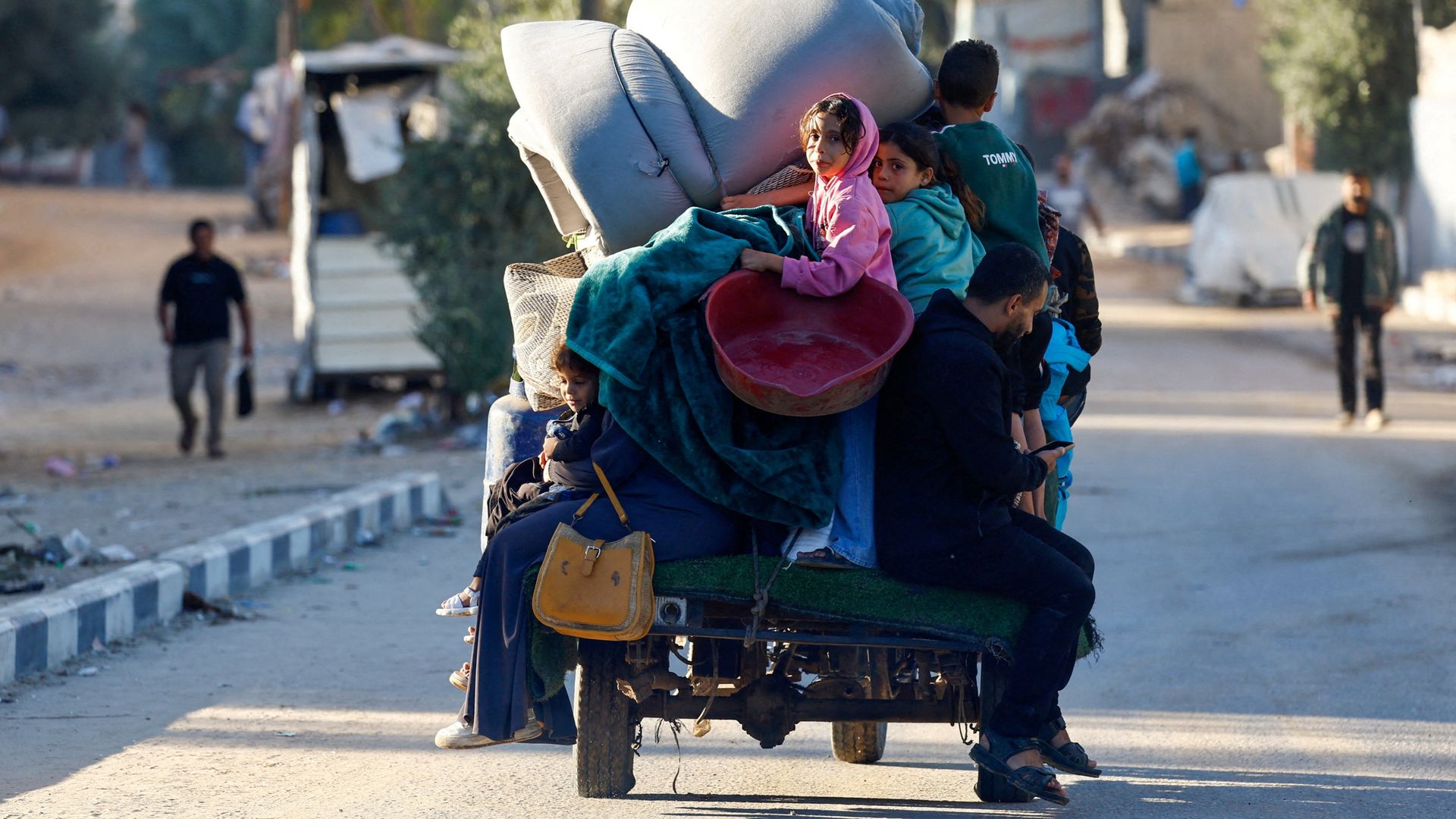
Unlike northern Gaza, where large portions of the population evacuated early in the war, central Gaza became an overcrowded refuge for hundreds of thousands of displaced Palestinians from both the north and Rafah in the south. According to data from the United Nations Office for the Coordination of Humanitarian Affairs (OCHA), population density in central governorates surged dramatically, straining water, sanitation, and medical infrastructure to the point of collapse.
This demographic reality fundamentally alters military operations. Every tactical maneuver in central Gaza intersects immediately with humanitarian logistics. Aid agencies, including UNRWA and the World Food Programme, have repeatedly reported that military operations along central transit routes—such as Salah al-Din Road and the coastal Al-Rashid Street—directly disrupt convoy movements, creating acute bottlenecks in food and medical distribution.
Dismantling the "Quick Decisive Blow" Fallacy
A recurring flaw in rapid-response journalism is the expectation of a singular, decisive military climax. Readers are often primed to ask: Will this specific operation end the war?
Military historians and regional security experts point out that this question rests on a flawed premise. Asymmetric conflicts rarely conclude through a single tactical maneuver. Instead, they evolve through prolonged attrition, shifting political constraints, and negotiations over governance.
- Israeli Strategic Objectives: According to public statements from the Israeli government and defense establishment, the stated goals remain the dismantling of Hamas's military and governing capabilities and the return of hostages held in Gaza. Within the Israeli security establishment itself, however, debates persist—widely reported by Israeli media such as Haaretz and Yedioth Ahronoth—over whether continuous tactical raids without a defined post-war political framework can achieve long-term security, or whether they risk strategic overreach.
- Hamas's Asymmetric Strategy: According to regional analysts, Hamas does not need to defeat the Israel Defense Forces (IDF) in conventional set-piece battles to claim strategic survival. By preserving a core leadership cadre, maintaining the ability to launch sporadic rocket fire or conduct tactical ambushes, and leveraging international diplomatic pressure resulting from humanitarian crises, the group seeks to outlast Israel's political and military bandwidth.
The Friction Between Tactical Raids and Hostage Negotiations
One of the most significant under-reported dynamics of ground operations in central Gaza is their direct entanglement with hostage rescue efforts and diplomatic negotiations.
In June 2024, an Israeli special operations raid in Nuseirat successfully rescued four hostages, an event widely covered for its dramatic tactical execution. However, the operation also resulted in heavy Palestinian casualties, according to Gaza health authorities, and triggered intense international debate over proportionality and the protection of civilians. Furthermore, security analysts note that while kinetic operations can occasionally yield intelligence or direct rescues, expanded ground maneuvers simultaneously increase the risk to remaining captives held in tightly guarded urban locations or subterranean facilities.
Mediators from the United States, Qatar, and Egypt have consistently noted in diplomatic readouts that major ground escalations frequently stall ceasefire negotiations, hardening bargaining positions on both sides while creating new facts on the ground—such as fortified buffer zones—that complicate withdrawal terms.
What Observers Actually Need to Track
If tracking arrows on a map is an unreliable way to measure the trajectory of the conflict in central Gaza, analysts suggest focusing on four concrete indicators instead:
- Infrastructure Permanence vs. Temporary Incursions: Look at satellite imagery and engineering reports to distinguish between brief, intelligence-led raids and the construction of paved roads, outposts, and demolished buffer zones. The latter signals an intent for long-term territorial partitioning rather than temporary counter-terrorism sweeps.
- Humanitarian Corridor Viability: Monitor OCHA and World Health Organization logistics reports regarding cross-line access between southern, central, and northern Gaza. The flow of aid is a primary barometer of both civilian survival and international diplomatic pressure on Jerusalem and Washington.
- Force Rotation and Reserve Fatigue: Track announcements regarding the deployment and withdrawal of IDF reserve brigades. Sustained urban warfare places immense strain on military manpower, equipment maintenance, and domestic economic stability, dictating the operational tempo far more than tactical announcements do.
- Local Governance Vacuums: Pay close attention to reports concerning civil order, aid distribution security, and local policing inside central Gaza. When existing administrative structures are dismantled without a viable replacement, criminal looting, clan rivalries, and militant recruitment quickly fill the void.
The Unavoidable Trade-Offs
Every strategic choice in central Gaza carries severe, documented downsides that neither military optimists nor armchair critics can wish away.
For the Israeli military, adopting a strategy of repeated, localized raids minimizes the troop casualties associated with static occupation, yet it allows militant cells to regroup once armored units withdraw—a cycle commonly described by military analysts as "mowing the grass." Conversely, committing massive forces to hold every neighborhood indefinitely invites heavy attrition, deepens humanitarian emergencies, and accelerates diplomatic isolation.
For Palestinian civilians trapped in central Gaza, the strategic calculus offers no safe haven. Evacuation orders issued prior to ground operations push families into increasingly congested zones lacking basic sanitation, while remaining in place exposes them to intense urban combat.
Understanding ground operations in central Gaza requires abandoning the comfort of simple narratives. Troop movements are merely the visible surface of a deeper collision between military doctrine, subterranean engineering, humanitarian survival, and unresolved political questions over who will ultimately govern Gaza when the fighting stops.