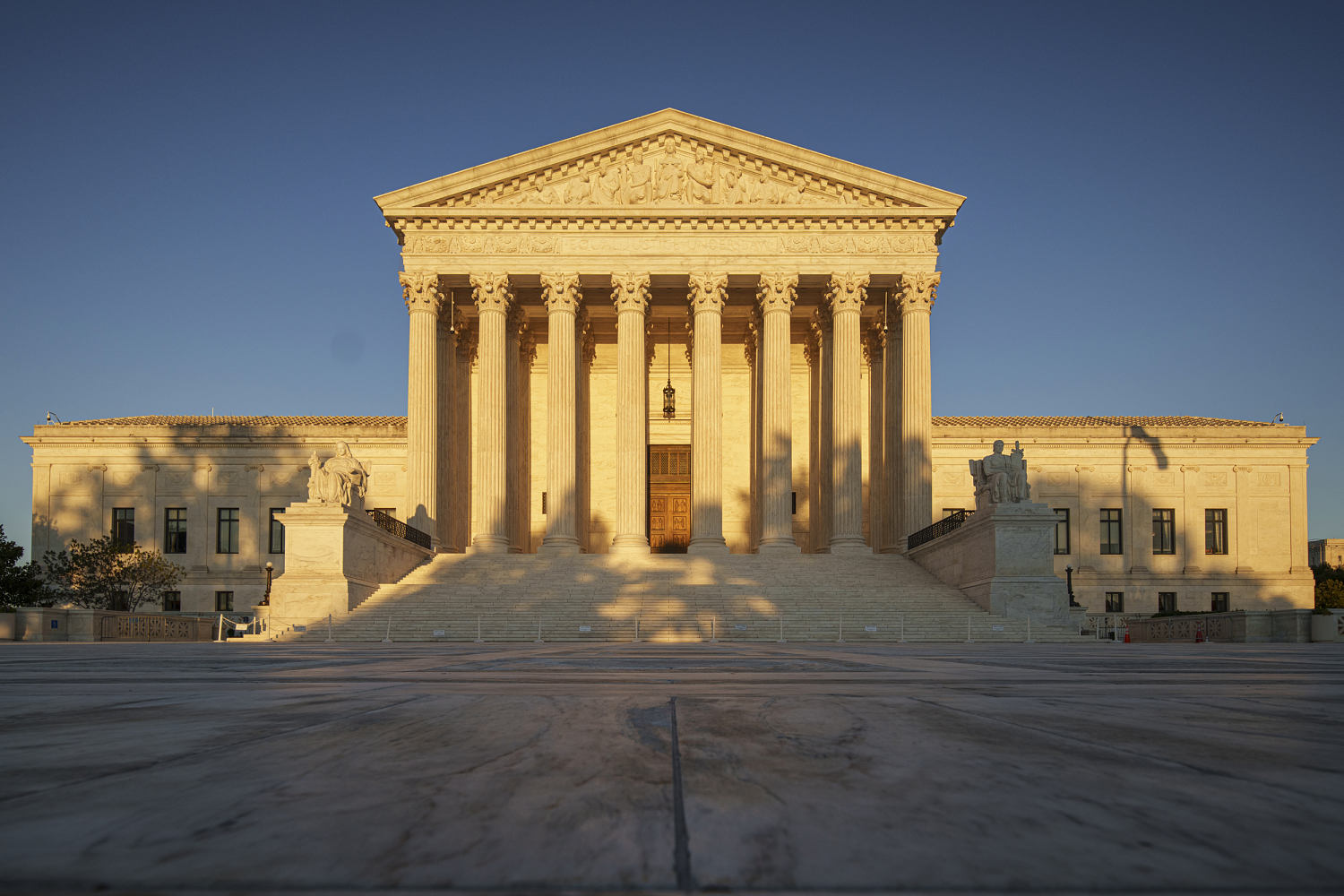
The mechanics of judicial confirmation have evolved from a constitutional routine into a zero-sum attrition game. When control of the executive branch and the legislative chamber responsible for advice and consent diverge, the institutional architecture built by the Framers functions less as an engine of governance and more as an absolute veto point. Following the midterms, the political geometry of the United States Senate guarantees that any prospective vacancy on the Supreme Court of the United States will trigger an institutional blockade rather than a routine confirmation proceeding.
Understanding why a Supreme Court vacancy under a Trump administration paired with a Democratic Senate would inevitably stall requires analyzing the structural incentives, historical precedent, and procedural bottlenecks that govern the modern confirmation process. Don't forget to check out our previous coverage on this related article.
The Cost Function of Judicial Retaliation
Institutional norms in the Senate operate on a system of delayed reciprocity. When Senate Majority Leader Mitch McConnell blocked the nomination of Merrick Garland in 2016 and subsequently lowered the confirmation threshold for Supreme Court nominees to a simple majority, he broke long-standing procedural taboos. That maneuver established a precedent: control of the Senate floor supersedes deference to the executive branch when the opposing party holds the chamber.
For Senate Democrats, declining to advance a Trump-nominated Supreme Court justice carries a negligible political penalty compared to the existential cost of forfeiting ideological balance on the nation's highest court. The cost function is stark: If you want more about the history of this, The Guardian provides an excellent summary.
- Permitting a conservative nominee to pass locks in a multi-generational ideological majority, neutralizing a party's core legislative and judicial objectives for decades.
- Withholding consent preserves the vacancy, shifting the timeline until a sympathetic executive occupies the White House, mirroring the exact calculus deployed by Republicans in 2016.
Senators have openly articulated this strategic posture. Lawmakers facing a recalibrated Senate majority have noted that the playbook established by the opposition must be mirrored to restore systemic equilibrium, transforming the confirmation process into an unyielding war of attrition.
The Institutional Mechanics of the Senate Judiciary Committee
The bottleneck of any judicial nomination begins in the Senate Judiciary Committee, a body where procedural rules grant immense leverage to the majority party. The committee chairman controls the docket, scheduling hearings, and determining whether a nomination ever reaches a floor vote.
If the Senate flips to Democratic control, the committee chairman possesses the authority to indefinitely withhold hearings for any Supreme Court nominee. This mechanism avoids the necessity of a floor defeat; it simply starves the nomination of oxygen before it reaches debate.
- Agenda Control: The majority party sets the calendar. Nominations submitted without committee approval cannot bypass the rules without extraordinary, unanimous bipartisan consent—an impossibility in a hyper-polarized legislative environment.
- The Confirmation Threshold: Even if a nomination were discharged from committee, the simple majority threshold means that party discipline dictates the outcome. Defecting votes from the majority party are mathematically possible only if the majority margin is razor-thin, but the political cost of supporting an opposing party's Supreme Court pick makes defection functionally non-viable.
- Internal Friction and Intra-Party Squabbling: Even within the executive branch's own party, confirmation processes face internal friction. When a party rushes late-term or contested nominations, resistance from moderate or institutionalist members of the president's own party frequently delays or kills appointments before they ever reach inter-branch conflict. This internal resistance magnifies exponentially when facing an opposition-controlled Senate.
Precedents of Non-Action and the Erosion of Comity
The historical view that the Senate has a constitutional obligation to hold hearings and vote on every nominee has been thoroughly dismantled by modern practice. The Garland precedent proved that inaction is a viable political strategy.
Subsequent statements by congressional leadership underscore that the Senate views "advice and consent" as an active discretionary power rather than a passive rubber stamp. When Senator Chuck Schumer and other senior Democrats outline plans to block ideological nominees, they are signaling an operational reality: the institutional machinery will be utilized to freeze the composition of the court rather than risk altering the balance of power.
Consequently, any unexpected retirement or vacancy occurring during a period of divided government will not result in bipartisan negotiation. It will trigger an immediate freeze, shifting the constitutional struggle entirely into the electoral arena for the next presidential cycle.
Strategic Forecast
The intersection of executive nomination power and legislative confirmation authority under divided control creates an unresolvable structural stalemate. As long as the Senate retains the absolute constitutional prerogative to withhold consent, vacancies occurring under a cross-party configuration will remain open. The incentive structure rewards obstruction over compromise, ensuring that the federal judiciary remains the primary theater for unyielding political combat. Future management of court vacancies depends entirely on unified party control of both the White House and the Senate, rendering cross-party confirmations functionally extinct for the foreseeable future.