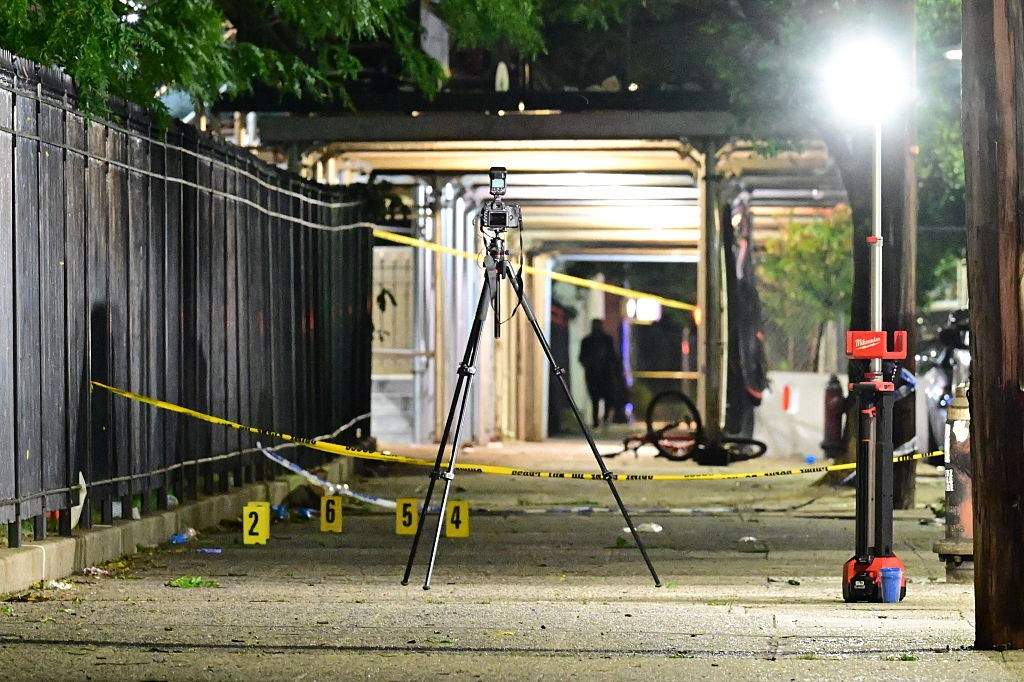
The media playbook for reporting mass violence is as predictable as it is broken. A suspect is arrested. The headline leads with the body count—eight injured, four of them children—and the collective sigh of relief from local officials is served up as the narrative climax. The public is told that justice is being served because a man is in handcuffs.
This is a dangerous illusion.
By focusing entirely on the post-incident cleanup—the arrests, the press conferences, the tactical deployments—we miss the systemic failures that make these predictable tragedies inevitable. I have spent years analyzing urban policy and crime data, and the reality is stark: celebrating an arrest after eight people are shot on a crowded boardwalk is like celebrating a squeegee when the roof collapses. The damage is done. The failure belongs to the system long before the trigger is pulled.
The Mirage of the Post-Incident Victory
Traditional news outlets framed the arrest in the Coney Island boardwalk shooting as a definitive win for public safety. Police flooded the zone, detectives worked the angles, and a suspect was taken off the street.
Here is what they left out.
- Saturation is not prevention: Massive police presence after an event does nothing to deter the initial act. It merely shifts the venue or delays the next eruption.
- The proximity fallacy: The shooting occurred in one of the most heavily surveilled, heavily patrolled recreational areas in New York during peak season. If sheer visibility deterred hyper-violent actors, this shooting would never have occurred.
- The downstream trap: Resources are heavily skewed toward reactionary measures rather than root-cause disruption.
When we treat an arrest as the resolution, we let local government off the hook. We allow bureaucrats to point to a closed case file instead of answering why a prohibited possessor felt comfortable walking onto a public beach with a firearm.
Dismantling the Premium on Reactive Policing
Every major urban center falls into the same trap. Mayors love ribbon-cuttings and press conferences featuring tables covered in confiscated firearms. It looks good on the evening news.
But if you look at the work of criminologists like David Kennedy, architect of Operation Ceasefire, the data shows that sustainable reductions in violence do not come from dragnet policing or post-hoc roundups. They come from targeted, direct communication with the micro-population responsible for the vast majority of urban violence.
In any given city, less than one percent of the population drives over 70% of the violent crime. Yet, the standard operational model treats entire neighborhoods like war zones while failing to surgically neutralize the specific individuals driving the chaos.
Imagine a scenario where a hospital only treats patients after they enter cardiac arrest, completely ignoring hypertension, diet, and preventative medicine. That is our current approach to urban gun violence. We wait for the body count, then marvel at the efficiency of the ambulance.
The Flawed Questions We Keep Asking
Go to any community board meeting after a tragedy like Coney Island, and you will hear the same "People Also Ask" refrains. The premises of these questions are fundamentally broken.
Flawed Question: Why aren't there more officers stationed on the boardwalk?
The Brutal Reality: More boots on the ground does not equal safety. New York already possesses one of the largest standing police forces in the world. True deterrence relies on the certainty of swift intervention and localized intelligence, not static officers staring at their phones every fifty yards.
Flawed Question: How do we get tougher on these offenders?
The Brutal Reality: The "toughness" of sentencing means nothing to an individual operating with zero long-term orientation. When a shooter opens fire into a crowd containing children, they are not running a cost-benefit analysis based on penal codes. They are reacting to immediate, localized disputes that should have been mediated weeks prior.
The High Cost of the Wrong Metrics
We measure what is easy to count, not what matters.
| What We Measure | Why It Is Deceptive | What We Should Measure |
|---|---|---|
| Arrest Rates | Measures response efficiency, not safety. | Community Trust Index |
| Guns Seized | A supply-side metric that ignores demand. | Active Dispute Resolution |
| Response Times | Shaving seconds off a drive does not save lives. | Intervention Velocity |
If your city’s primary metric of success is how quickly it can lock someone up after a boardwalk turns into a triage center, your city is failing.
The downside to shifting away from this reactive model is that preventative work is invisible. You cannot photograph a shooting that never happened. Politicians cannot take credit for an argument that was de-escalated in a back alley three weeks before it turned into a gang war. It requires an appetite for quiet, unglamorous, data-driven work that does not fit neatly into a two-minute television segment.
Stop applauding the arrest. Start demanding to know why the system allowed the boardwalk to become a shooting gallery in the first place.



