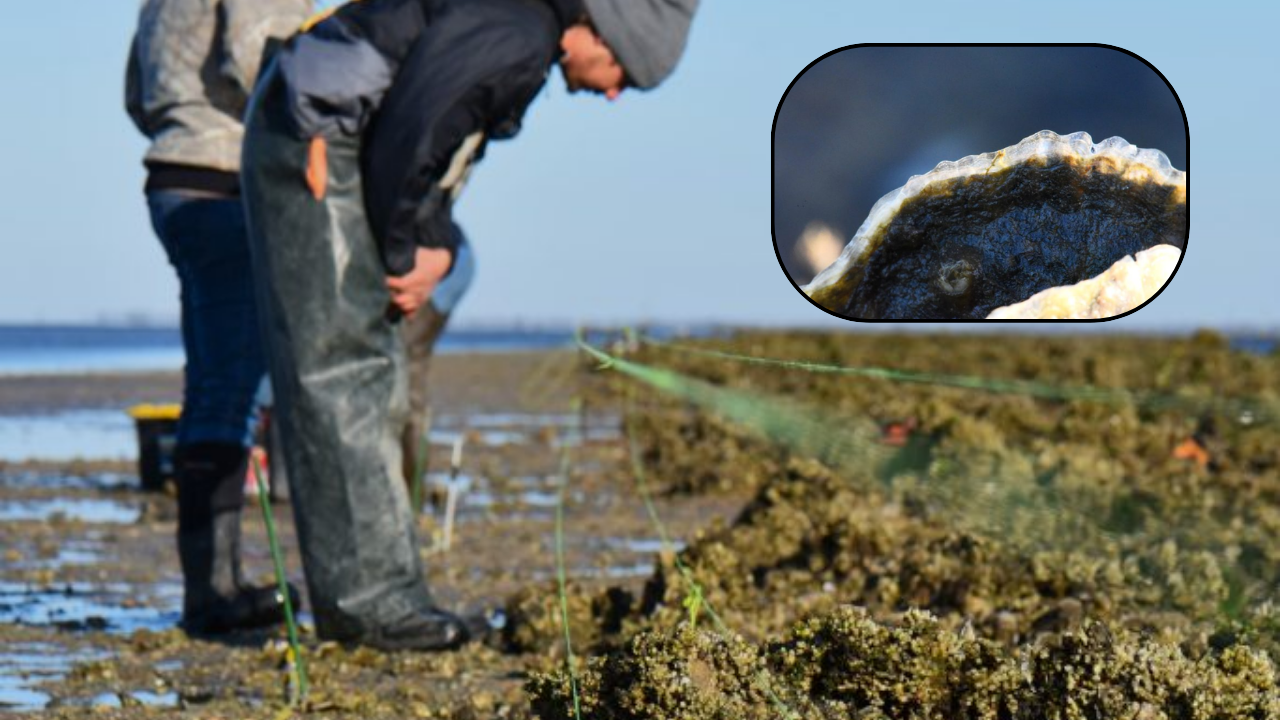
In the shallow, sun-scorched waters of Florida's Big Bend, marine ecologists are watching numbers that defy standard environmental pessimism. Live eastern oyster densities on a heavily degraded patch of Lone Cabbage Reef dropped to near zero before intervention. Then came the heavy machinery, the barges, and thousands of tons of quarried dolomite limestone. Within six months of laying down this engineered substrate, population counts hit 91 oysters per square meter. Five years out, those same fixed monitoring stations recorded an average of 244 oysters per square meter.
On paper, this reads like a miraculous ecological resurrection. Yet beneath the celebratory headlines lies an unvarnished truth that resource managers are finally willing to state out loud: dumping truckloads of rocks into the Gulf of Mexico is a brilliant engineering band-aid, but it does nothing to stop the underlying bleeding of the estuary. Expanding on this topic, you can find more in: Why Moscow Is Playing Broker While Everyone Else Misses the Real Play.
For decades, marine conservation discussions fell into a comfortable trap. When an oyster fishery collapsed or a reef flattened into mud, authorities blamed overfishing, shifting river discharges, or fluctuating salinity. They wrung their hands over water management policies and pointed fingers at upstream agricultural runoff. Meanwhile, the physical architecture of the reefs—the complex matrix of old shells, known scientifically as cultch, that larvae require to settle—simply dissolved into the silt. Without a hard surface to grip, microscopic free-floating oyster larvae drifted past the barren seabed and died in the muck.
The 2018 Lone Cabbage project bypassed the endless political debate over water flow and attacked the immediate structural failure. Researchers realized that the system was suffering primarily from substrate limitation, not larval starvation. By dropping angular dolomite limestone into the water, they gave the larvae what they desperately craved: physical elevation and countless interstitial spaces where predators could not easily reach them and currents could deliver microscopic food particles. The response was biologically instantaneous. The oysters settled, secreted calcium carbonate, cemented themselves to the stone, and began building the three-dimensional canopy that defines a healthy marine habitat. Experts at BBC News have also weighed in on this matter.
Yet tracking the success of these four fixed monitoring stations requires a heavy dose of realism. University of Florida researchers point out that this massive localized win covered only a fraction of the broader regional collapse. The project successfully rehabilitated a vital corridor, but it replaced merely 3 to 4 percent of the total oyster reef acreage lost across the entire Big Bend ecosystem.
Scale remains the ultimate bottleneck. You cannot quarry, transport, and drop millions of tons of dolomite limestone across hundreds of square miles of coastal waters without running into staggering financial and logistical walls. Marine restoration is profoundly expensive, labor-intensive, and fundamentally reactive. It treats the symptom of habitat loss while the broader drivers of environmental degradation—warming water temperatures, altered freshwater inflows, and chronic nutrient loading—continue unchecked in the background.
Furthermore, the data reveals a complex narrative about what drives these ecosystems over long horizons. While commercial fishing activity and variable river discharge do impact coastal zones, statistical models from the project demonstrate that their immediate negative associations with oyster density pale compared to the overwhelming power of correct substrate addition and proper elevation. If the rocks are placed at the right height in the water column, the oysters can weather a surprising amount of environmental variability. If the elevation is wrong, or if the bottom remains soft mud, even pristine water quality will not save the population.
This realization forces a hard pivot in how coastal management must operate. For years, agencies treated habitat restoration as an environmental garden project—a nice thing to do when grants cleared and volunteers showed up with shovels. The Florida data elevates it to heavy civil engineering. Rebuilding a dying estuary requires the same rigorous hydrodynamic modeling, geological assessment, and structural durability calculations used to build highway bridges or breakwaters.
The