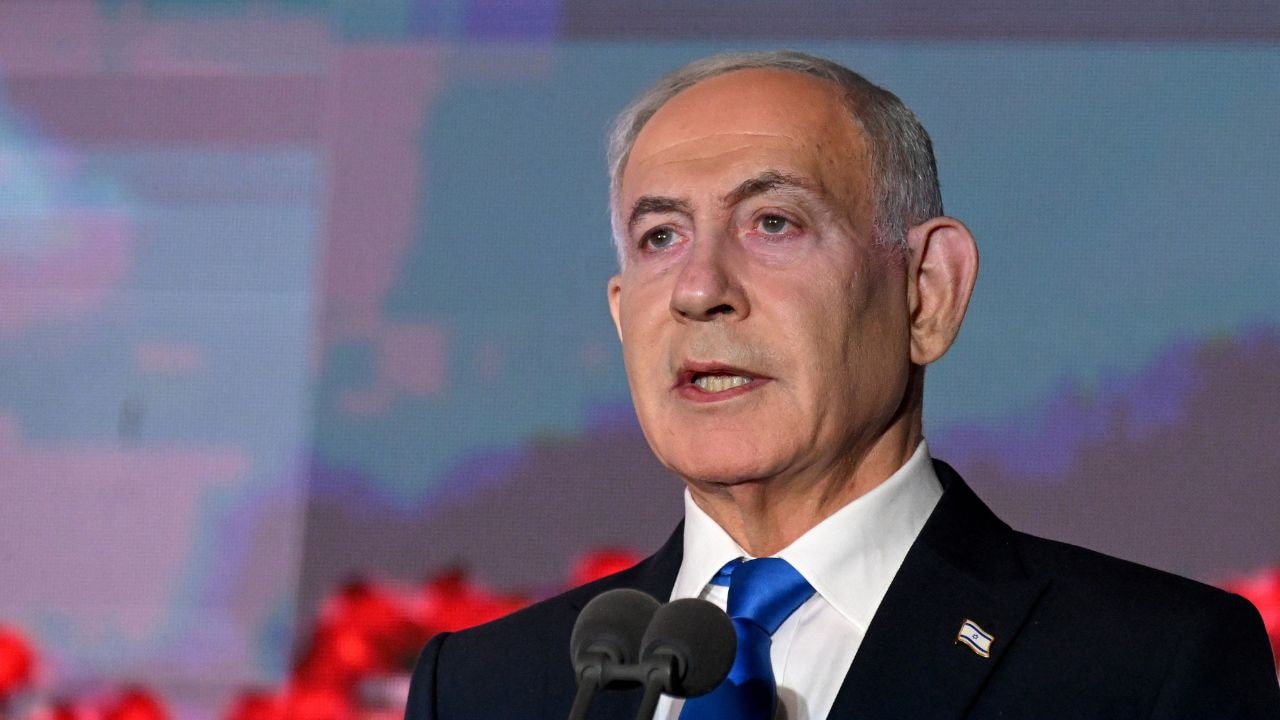
The structural stability of a governing coalition in Israel depends entirely on the narrowest margin of its ideological periphery. According to political analysts and constitutional observers examining the dynamics of Israel's parliamentary system, a newly seated Knesset presents Benjamin Netanyahu with a governance paradox: securing a mathematical majority does not guarantee legislative control. Instead, the institutional architecture of proportional representation transforms small faction leaders into absolute veto players, creating immediate operational friction across fiscal policy, judicial appointments, and security management.
To understand why the legislature poses an acute operational challenge to the Prime Minister, one must strip away surface-level partisan rhetoric and examine the underlying mechanics of Israeli coalition politics. Conventional political commentary often frames parliamentary resistance as a simple matter of personal rivalries or ideological disagreements. In reality, the constraints facing Netanyahu are governed by structural game theory, institutional rules of procedure, and competing constituency incentives that punish compromise.
The Veto-Player Architecture of Proportional Representation
Israel operates under a closed-list proportional representation system with a single nationwide electoral district and a 3.25 percent electoral threshold. According to political science literature on multi-party parliamentary democracies—specifically George Tsebelis’s veto player theory—policy stability increases, and executive agility decreases, as the number of ideological veto players grows and the ideological distance between them widens.
When a governing coalition relies on a slim majority within the 120-seat Knesset, every constituent party holding enough seats to collapse the government becomes an institutional veto player. Unlike a two-party system where backbench rebellion is mitigated by party discipline and single-member district pressures, Israeli coalition partners answer to distinct, often mutually exclusive voter blocs.
This dynamic creates an asymmetric bargaining environment:
- Zero-Sum Exit Threats: A minor party leader with six to ten seats can credibly threaten to dissolve the coalition if a specific ministry budget or legislative rider is withheld. The Prime Minister cannot easily replace that bloc without fundamentally altering the coalition's ideological baseline.
- The Public Goods Dilemma: Each coalition faction seeks to extract targeted resources—such as ministerial portfolios, discretionary coalition funds, or statutory exemptions—for its specific constituency, while externalizing the political and fiscal costs onto the broader government and the Prime Minister’s central party.
- Synchronized Defection Risks: Because the Knesset operates under constructive and standard confidence mechanisms, a crisis on one front (such as military conscription exemptions) immediately lowers the cost of defection for another faction fighting on an entirely separate front (such as judicial restructuring or settlement expansion).
Three Structural Bottlenecks in Legislative Execution
Rather than facing a unified opposition, a Prime Minister in a fragmented Knesset confronts internal legislative bottlenecks. Based on historical Knesset procedural analyses and parliamentary reporting, these bottlenecks manifest across three distinct operational arenas.
1. The State Budget and Coalition Fund Allocation
Under Israel’s Basic Law: The Knesset, failure to pass the state budget by the statutory deadline triggers automatic dissolution of the parliament and new elections. This hard deadline turns the annual or biennial budget process into the ultimate stress test for coalition cohesion.
During budget negotiations, the Finance Ministry must reconcile macroeconomic constraints—such as sovereign credit ratings, deficit targets, and defense expenditure—with the micro-demands of coalition agreements. When multiple factions demand immediate liquidity for sector-specific institutions, the Prime Minister is forced into sequential bilateral concessions. Every concession granted to one faction establishes a new baseline for the remaining partners, inflating total expenditure or forcing politically costly cuts to universal public services. If the Prime Minister attempts to enforce fiscal discipline, individual lawmakers can stall committee votes, effectively holding the entire legislative calendar hostage until their specific line items are restored.
2. Committee Chairmanships and Procedural Gatekeeping
Plenary votes in the Knesset represent only the final stage of legislation. The actual power to advance, delay, or rewrite bills resides within the permanent Knesset committees, particularly the Finance Committee, the Constitution, Law and Justice Committee, and the Foreign Affairs and Defense Committee.
According to Knesset Rules of Procedure, committee chairs control the daily agenda, dictate the pace of clause-by-clause readings, and determine which expert witnesses or ministry officials are summoned. When coalition partners control key chairmanships, they gain institutional gatekeeping power that operates independently of the Prime Minister’s Office. A committee chair from a junior coalition party can quietly shelve a bill prioritized by the Prime Minister to extract unrelated concessions from another ministry. Conversely, a chair can accelerate contentious private member bills that destabilize the government’s broader diplomatic or legal strategy, forcing the Prime Minister to expend political capital merely to halt internal legislative momentum.
3. The Conscription and Judicial Friction Nexus
Certain policy domains cannot be resolved through budgetary transfers because they involve binary legal outcomes. Two primary issues consistently generate non-negotiable friction within right-wing and religious coalitions: the statutory framework governing military service exemptions for ultra-Orthodox (Haredi) yeshiva students, and the balance of power between the executive branch and the Supreme Court.
As legal scholars and Israeli media analysts have extensively documented, the Supreme Court’s oversight of administrative decisions and Basic Laws directly intersects with the survival of the coalition. When the judiciary strikes down an exemption or blocks an executive appointment, Haredi and nationalist factions demand immediate legislative overrides or structural changes to the Judicial Selection Committee. However, moderate elements within the Prime Minister's own party—and institutional stakeholders within the defense and economic establishments—warn against the systemic fallout of rapid institutional overhaul. Netanyahu is thus caught between two incompatible failure modes: advancing sweeping legislative overrides risks fracturing his own party and triggering mass civil mobilization, while stalling those initiatives risks an immediate walkout by coalition partners whose voter bases demand tangible statutory protections.
The Limits of Executive Centralization
A common misconception in political analysis is that a veteran Prime Minister can indefinitely manage coalition friction through tactical delay and bilateral deal-making. While ambiguity and postponement are standard tools in parliamentary statecraft, they suffer from diminishing returns over a multi-year legislative term.
First, statutory deadlines imposed by the Supreme Court or existing legislation eventually eliminate the option of delay. When a temporary regulation expires, inaction automatically defaults to a legal status quo that one or more coalition partners find intolerable. Second, prolonged ambiguity erodes trust among coalition whips. When faction leaders suspect that promises made in coalition agreements will not be honored before the next election cycle, they shift from cooperative governance to preemptive positioning—introducing populist bills and publicizing internal disputes to insulate themselves with their base before a potential coalition collapse.
Third, external security and economic pressures compress the executive’s margin for error. Managing high-intensity security threats or multi-front military operations requires unified cabinet decision-making and international diplomatic coordination. When domestic coalition partners use security cabinet forums or public statements to signal ideological inflexibility to their domestic voters, it constrains the Prime Minister’s strategic bandwidth and complicates negotiations with international allies.
Operational Mechanics of Knesset Opposition and Rebel Backbenchers
While the opposition in a fragmented parliament often lacks the unified ideological vision required to form an alternative government, it possesses potent procedural tools to exploit coalition fatigue. Opposition whips systematically track the attendance and voting discipline of coalition members, using unexpected no-confidence motions, filibusters, and surprise procedural votes during late-night plenary sessions to force minor coalition defeats.
More dangerous to the Prime Minister than the formal opposition is the emergence of autonomous backbenchers within his own faction. In a slim majority, a bloc of just three to five Likud lawmakers holds the exact same mathematical veto power as a small coalition party. Because closed-list primary systems reward lawmakers who demonstrate ideological purity to party central committee members and primary voters, individual MKs face strong incentives to defect from cabinet discipline on high-profile votes. The Prime Minister must therefore monitor not only the demands of rival party leaders, but also the internal primary ambitions of his own rank-and-file legislators.
Strategic Trajectory and Forecast
The operational dynamics of the Knesset dictate that Netanyahu’s primary challenge is not defeating the parliamentary opposition, but managing the internal transaction costs of his own coalition. Every legislative session requires recalibrating the balance between fiscal restraint, judicial stability, and the sectorial demands of veto players.
To prevent premature coalition dissolution, executive strategy will rely on compartmentalizing legislative tracks: separating budgetary passage from ideological legislation, utilizing temporary administrative decrees where statutory consensus fails, and maintaining tight control over the Ministerial Committee for Legislation to filter out destabilizing private bills before they reach the Knesset floor. However, because the underlying ideological contradictions among the coalition partners remain unresolved, each approaching statutory deadline—particularly surrounding the state budget and military conscription—will systematically narrow the Prime Minister’s room to maneuver, ensuring that legislative survival remains a continuous, high-friction negotiation rather than a settled mandate.