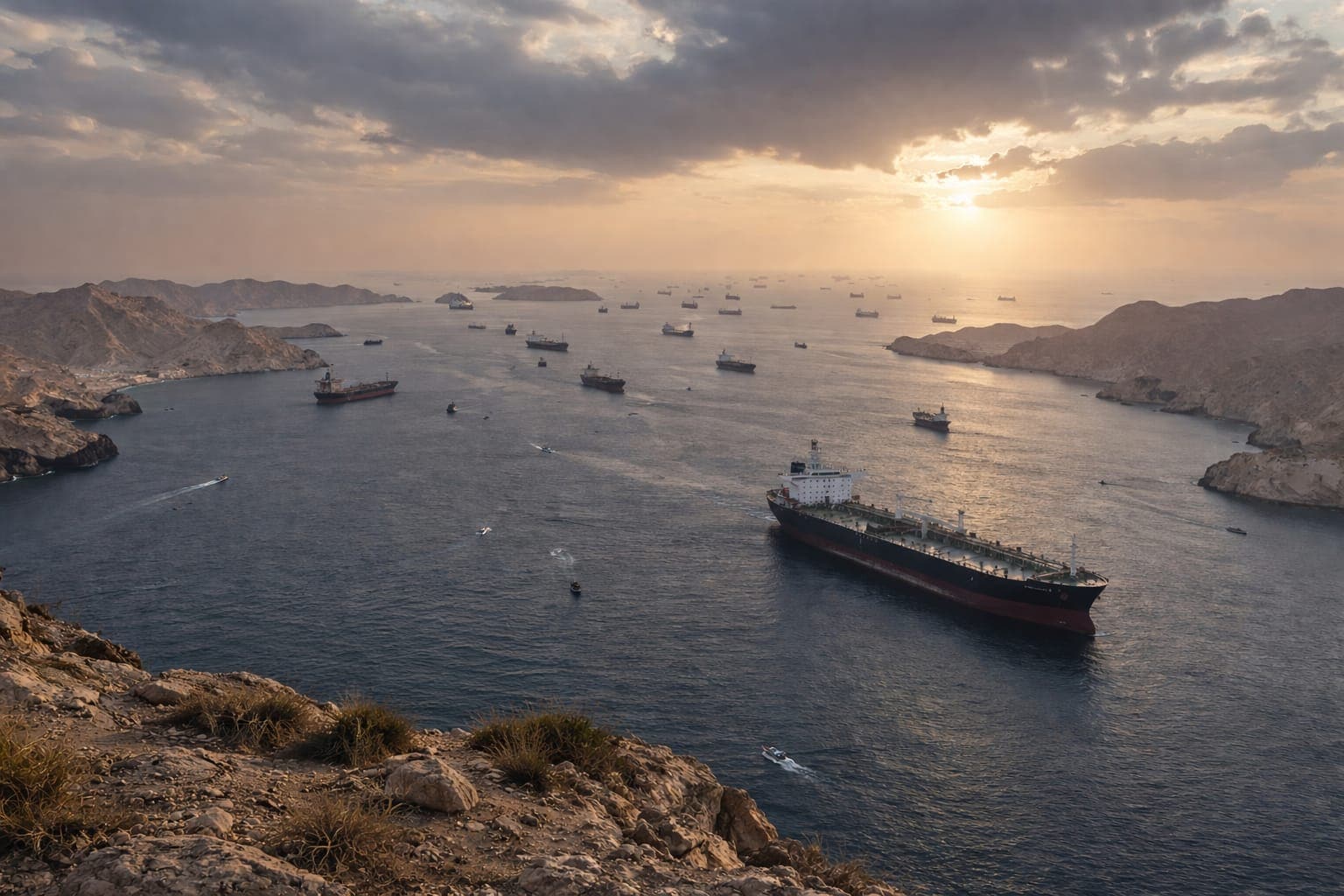
The rusted hull of a mid-sized oil tanker groans as it slides through the grey-blue swells of the Strait of Hormuz. On the bridge, the captain grips a lukewarm mug of coffee, eyes scanning the horizon. This narrow strip of water, barely twenty-one miles wide at its tightest bottleneck, is a global artery. It is quiet today. But in this part of the world, quiet is never peaceful. It is merely the tense breath held before a scream.
One-fifth of the world’s petroleum passes through this exact corridor. If you have ever filled up your car, bought groceries shipped from overseas, or turned on a heater in the dead of winter, your life has been quietly tethered to this fragile stretch of sea.
Now, that tether is fraying.
In a sudden, sharp escalation of global tensions, Iran has officially withdrawn from its diplomatic agreements with the United States. The catalyst? A newly imposed maritime blockade designed to choke off Iranian shipping. Tehran's response was swift, predictable, and terrifyingly simple. They have reasserted absolute operational control over the Strait of Hormuz.
To understand why this matters, we have to look past the dry press releases, the political posturing, and the endless talking heads on cable news. We have to look at the water. And we have to look at the people whose lives are about to be upended by a geopolitical chess match played with live ammunition.
The Weight of Twenty-One Miles
Close your eyes and picture a highway. Now, imagine that eighty percent of the world's commercial transit relies on a single, narrow exit ramp. If someone parks a broken-down truck across that ramp, the entire city grinds to a halt.
That is the Strait of Hormuz.
On one side lies the mountainous coastline of Iran. On the other, the rugged cliffs of Oman and the sweeping dunes of the United Arab Emirates. It is a natural choke point. For decades, the global economy has functioned on the assumption that this highway would remain open, guarded by international maritime law and the looming presence of the US Navy.
But treaties are only as strong as the trust between the hands that sign them.
When the latest round of economic restrictions transformed into an active blockade, sealing off Iranian ports from global trade, the diplomatic thread snapped. Tehran viewed the blockade not as statecraft, but as an act of economic warfare. In their eyes, the deal was already dead. The formal withdrawal was merely the autopsy report.
For the average citizen, this isn't a debate about foreign policy. It is a ticking clock.
Think about a small business owner in a quiet suburb thousands of miles away. Let's call him Marcus. Marcus runs a modest delivery service. He doesn't read geopolitical briefings. He doesn't track the movement of naval destroyers. But when the price of crude oil spikes because a single tanker is detained in the Persian Gulf, Marcus feels it instantly. The numbers on the gas pump climb. His margins shrink. The pressure in his chest tightens.
Marcus is the invisible casualty of the chokepoint.
The Anatomy of a Standoff
The mechanics of this confrontation are deeply rooted in geography and asymmetric warfare.
Iran does not need a massive, blue-water navy to control the Strait. They do not need aircraft carriers or billion-dollar destroyers. Instead, they rely on speedboats, sea mines, and shore-based missile batteries. It is a swarm strategy. It is cheap, highly effective, and incredibly difficult to counter.
Imagine a swarm of hornets defending a nest. A bear might be vastly stronger, but the sheer volume of tiny, painful stings makes entry too costly to contemplate.
During previous periods of high tension, the mere rumor of Iranian exercises in the Strait was enough to send marine insurance rates skyrocketing. Shipping companies face a brutal calculus. Do they risk sending a multi-million-dollar vessel through a potential combat zone, or do they take the long, expensive route around the southern tip of Africa?
Most choose to wait. And while they wait, the world's supply chain begins to choke.
The reality of this blockade is felt first by the seafarers. The merchant mariners from the Philippines, India, and Eastern Europe who crew these giant tankers do not sign up to be human shields. Yet, they find themselves staring at the dark silhouettes of military patrol boats flanking their vessels in the early morning mist. They know that a single miscalculation, a sudden panic on either side, could ignite a conflict that no one truly wants but everyone has prepared for.
The Illusion of Distance
We live in an era of profound detachment. We double-tap news stories on our phones, swipe away alerts, and assume that events happening on the other side of the planet are safely insulated from our daily routines. We treat international relations like a spectator sport.
But the global economy is a highly complex, fragile ecosystem.
When the flow of energy through Hormuz is disrupted, the shockwaves travel at the speed of light. It starts with energy prices, but it quickly mutates. The cost of manufacturing agricultural fertilizer spikes. Food production becomes more expensive. Groceries cost more. Suddenly, a political standoff in the Middle East dictates what a family in Ohio can afford to put on their dinner table.
This is the true leverage Iran holds. They do not need to win a war. They only need to make the peace too expensive for the West to bear.
By withdrawing from the US deal, Tehran is sending a clear, uncompromising message. They are daring the international community to test their resolve. It is a high-stakes game of chicken played with the global economy as the prize, and the margin for error has just shrunk to zero.
The captain on the bridge of that tanker looks out over the water. The sun is setting, casting long, golden shadows across the waves. In the distance, a small patrol boat cuts through the water, its wake a sharp, white scar on the dark blue surface.
The engine room hums beneath his feet, a steady, rhythmic vibration that feels suddenly fragile. The world is waiting to see who blinks first. Until then, the ships will keep sailing, the tension will keep building, and the twenty-one miles of the Strait of Hormuz will remain the most dangerous water on Earth.