Chinese students stand by their plans to study in France despite widespread civil unrest because French public universities offer state-subsidized tuition, credential recognition back home, and a European foothold that remains cheaper than Anglo-American alternatives. Street protests look dramatic on a screen. Tuition bills arrive every semester.
After three decades covering international education flows between East Asia and Europe, I have watched headlines predict the collapse of foreign enrollment every time a boulevard burns or a transit strike paralyzes a city. Those predictions almost always miss how families actually price a degree. A family spending tens of thousands of dollars—or yuan—on cross-border schooling does not treat political noise as a vacuum. They weigh it against visa hurdles, total cost of attendance, safety inside campus walls, and what a foreign diploma signals to a domestic employer.
Street clashes in Paris or Lyon make international news feeds instantly. Quietly comparing tuition schedules, housing waitlists, and post-graduation work rules takes months. For many Chinese households, France still clears the basic arithmetic even when the streets outside the lecture halls look chaotic.
How Street Unrest Actually Hits Student Life
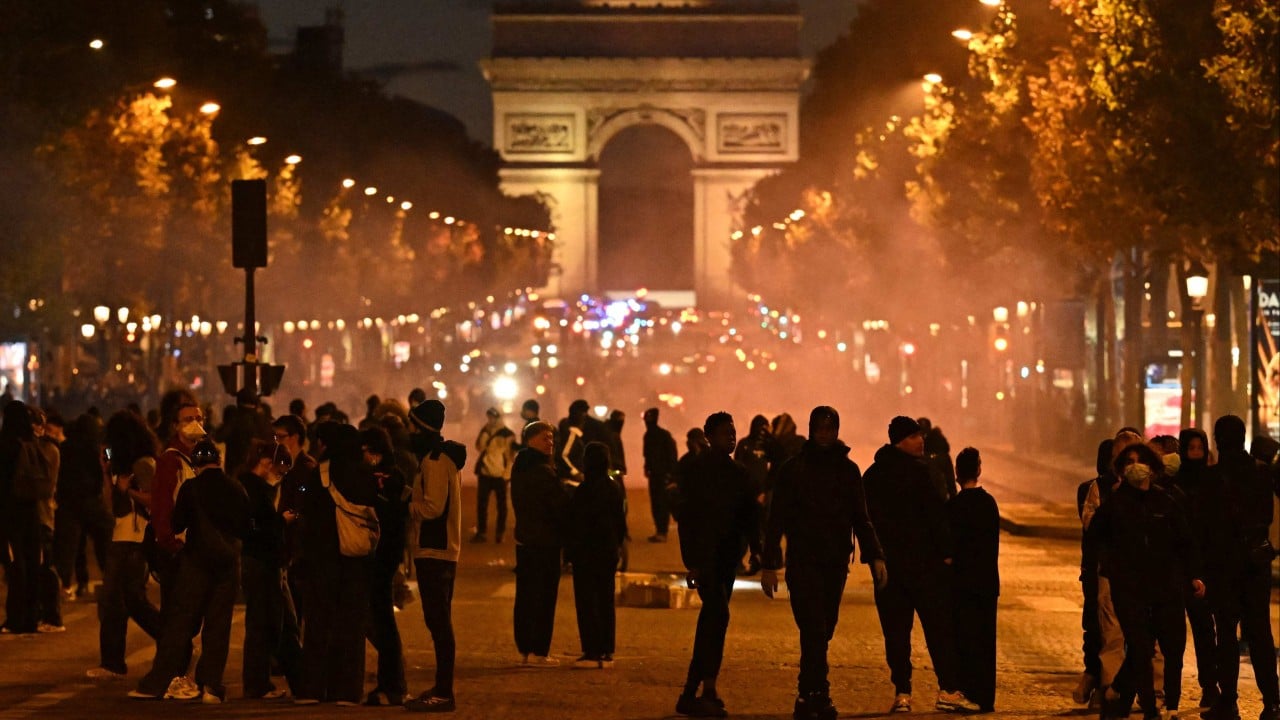
Civil unrest in France rarely unfolds like a war zone, even when television clips make it look that way. Demonstrations over pensions, budget cuts, policing, or labor rules tend to cluster around symbolic squares, rail hubs, and government ministries on predictable days.
Still, calling the disruption "minor" for a newcomer would be dishonest. When buses stop running, trains crawl, or tear gas drifts near a metro station, a newly arrived student carrying two suitcases feels the friction immediately.
- Commute and transit delays can turn a twenty-minute ride into an hour-long walk, especially during coordinated strikes across regional rail networks.
- Commercial collateral damage sometimes hits shops, cafes, or bank branches near protest routes, forcing quick detours for groceries or cash.
- Emotional strain hits parents thousands of miles away hardest, since distant families rely on short news clips without street-level context.
In practice, day-to-day university life often runs on a parallel track. Lecture halls open, library cards still swipe, and lab schedules continue unless a specific campus is blockaded by student activists. Over years of watching foreign cohorts settle in, I have noticed a sharp split between spectacle unrest—loud, brief, heavily filmed—and chronic friction, such as finding an affordable room before autumn term begins. For most students, housing scarcity and administrative paperwork cause far more stress than a Saturday march.
The Economics Behind Staying the Course
Money explains a huge share of this resilience. Public higher education in France has historically been heavily subsidized by the French state, keeping base tuition far lower than private tuition at many American or British institutions. Even after fee adjustments for non-European students in recent years, the overall price tag for a master's degree or engineering track in France frequently undercuts rival English-speaking destinations once living costs and program lengths are factored in.
Consider a hypothetical example to see how a household might run the numbers. Suppose a family in Guangzhou compares a two-year master's program in France against a one-year master's program in the United Kingdom or a two-year program in the United States. Even if housing in central Paris is steep, lower tuition at a public university—or targeted scholarships and housing aid—can keep total out-of-pocket spending competitive, especially if the student looks at regional university towns like Toulouse, Grenoble, or Rennes where rent drops noticeably.
Families rarely pick a country based on one viral protest video; they pick the option whose total cost of attendance and return on investment survive a hard spreadsheet check.
There is also a structural factor tied to diploma recognition and employability. Graduates from recognized French universities, particularly grandes écoles in engineering, business, and design, carry established brand weight in multinational firms and major Chinese cities. When alternative destinations tighten student visa rules, raise fees, or face geopolitical friction, holding steady on a French offer looks less like stubbornness and more like risk diversification.
What Competitors Miss About Chinese Student Choices
Surface-level coverage often treats Chinese students as a single bloc reacting in lockstep to headlines. That view is lazy and inaccurate.
Motivations vary sharply by academic track, family income, and career goal. A student pursuing an art or luxury-management degree in Paris has different priorities from an engineering student heading to a polytechnic institute or a language major aiming for diplomatic or trade work. Treating all Chinese students as one uniform mindset misses the quiet pragmatism driving individual choices.
| Decision Factor | Street Unrest Impact | Practical Student Countermeasure |
|---|---|---|
| Tuition and Living Cost | Low direct effect; indirect inflation possible | Choose regional cities or apply for housing aid early |
| Daily Mobility | High during strikes or major marches | Live near campus, use bikes, build buffer time |
| Personal Safety | Moderate near flashpoints; low inside campuses | Avoid crowds, monitor local alerts, pick vetted housing |
| Career Value | Minimal long-term drag on degree validity | Target accredited programs with internship pipelines |
Another overlooked angle is information filtering. Students preparing to go abroad often follow French student forums, WeChat groups, alumni networks, and university international offices rather than relying solely on dramatic news clips. Veteran applicants ask older peers practical questions: Which neighborhoods stay calm? How do campuses communicate during transit disruptions? Where do international students find reliable leases without getting scammed?
At the same time, we should not pretend France has zero structural headaches for foreign enrollees. Bureaucracy around residence permits, uneven English-taught course quality in some tracks, and occasional anti-Asian petty crime or harassment in big cities are real issues. Acknowledging those friction points makes the persistence of Chinese students more understandable, not less: they are weighing known, manageable problems against an uncertain alternative.
Friction Points That Still Test Resolve
Standing by a plan does not mean ignoring every warning sign. Prospective students who arrive without preparation quickly run into hurdles that have nothing to do with politics.
- Housing bottlenecks hit international arrivals every late summer, driving up temporary hotel costs when leases fall through.
- Administrative delays with visas, bank accounts, and student residence permits can test patience during the first few months.
- Language barriers outside major university hubs complicate everyday errands, medical visits, and part-time job searches.
Smart applicants treat these obstacles as logistical problems to solve ahead of time rather than reasons to panic at the first headline. They line up university residences or vetted shared flats early, learn basic French before departure, and keep emergency funds accessible in case a transit strike forces a last-minute taxi or hotel night.
How Pragmatism Shapes Cross-Border Education
International education has always moved through waves of anxiety and adaptation. Decades of observing student migration show that young people and their families adjust routes gradually when structural value remains intact, even while streets outside remain loud and unpredictable.
For anyone watching study in France trends among Chinese students, the real story is not blind optimism in the face of unrest. It is cold-eyed calculation—measuring tear gas and delayed trains against tuition savings, degree prestige, and the stubborn reality that life abroad is built one ordinary semester at a time.