Western observers love to gawk at the Chinese Politburo like it’s a high-stakes engineering firm. They see a scientist with a PhD from Caltech or a rocket engineer from Beihang University ascending to a provincial governorship and they swoon. The "lazy consensus" among analysts is that China is building a meritocratic utopia where "the best and brightest" run the gears of state. They claim the West is failing because we have lawyers and career politicians, while China has material scientists and aerospace experts.
They are missing the point. This isn’t a talent search. It is a pivot toward hard-asset survival and the ultimate consolidation of power. If you enjoyed this article, you should check out: this related article.
The rise of the "Scientist-Official" in the Communist Party isn't about injecting logic into governance. It is about the CCP realizing that in a world of decoupled supply chains and semiconductor sanctions, the only way to maintain absolute control is to turn the state into a laboratory-fortress. If you think these men were promoted because they are "good at science," you are falling for the marketing. They were promoted because they are the new praetorian guard of a self-reliant economy.
The Myth of the Rational Technocrat
Western media often frames the rise of technocrats as a move toward more "rational" or "predictable" policy. This is a fundamental misunderstanding of how power functions in Beijing. Science is objective; politics is anything but. When you put a quantum physicist in charge of a province, he doesn't start managing the budget with mathematical purity. He manages it with the same ruthless loyalty required of any other party cadre, just with better data visualization tools. For another perspective on this development, check out the latest coverage from Wired.
The real shift isn't from "ideology to science." It is from "finance to physics." For three decades, the CCP was dominated by the "Goldilocks" generation—officials who understood real estate, global trade, and how to massage GDP numbers. Those people are now liabilities. In a high-tech Cold War, knowing how to flip land in Shenzhen is less valuable than knowing how to lithograph a 7nm chip.
The technocrat isn't there to innovate; they are there to execute. In the CCP hierarchy, the scientist serves the sovereign. We are seeing the birth of a "Hard Tech Autocracy" where the goal is not to solve human problems, but to achieve "choke-point" independence.
Hard Power is the Only Metric
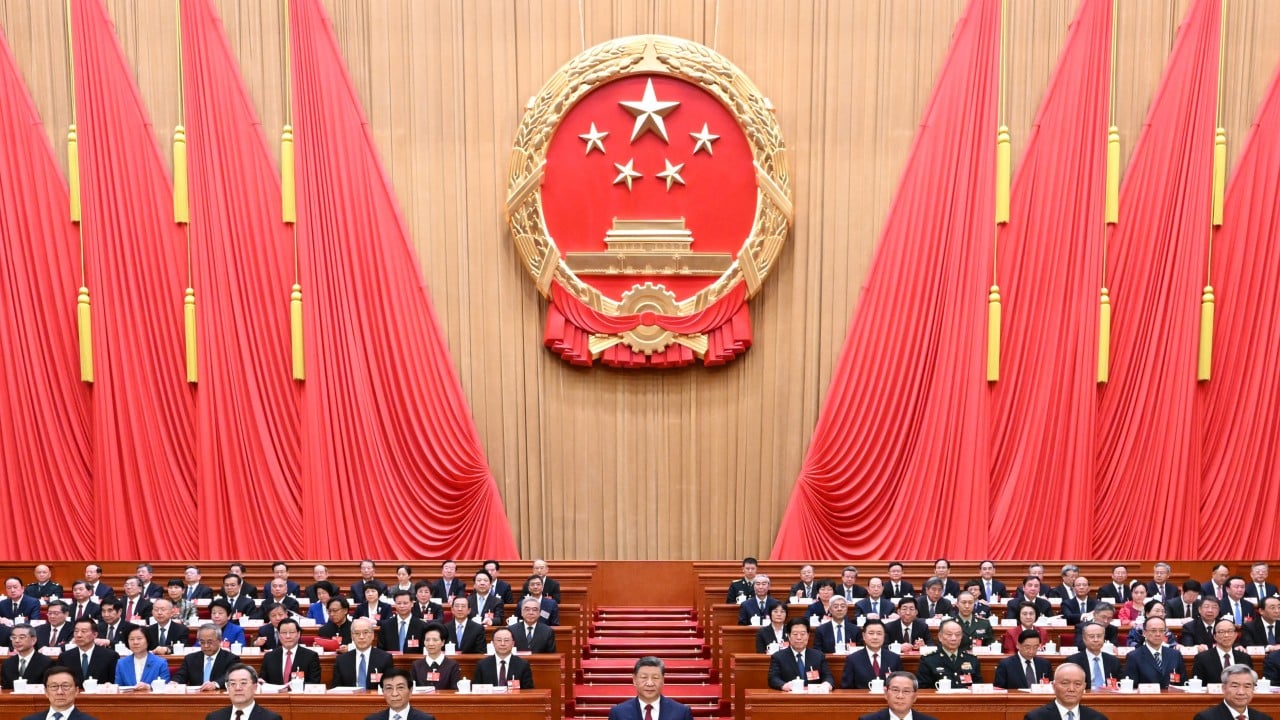
Let's look at the data. Look at the 20th Party Congress. The surge of officials with backgrounds in aerospace, artificial intelligence, and new materials is staggering. But look closer at where they are placed. They aren't in research labs. They are running Xinjiang. They are running Liaoning. They are overseeing the industrial heartlands.
The Party has identified five "Battlefields of Survival":
- Semiconductors (The lifeblood)
- Biotechnology (The future of defense and demographics)
- Aerospace (The ultimate high ground)
- Quantum Computing (The encryption killer)
- New Energy (The escape from the Malacca Trap)
I have spoken with executives who dealt with the previous generation of Chinese bureaucrats. They were deal-makers. They wanted your IP in exchange for market access. The new breed? They don't want your IP; they want your obsolescence. They aren't looking for a "win-win." They are looking for a "zero-sum" victory where China owns the entire stack.
The Dark Side of Technical Governance
There is a dangerous assumption that a technical background makes a leader more humane or less prone to ideological fervor. History suggests the opposite. Some of the most efficient atrocities in human history were managed by people with engineering degrees. When you view a population as a set of variables to be optimized rather than a collection of citizens with rights, you don't get "better" government. You get more efficient surveillance.
Technocrats love systems. They love "Social Credit" because it is a feedback loop. They love facial recognition because it is a data point. To a scientist-official, a protest isn't a grievance; it is a "system instability" that needs to be "re-stabilized."
If you are a Western CEO thinking you can "talk tech" to these new leaders and find common ground, you are delusional. They aren't your peers. They are your competitors, and they have the entire weight of a trillion-dollar state treasury behind them.
The Talent Trap: Why the West is Losing the Wrong Race
The "People Also Ask" crowd wants to know: "Should the US elect more scientists?"
The answer is: It doesn't matter if your system doesn't allow them to execute.
The advantage China has isn't that their leaders know how a rocket works. The advantage is that when they decide to build a rocket industry, they can strip-mine their entire education system to produce 10,000 engineers while the West is busy debating the ethics of the fuel.
But this advantage has a shelf life.
The fundamental flaw in the Chinese technocratic model is the Creativity-Control Paradox. You can command an engineer to build a bridge. You can command an engineer to copy a chip design. You cannot command an engineer to have a "Eureka!" moment that disrupts the very state that employs him. By folding the scientific elite into the Party hierarchy, China is effectively turning its innovators into administrators.
Imagine a scenario where Albert Einstein wasn't allowed to think about relativity because he was too busy managing the municipal waste of Berlin. That is the hidden cost of the CCP's strategy. They are trading long-term, disruptive innovation for short-term, incremental execution.
The Death of the "Global Scientist"
We are witnessing the end of the era where a scientist belonged to the world. In the new Chinese model, a scientist is a national asset, no different than a coal mine or a carrier group.
I’ve seen this play out in real-time. Ten years ago, a Chinese PhD returning from MIT was a bridge between cultures. Today, that same PhD is often viewed by Beijing as a strategic acquisition and by Washington as a potential security risk. This isn't just "brain drain" or "brain gain." It is the weaponization of the intellect.
The new "Red Technocrats" are comfortable with this. They don't see themselves as part of a global academic community. They see themselves as the vanguard of a civilizational rebirth. They aren't looking for "synergy" with Western labs. They are looking for "substitution."
Stop Romanticizing the "Smart" Autocrat
Do not mistake efficiency for wisdom.
The Western obsession with China's technocracy is a form of "competence envy." We are so tired of our own political gridlock that we find the sight of a nuclear engineer building a high-speed rail network seductive. But that rail network comes with a price tag that doesn't appear on a balance sheet: the total subordination of the individual to the state's technical goals.
The "Scientist-Official" is the ultimate tool for a regime that wants to eliminate the "messiness" of humanity. They don't want to debate you. They want to calculate you.
If you are looking at the rise of Chinese scientists and seeing a triumph of meritocracy, you are looking at the surface of the water while the shark is underneath. This isn't about being "smart." This is about being "strong."
The West doesn't need more engineers in Congress. It needs to realize that we are no longer in a competition of ideas. We are in a competition of physical realities. The Chinese technocrat isn't a philosopher-king; he is a system administrator for the largest autocracy in history.
Stop asking if they are smarter than us. Start asking what happens when the people who build the world's most advanced tools decide those tools should only be used to keep one group of people in power forever.
The era of the "Global Village" is dead. The era of the "Sovereign Lab" has begun. Adjust your strategy accordingly or get out of the way.