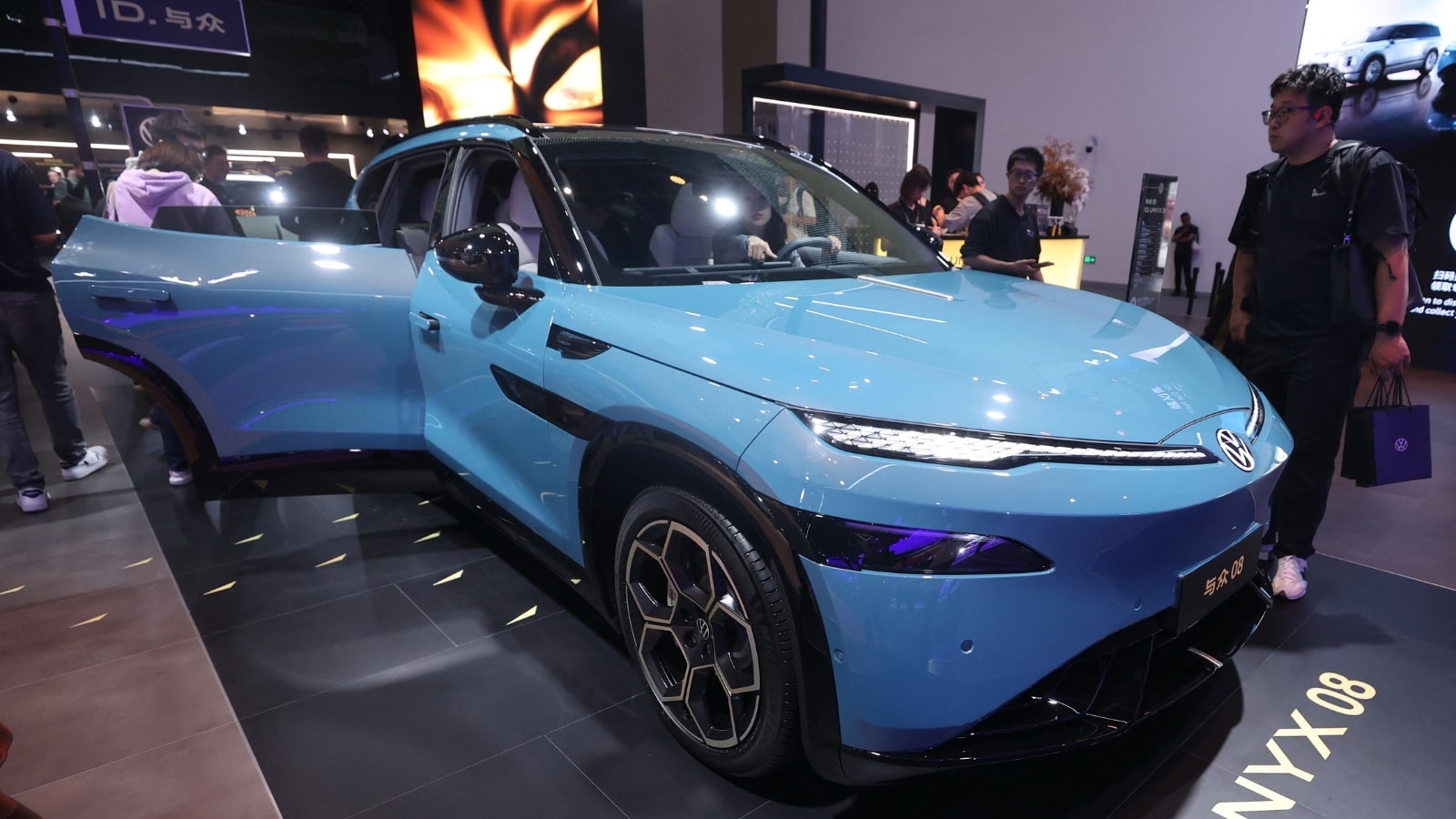
The traditional automotive lifecycle used to take four to five years. You drew a concept, smashed prototypes into concrete walls, spent months tweaking mechanical parts, and eventually shipped a car to a dealership. That era is dead. Artificial intelligence tools now let Chinese manufacturers compress new vehicle development cycles down to roughly 18 months. It sounds like a victory for pure engineering efficiency.
It is also causing a panic in government offices.
When you build cars at software speed, you run into physical reality. Beijing just launched a sweeping, year-long nationwide inspection campaign targeting production conformity, durability testing, and new technology verification. Authorities are tired of seeing rushed electric vehicles roll off assembly lines only to face massive recalls or unexpected component failures. The collision between hyper-fast artificial intelligence development and heavy-handed safety crackdowns tells us a lot about where the global automotive industry is heading next.
The Speed Trap of Artificial Intelligence
Automakers in China are using artificial intelligence for everything from aerodynamic simulation to generative user-interface design. Instead of building physical wind-tunnel prototypes, engineers run millions of virtual iterations in hours. This computing power allows companies to slash development timelines from a standard 36 months down to 18 months or less.
On paper, this sounds amazing. If you can iterate faster, you can respond to consumer trends instantly and outpace legacy foreign competitors who are stuck in slow-moving corporate hierarchies.
The trouble starts when digital simulations don't match the chaotic mess of the real world. A machine learning algorithm might optimize a chassis design or a battery layout on a server farm, but it can't always predict how a physical component ages after five years of potholes, extreme winter cold, and driver abuse. When development shrinks from years to months, the physical validation phase gets squeezed. Companies end up relying on over-the-air software patches to fix problems that should have been caught during wet-ink prototyping.
Regulators Draw a Hard Line
Beijing isn't letting this slide. The Ministry of Industry and Information Technology, alongside other key agencies, initiated a strict oversight campaign aimed at stopping the era of the rushed car.
Regulators have instituted rigid checkpoints that automakers must clear. Companies can use digital tools and concurrent engineering all they want, but they must provide concrete, traceable proof that their efficiency gains didn't sacrifice real-world testing. If you skipped physical durability trials because your AI model said you didn't need them, your production license is at risk.
We are also seeing massive structural shifts in what cars are allowed to have. Authorities banned certain hidden flush door handles after rescue access issues surfaced during accidents, and strict new standards for battery thermal runaway mean packs must not emit smoke or catch fire for hours after a cell failure.
At the same time, massive recalls are sweeping the market. Millions of electric vehicles have been flagged for physical component issues, proving that software-first mentalities cannot completely bypass mechanical durability.
What This Means for Global Automakers
If you think this is just a domestic Chinese administrative headache, think again. The playbook being written here will affect every car market on Earth.
Chinese brands are expanding aggressively into Europe, Southeast Asia, and Latin America. They are bringing cars designed in record time with advanced digital cockpits and aggressive price tags. But as export volumes rise, foreign safety regulators are going to look closely at these exact same validation records. Export markets will demand proof that 18-month development cycles didn't cut corners on crash structures or cybersecurity resilience.
The industry is splitting into two distinct camps. One camp believes that physical cars are basically consumer electronics that should be updated rapidly and replaced often. The other camp remembers that a two-ton metal box moving at high speeds remains a lethal weapon if a line of code miscalculates structural fatigue.
The winners won't be the companies that build the fastest. They will be the ones smart enough to use artificial intelligence for speed while keeping old-school discipline for safety. Don't expect the race to slow down, but do expect the toll for cutting corners to get much higher.
:max_bytes(150000):strip_icc()/GettyImages-700832601-5bb602c0c9e77c002609fe08.jpg)