The morning air outside Paris smells of diesel, damp asphalt, and the distinct, metallic ozone of a commuter train braking too hard. It is a Tuesday that feels like every other Tuesday. Thousands of people in beige coats step onto the platform, their eyes fixed on screens displaying delays, cancellations, and the endless accumulation of municipal gray. They carry the weight of European winters in their shoulders. They walk fast because standing still invites the cold.
Now, close your eyes. Picture a different sky.
Imagine an orange sun sinking behind a jagged peak shaped like a turtle shell. Picture a small, tile-roofed house sitting on a grassy knoll, surrounded by an ocean so blue it hurts to look at it. No spreadsheets. No quarterly reviews. Just the sound of waves, the whistle of a wind-whipped staff, and the absolute certainty that if you train hard enough, you can fly.
That impossibility—the absurd, beautiful physics of Akira Toriyama's universe—is moving to France.
Paris and Saudi Arabia are joining forces to build a massive Dragon Ball Z theme park, spanning over 500,000 square meters, tucked just outside the French capital. This is not a casual nod to pop culture. It is a massive, multi-million-dollar physical manifestation of childhood devotion, designed to drop visitors straight into the World Martial Arts Tournament arena, complete with iconic zones representing Beerus's planet, Capsule Corporation, and iconic battles that defined the childhoods of an entire generation across Europe.
To understand why this matters, you have to understand the strange, deep romance between France and manga.
In the early 1980s, long before anime was a global streaming commodity, French television executives needed cheap children's programming. They bought Japanese animation blocks by the container load. They dubbed them quickly, often poorly, and broadcast them into living rooms where children sat cross-legged on carpeted floors. Adults dismissed it as violent foreign noise. Kids knew better.
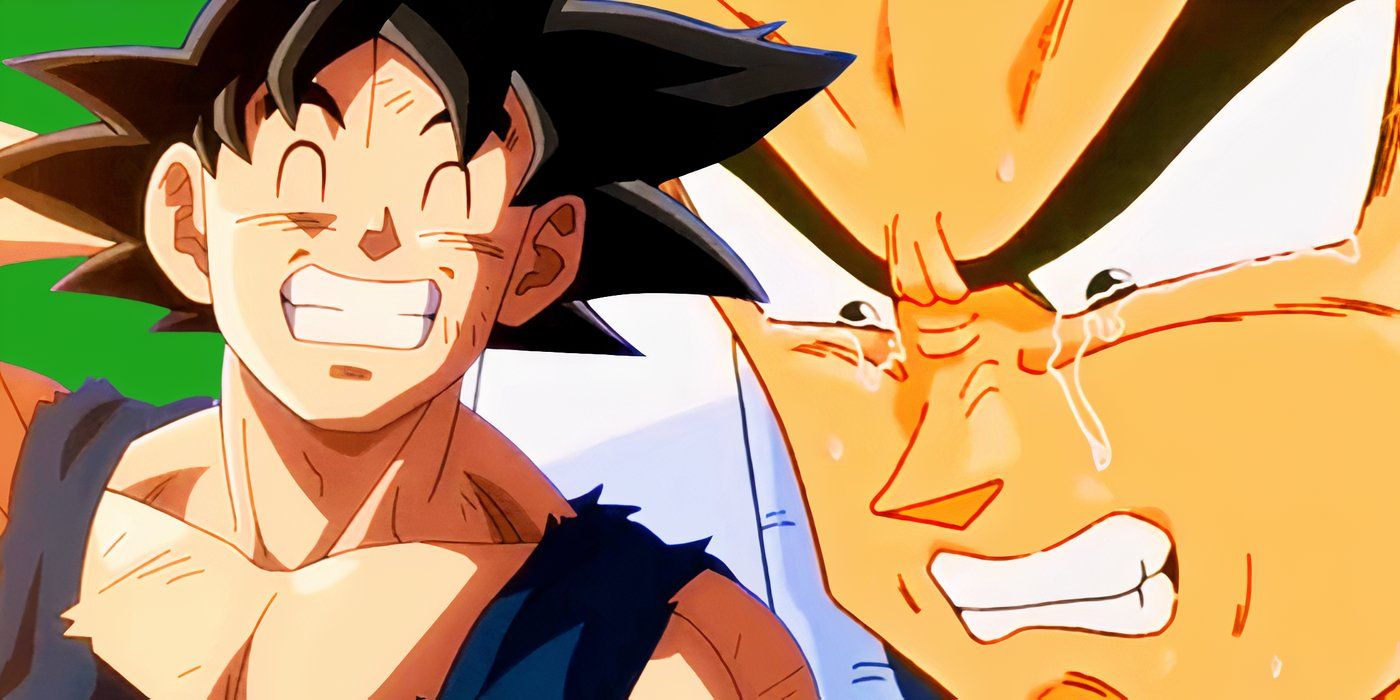
We watched Goku grow from a feral boy with a monkey tail into a savior of worlds. We learned that failure wasn't an endpoint; it was just a cue to stand back up, tear your shirt off, and try a spirit bomb one more time.
France became the second-largest consumer of manga and anime in the world, trailing only Japan. Walk into a bookstore in Lyon, Marseille, or the Latin Quarter of Paris today, and you will find shelves upon shelves of graphic novels outselling traditional literature. The French didn't just consume the culture; they adopted its emotional architecture.
So when news broke that Qiddiya Investment Company—backed by Saudi Arabia’s Public Investment Fund—was partnering to bring this colossal project to life near Paris, the internet didn't just react. It shuddered.
Critics will point out the financial engineering. They will talk about sovereign wealth funds, tourism diversification, and post-oil economic strategies in the Middle East meeting European leisure markets. They will look at the blueprints of the park—seven distinct zones, rollercoasters threading through a massive 70-meter-tall Shenron the dragon—and see only cold calculus. Real estate. Ticket prices. Capital return metrics.
They are missing the soul of the machine.
Economics built the bricks, but nostalgia built the blueprints. Consider what happens when a 35-year-old accountant from the Parisian suburbs, someone who spent their allowance on folded black-and-white comic volumes at the local tabac, walks beneath the shadow of a giant dragon. The commuter train disappears. The gray concrete dissolves. For a few hours, the laws of adult gravity are suspended.
This project represents a fascinating collision of geography and fantasy. Saudi Arabia is building the physical infrastructure of Qiddiya at home, turning desert expanses into futuristic entertainment hubs, yet they are staking a claim in the heart of Europe. They recognize that intellectual property is the only currency that transcends borders effortlessly. You do not need to speak Japanese or Arabic to understand the stakes of a glowing golden aura. You just need to remember what it felt like to want to be strong when the world made you feel small.
There is a vulnerability in loving something animated. People mock adults who care about comic books, superheroes, or martial arts sagas from the nineties. They call it escapism. They act as if wanting to step outside the grinding misery of modern life is a moral failure.
Let them mock.
The park near Paris will not solve housing crises or political fractures. It will not fix broken supply chains or mend fractured geopolitical alliances. But it will offer something arguably just as vital for the human spirit: a tangible sanctuary for the imagination.
When the gates open, and the theme music of your youth echoes across the French countryside, the spreadsheets won't matter. The financial backers won't matter. Only the kid on the carpeted floor will remain, watching a stubborn kid with spiked hair scream at the sky until the earth shook.
We spent our lives growing up. It is time, at least for a weekend, to remember how to power up.