The accident in the Sierra Madre mountains of Chihuahua didn’t just take four lives; it exposed a massive, jagged crack in the foundation of US-Mexico relations. When news broke that two US embassy officials, widely reported as CIA officers, died in a car crash alongside two Mexican state officials, the immediate focus was on the tragedy. But the political fallout arrived within hours, and it’s arguably more significant than the accident itself.
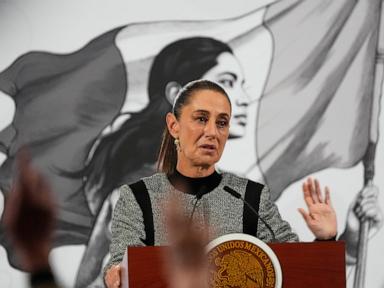
President Claudia Sheinbaum didn’t hold back. In her morning press conference, she made one thing perfectly clear: her administration had no idea these US agents were involved in a counternarcotics operation. She didn’t know, her security cabinet didn’t know, and the Secretariat of Foreign Relations certainly didn’t know. This isn’t a small bureaucratic oversight. It is a fundamental question of Mexican sovereignty and the rules of engagement that supposedly govern how US intelligence agencies operate south of the border.
You’re hearing a lot of noise right now—speculation about rogue agents, claims of "unauthorized" operations, and the predictable saber-rattling from Washington. But look past the headlines. This incident cuts straight to the central tension in the current US-Mexico relationship: the desperate American need for results against cartels versus Mexico’s requirement to maintain control over its own national territory.
The Legal Reality Behind The Rhetoric
Mexico’s national security laws aren't just suggestions. They are rigid frameworks designed to prevent the exact scenario we just witnessed. Foreign agents in Mexico are generally barred from engaging in direct operational activities—like participating in drug lab raids—without explicit federal authorization. It’s an arrangement that keeps the relationship professional and prevents the "Wild West" scenarios of the past.
The issue here is the "cooperation" pipeline. Chihuahua, a key border state, has long had its own channels of communication with US agencies. Often, these channels bypass the federal government in Mexico City. The logic, from the perspective of state-level officials, is simple: they need intel, they need training, and the US has both. Why wait for federal bureaucracy when you can work directly with a partner on the ground?
But from Sheinbaum’s desk, this is a nightmare. It creates a "blind spot" in national security. If you don't know who is operating where, you don't know who is responsible when things go wrong. When those four people died in that ravine, the first question wasn't "Who were they?" but "Who authorized them to be there?" When the answer turned out to be "nobody at the federal level," it signaled that the state of Chihuahua had effectively outsourced its security oversight to foreign officials. That’s a constitutional issue. It’s a sovereign issue. And for a president like Sheinbaum, who has campaigned on professionalism and clear lines of command, it’s an unacceptable breach of protocol.
Why Chihuahua Is The Epicenter
You might wonder why this happened in Chihuahua. Look at a map. This state is the transit corridor for a massive percentage of the fentanyl and illicit drugs flowing north. The cartels know this, the Mexican government knows this, and the US intelligence community knows it best of all.
The pressure from Washington—specifically under the current administration—has been relentless. The demand isn't just for "more cooperation." It’s for results. It’s for dismantled labs, arrested kingpins, and suppressed violence. This pressure forces state officials, often struggling with limited resources, to look for any advantage they can get. Enter the CIA, which has been expanding its counternarcotics footprint significantly across Latin America.
When you have a state government that feels abandoned or overwhelmed, and a US intelligence agency eager to show it can deliver, you get the "Chihuahua Model." It’s fast, it’s effective, and it’s entirely illegal under the current framework. The tragedy is that this model operated in the shadows until a car skidded off a mountain road. Now, the daylight has hit, and the questions are uncomfortable for everyone involved.
The Strategy Of Deniability
There’s a sophisticated game of "don't ask, don't tell" occurring here. Washington wants to be able to say it’s helping. Chihuahua state authorities want the intelligence and tech the US provides. Mexico City wants to maintain the appearance of total control without having to deal with the messy reality of daily anti-cartel operations in remote mountains.
Sheinbaum is currently stuck in the middle. She cannot be seen as soft on sovereignty—the Mexican public is historically sensitive to US meddling. Yet, she also can’t afford to burn the relationship with the US, which remains Mexico's primary trading partner and, when it works correctly, its primary security partner.
Sheinbaum’s public statements about needing "explanations" are a message to both sides. To the US, she’s saying: "Stop using state-level backdoors. If you want to operate, follow the federal legal process." To her own officials in Chihuahua: "Stop acting like you run your own foreign policy."
It’s a masterclass in diplomatic positioning. By framing the incident as a potential constitutional violation, she shifts the conversation from "did the US fail?" to "did the state government break the law?" It protects her from accusations of being weak against the US while simultaneously reasserting her authority over the state government.
Distinguishing Between Reality And Speculation
A lot of what you see online right now is hyperbolic. You’ll see people claiming this is the start of a "secret war" or that the US is actively occupying parts of Mexico. That’s nonsense.
The reality is much more mundane, which actually makes it harder to fix. It’s a mix of overworked state officials, desperate for any help they can get, and US intelligence officers who are essentially "mission-creeping" their way into roles they aren't authorized to have. It’s bureaucratic friction, not an invasion.
If you look at the recent success against cartel figures—like the operation that led to the death of the CJNG leader—you see the model working as intended: intelligence sharing at the federal level, followed by Mexican-led operations. That works. The Chihuahua incident, by contrast, is a failure of that model. It’s an example of what happens when shortcuts become the standard procedure.
Actionable Takeaways For Understanding The Situation
If you want to track where this goes next, don't rely on sensationalist takes. Watch for these three specific developments:
- Federal-State Memo Protocols: Expect a new, extremely strict set of rules from Sheinbaum’s office regarding how state governors communicate with foreign embassies. Any "informal" training or intel sharing will likely be shut down or heavily audited.
- The "Accreditation" Audit: Watch for how many US embassy personnel in states like Chihuahua, Sonora, and Baja California are suddenly asked to verify their "accreditation." If a staffer is in the country as a "tourist," expect them to be sent home quietly to avoid diplomatic embarrassment.
- The Bicentennial Framework Review: The current security pact between the US and Mexico is constantly under revision. Look for "tightened oversight" clauses in the next round of talks. Sheinbaum needs to prove to her domestic base that she’s in charge; the US needs to prove to its voters that it’s fighting the drug trade. The middle ground will be more paperwork and stricter reporting requirements for every US agent in Mexico.
Ultimately, the Chihuahua tragedy is a lesson in the limits of shadow diplomacy. When security forces operate in the gray areas, they eventually hit a wall. In this case, that wall was a literal cliffside. The relationship between Mexico and the US is too big, too complex, and too vital to be left to ad-hoc, off-the-books operations. Sheinbaum knows it, Washington knows it, and the state governors are about to find out the hard way that the cost of doing business has just gone up significantly. Don't expect a conflict—expect a crackdown on the loose, informal networks that have defined this security environment for the last few years. The era of the "unauthorized operation" is coming to a very abrupt end.