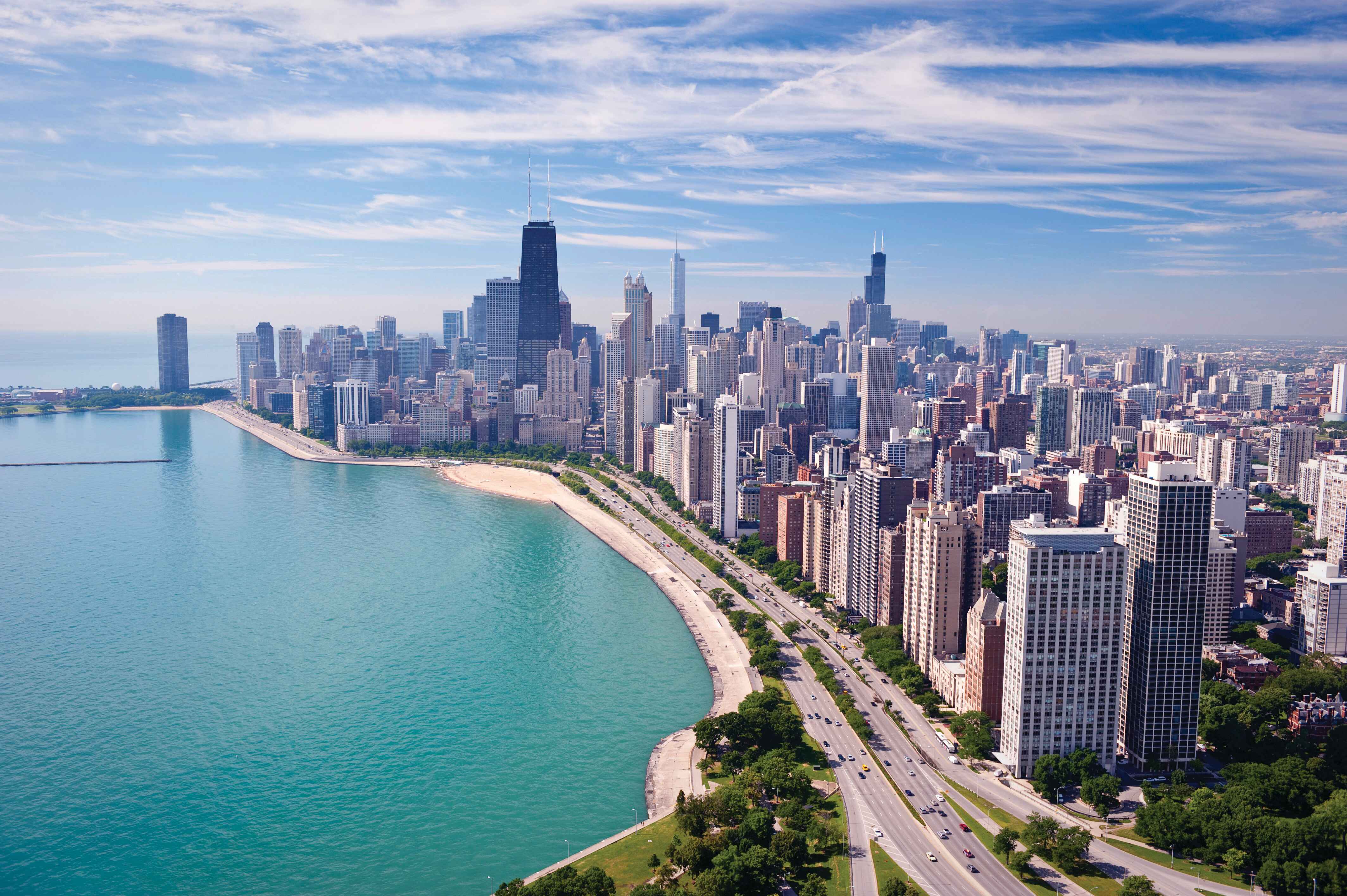
The wind off Lake Michigan does not merely blow; it edits. It strips away the pretense of the city, tearing at wool coats and rattling the elevated train tracks until the metallic roar drowns out everything else. Most visitors stand on the Magnificent Mile, necks craned toward the glass prisms of Michigan Avenue, or queue for hours to squint through the slanted windows of the Willis Tower. They want the postcard. They want the vertical Chicago of steel and ego.
They miss the quiet rooms.
If you walk ten blocks west and two south, past the roaring concrete arteries where semi-trucks rumble toward the Stevenson Expressway, the noise drops away like a heavy theater curtain. You find an alley paved with Belgian blocks that have been polished smooth by a century of rain. A green wooden door with no sign, save for a brass number three. Inside, the air smells of old cedar, roasting chicory, and the damp wool of coats left on a bentwood rack.
This is where the city hides its true vernacular.
Chicago has always been two places occupying the same geographic coordinates. There is the loud, swaggering municipality of Carl Sandburg's hogs and steel—the brawny, brawling titan that rebuilt itself in a single generation after the great ash of 1871. But beneath that architectural skeleton lies a network of intimate pockets, neglected by tour buses and protected by locals who regard silence as a scarce and precious commodity.
Consider what happens when you leave the Loop behind on a Tuesday morning.
The sidewalk narrows in Pilsen. The murals here do not decorate walls; they argue with them. They tell stories of displacement, of copper kettles simmering with mole, of grandmothers who remember when 18th Street was a dirt track flanked by prairie grass. You stop at a nondescript bakery where the woman behind the counter does not speak English, nor you Spanish, but a pointed finger and a warm nod secure a concha still hot enough to melt the paper bag. You eat it standing against a brick wall painted the color of marigolds.
There is no plaque commemorating
The Chicago Nobody Knows
travel, lifestyle
The wind off Lake Michigan does not merely blow; it strips the paint off memory. Tourists stand shoulder-to-shoulder on the Magnificent Mile, squinting up at glass monoliths, clutching plastic bags from flagship stores that exist in every zip code from Tokyo to Toronto. They smell roasted nuts from cart vendors, hear the rhythmic roar of the double-decker buses, and leave believing they have touched the pulse of the Midwest.
They have touched nothing. They have merely pressed their palms against the windowpane.
Chicago is a city built on vertical ambition and horizontal ghosts. Beneath the polished veneer of architectural boat tours and Michelin-starred tasting menus lies an entirely different municipal geography—a city of hidden courtyards, subterranean jazz joints that refuse to die, alleys lined with century-old cobblestones, and neighborhoods where the language spoken on the front porch changes every three blocks.
To find the true Chicago, you have to abandon the map. You have to walk until the concrete changes color and the sound of the elevated train fades into the low murmur of neighborhood life.
Consider what happens when you turn away from the river and walk west, deep into Pilsen, long after the morning rush has evaporated. The air here smells less of diesel and more of roasting chiles, fresh lime, and old brick baking in the afternoon sun. On 18th Street, the walls speak. They are plastered with murals that tell the history of labor, migration, and fierce community survival, painted by hands that belong to people who have lived through the city's cyclical betrayals and rebirths.
You slip through an unmarked wooden gate off a residential side street and find yourself in a hidden garden courtyard, completely insulated from the roar of the city. There is no sign. There is no velvet rope. There is just an elderly man named Mateo pruning grapevines that his father planted in the nineteen-seventies, offering a handful of sun-warmed fruit to anyone who nods in greeting. This is not a tourist attraction. This is the living room of a neighborhood.
Move north, past the gleaming towers of the Loop, past the collegiate Gothic facades of Lincoln Park, and slip into the quiet corners of Uptown or the labyrinthine alleys of Andersonville. Here, Chicago reveals its eccentricities.
Take the Green Mill up in Uptown. To walk through its nondescript doorway is to step backward through a velvet curtain into 1927. The booths are scuffed by decades of knees. The air smells of stale beer, lemon-scented polish, and old wool. In the corner booth, Al Capone’s favorite—where he could watch both the front door and the alley exit simultaneously—someone’s coat is draped over the leather. The bass player leans into his instrument, his eyes closed, pulling a note so deep and resonant it vibrates straight up through the floorboards into your teeth.
Nobody comes here because a travel magazine told them to. They come because they received the address in a whispered recommendation from a bartender three neighborhoods away.
This is the secret currency of Chicago. It is a city obsessed with preservation, not of glass and steel, but of spirit.
Farther south, past the industrial bones of the Pilsen rail yards and into Bridgeport, the streets narrow. Small brick cottages, built a century ago for steelworkers and stockyard laborers, sit shoulder-to-shoulder like old friends whispering secrets. Step into Maria’s Packaged Goods & Community Bar. From the outside, it looks like a preserved relic of a neighborhood liquor store, complete with vintage neon signs flickering over the door. Inside, it transforms into a cultural laboratory where neighborhood locals who have lived on the same block since Eisenhower was president share elbow space with artists, poets, and musicians who moved into the city last Tuesday.
This juxtaposition is the heartbeat of the place. Chicago is allergic to pretense. It is a working-class town that accidentally built some of the world's greatest skyscrapers, a place where people will debate the merits of deep-dish versus tavern-style pizza with the gravity usually reserved for international treaties.
To understand this friction, you have to visit the Green City Market on a crisp autumn Saturday morning, but ignore the pristine stalls of artisanal cheese. Instead, watch the old-timers who sit on the low stone walls near the edges of Lincoln Park, trading gossip about weather patterns and city council corruption that dates back to the Daley administration. They are the human archives of a town that reinvents its skyline every twenty years while stubbornly refusing to change its soul.
The mistake travelers make is looking for Chicago in the museums and the monuments. Monuments are static. They are history wrapped in bronze and stone. But Chicago is a verb. It is happening in the smoky back room of a jazz club on a Tuesday night. It is happening in a tiny, nameless bakery in Chinatown where a woman rolls out dough for soup dumplings with movements so fast they blur. It is happening on the crumbling concrete steps of a lakefront promontory where a lone saxophonist plays into the freezing wind, asking nothing from the city except an echo.
When you leave, your shoes will be dusted with limestone and soot from the el tracks. Your ears will ring with the distant, metallic shriek of steel wheels rounding a tight elevated turn. And you will realize that the city’s best-kept secrets are not hidden in shadows. They are hiding in plain sight, protected entirely by the fact that most people are simply moving too fast to look down.