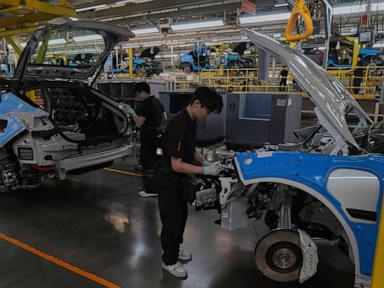
The transaction was quiet, pragmatic, and seismic. When traditional legacy automakers begin offloading their physical footprints to fast-rising international rivals, the era of protectionist comfort ends. Chery acquiring a Nissan manufacturing facility is not merely a corporate real estate transaction. It represents a fundamental transfer of industrial gravity. For decades, legacy brands dictated where cars were built, how supply chains functioned, and which markets deserved investment. Now, Chinese automakers are simply moving into established factories to build electric vehicles right on the doorstep of hesitant foreign competitors.
The Anatomy of Industrial Retreat
Look past the corporate press releases. Nissan did not sell a facility out of sudden charity or a desire to diversify global manufacturing for fun. Capacity utilization tells the real story. When a massive assembly plant operates far below its maximum output, it becomes an expensive drain on corporate balance sheets. Maintaining idle robotics, paying overhead for half-empty paint shops, and servicing massive real estate footprints will bleed any legacy balance sheet dry. Also making headlines recently: Why the Tata Succession Battle Changes Corporate Governance Forever.
Japanese and Western manufacturers expanded rapidly during the twentieth-century boom, assuming continuous growth would always justify the square footage. That assumption shattered under the weight of the electric transition. Electric vehicle architecture requires different assembly lines, reconfigured battery staging areas, and streamlined component integration. Retrofitting an ancient, rigid factory often costs almost as much as building a greenfield site from scratch.
So, legacy giants are pruning their portfolios. They are cutting assets in mature regions to preserve cash for software development and battery joint ventures. Enter companies like Chery. They do not need to spend three years acquiring permits, zoning land, and training local workforces from a blank slate. They plug their supply chains directly into ready-made infrastructure. They inherit local supplier networks, experienced industrial labor pools, and regional regulatory compliance in one fell swoop. Additional insights into this topic are detailed by Bloomberg.
Why Traditional Plants Work for New Entrants
A factory floor is a language of steel, conveyors, and tolerances. Chery taking over an established Nissan site means they acquire more than four walls and a roof. They gain immediate access to local institutional knowledge.
- Workforce Readiness: The technicians working the line already understand automotive quality control standards, even if the brand and tooling change.
- Regulatory Alignment: Environmental and safety clearances attached to an existing manufacturing license often transfer or accelerate local bureaucratic approvals.
- Logistics Hubs: Legacy plants were originally built near major shipping ports, rail lines, and highway interchanges for a reason. New entrants inherit these prime geographic advantages instantly.
This shortcut bypasses years of bureaucratic friction. While Western trade ministries debate new tariffs and bureaucratic roadblocks, Chinese manufacturers are already inside the fortress, setting up robotic welding arms inside buildings that once pumped out internal combustion engines.
Overcapacity at Home Breeds Global Expansion
You cannot understand Chery's aggressive moves abroad without looking at the domestic pressure cooker in China. The domestic automotive market is saturated. Dozens of domestic brands are locked in a ruthless price war, squeezing profit margins to the bone. Beijing pumped billions into building out massive manufacturing capacity over the last decade. The result is an industrial machine capable of producing millions more vehicles than the local population can possibly buy.
Exporting is no longer an optional strategy for growth. It is an existential necessity.
To survive the domestic shakeout, companies must scale globally. But exporting completely built cars from Chinese ports incurs heavy shipping costs and invites immediate political retaliation in the form of steep import duties. Shipping giant steel boxes across oceans makes less economic sense when destination markets are slapping thirty, forty, or fifty percent tariffs on imported electric vehicles.
Localizing production solves this dilemma. By buying up distressed or underutilized assets owned by foreign brands, Chinese automakers neutralize tariff arguments. When a vehicle is assembled inside a European or Asian plant using a significant percentage of local components, protectionist politicians lose their primary talking points. It ceases to be an invasive import. It becomes a localized product providing local jobs.
The Shift in Market Power
[Legacy Expansion Era] -> High Capital Outlay -> Slow Greenfield Development -> Rigid Supply Chains
[New Wave Localization] -> Asset Acquisition -> Instant Footprint -> Flexible, Rapid Deployment
This structural shift reverses historical patterns. For decades, Western and Asian giants built joint ventures inside developing markets to gain access to consumers while retaining core technology control. Now, Chinese corporations are acquiring physical assembly footprints in developed automotive territories.
The financial muscle required for this maneuver is staggering. While legacy balance sheets are strained by falling margins on legacy internal combustion engines and slow-selling initial electric lineups, Chinese firms backed by robust domestic cash flows and strategic state support can write large checks for idle foreign assets.
The Strategic Playbook for Global Dominance
Acquiring a plant is only the first step. The deeper strategy involves completely rewriting how vehicles are engineered, built, and delivered to consumers. Chery and its peers do not operate with the same legacy drag as historical automakers. They iterate software faster, update vehicle platforms on eighteen-month cycles instead of five-year cycles, and maintain hyper-integrated supply chains that cut raw material costs dramatically.
When these production philosophies meet a traditional factory floor, efficiency skyrockets. The equipment might be familiar, but the software running the factory, the sequencing of parts arrival, and the integration of battery packs are entirely modern.
Overlooked Hurdles in the Transition
Of course, this path is not without friction. Integrating a foreign corporate culture into a newly acquired manufacturing plant brings severe growing pains.
- Cultural Clashes: Management styles between traditional Japanese or Western executives and fast-moving Chinese corporate teams often clash over decision-making speed and hierarchy.
- Labor Relations: Local labor unions watch foreign acquisitions with intense suspicion. Fears of downsizing, altered benefit structures, and shifts in workplace culture trigger immediate pushback.
- Brand Perception: Consumers in mature markets have spent decades trusting specific nameplates. Convincing a skeptical buyer to purchase an advanced electric vehicle built in a converted legacy plant requires massive marketing spend and bulletproof reliability records.
Yet, none of these hurdles are fatal. They are typical growing pains of an industry undergoing radical consolidation. Every historical wave of automotive globalization—from American giants expanding into Europe in the mid-twentieth century to Japanese and South Korean brands building plants in North America in the nineteen-eighties—faced identical resistance and skepticism. The skeptics always underestimate how quickly economic incentives override cultural nostalgia.
The Broader Industrial Fallout
What happens when the map of global manufacturing is completely redrawn over the span of a single decade? Legacy brands can no longer rely on geographical moats. For a century, an automotive brand could protect its home turf simply because building a massive manufacturing network required capital outlays that few outsiders could stomach.
That moat has dried up. Capital is mobile, industrial overcapacity demands an outlet, and established plants are up for grabs for any buyer with deep enough pockets and the operational discipline to turn them around.
Nissan offloading a facility to Chery is a symptom of a much larger realignment. It signals that the traditional guard can no longer defend every market from a position of unchallenged strength. As more plants change hands, the distinction between domestic and foreign manufacturing will blur entirely. The cars parked on suburban streets tomorrow will carry heritage badges of old, or entirely new names born out of digital-first speed, but inside the factory walls, the machinery, the methods, and the master plan belong to a new industrial vanguard that refuses to wait for permission.