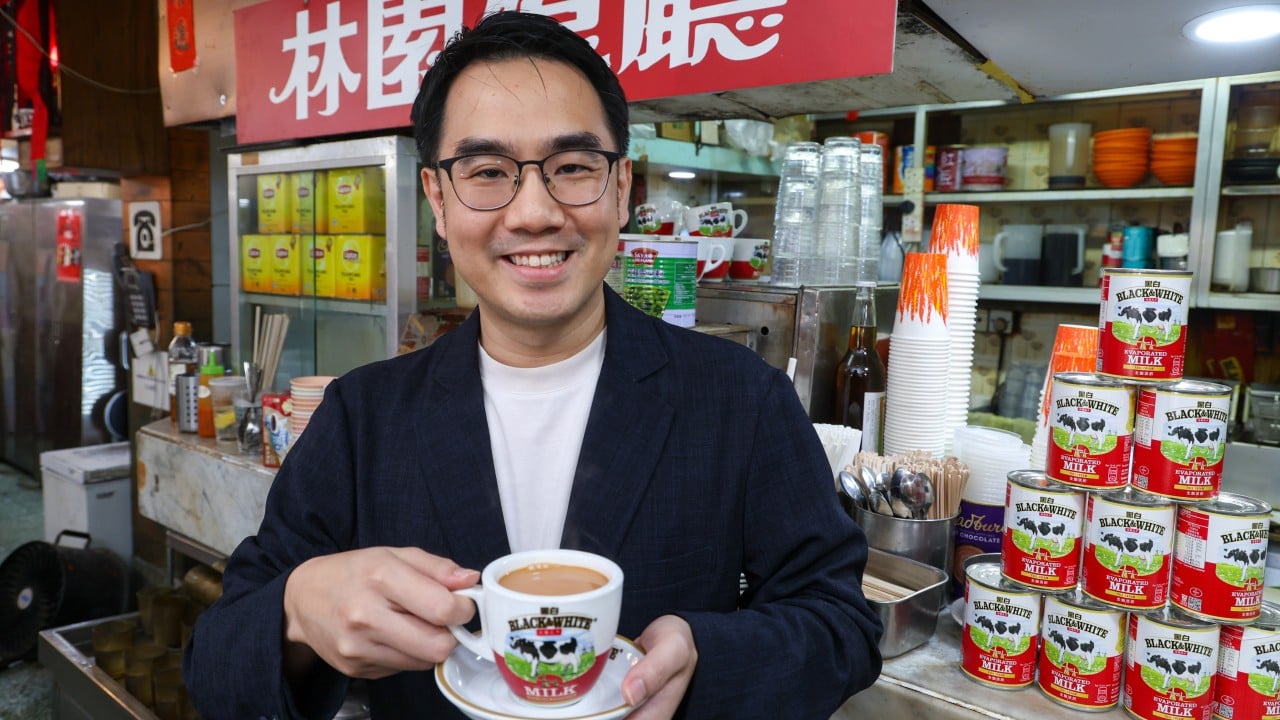
Hong Kong style milk tea tastes the way it does because of a Dutch company named FrieslandCampina and their iconic Black and White evaporated milk brand. Walk into any cha chaan teng across the territory, and you will spot those familiar blue-and-white cans stacked behind the counter. For decades, locals assumed local dairies produced this essential brew component. They did not. The signature texture, mouthfeel, and rich profile rely entirely on a specific formulation of imported canned milk developed specifically to withstand the brutal heat and humidity of southern China while balancing the astringency of heavy Ceylon tea leaves.
The Colonial Blueprint of a Daily Ritual
British administration brought afternoon tea to Hong Kong during the colonial era, but local residents found the traditional British method too thin. High-end imported fresh milk was an expensive luxury reserved for officials and the wealthy. Working-class residents needed an alternative that delivered calories, fat, and durability without requiring daily refrigeration. Meanwhile, you can read related developments here: The Silent Invasion Beneath the Waves of the Mediterranean.
Enter evaporated milk. Invented in the nineteenth century, canned dairy products could survive tropical shipping routes and warehouse storage without spoiling. Enterprising tea stall owners began experimenting with these condensed and evaporated varieties, mixing them with strong, affordable black tea blends imported from Sri Lanka.
The process evolved from a casual experiment into an exacting science. The tea itself is brewed using a cloth sack strainer that resembles a silk stocking, a tool that earned the beverage the colloquial name silky milk tea. This straining method serves a distinct mechanical purpose. It strains out bitterness while aerating the liquid, creating a smooth foundation designed to bind with dense dairy fats. To understand the bigger picture, check out the excellent article by Vogue.
The Chemistry of Evaporation
Why use evaporated milk instead of standard fresh milk or sweetened condensed milk? The answer lies in total solids and water content. Standard fresh milk is roughly eighty-eight percent water. When added to hot tea, it dilutes the flavor and lowers the temperature too quickly. Sweetened condensed milk contains massive amounts of sugar, which overpowers the subtle tannic bitterness of the tea blend.
Evaporated milk removes roughly sixty percent of the water content from fresh cow's milk through a thermal vacuum process. The resulting liquid undergoes sterilization at high temperatures, which triggers the Maillard reaction between milk proteins and natural sugars. This gentle caramelization creates a deeper, cooked-milk flavor profile that fresh dairy simply cannot replicate.
Fresh Milk -> Thermal Vacuum (Water Removal) -> High-Heat Sterilization -> Maillard Reaction -> Black and White Evaporated Milk
When added to the tea, these concentrated proteins coat the tongue. This creates the characteristic velvety mouthfeel that separates a mediocre cup from a masterclass brew.
The Dutch Monopoly on a Cantonese Staple
FrieslandCampina did not stumble into this market by accident. Through their predecessor brand, they identified the burgeoning tea culture in British Hong Kong during the mid-twentieth century and engineered a product to exact specifications. They adjusted the fat and protein ratios to ensure the milk would not curdle when poured into boiling, highly acidic black tea.
Most consumers assume milk is milk. Commercial kitchens know better. Standard consumer evaporated milk often separates or forms a skin when exposed to sustained heat. The formulation supplied to cha chaan tengs maintains a higher percentage of milk fat—usually around eight percent—and stabilizing agents that keep the emulsion stable under heat lamps and boiling urns.
This created a deep commercial moat. Generations of Hongkongers grew up associating this specific dairy brand with authenticity. If a restaurant switches to a cheaper generic alternative, regular patrons notice the drop in quality instantly. The tea tastes watery. The finish lacks the characteristic lingering weight on the palate.
The Brewing Matrix
Making a proper cup requires rigorous adherence to a specific workflow. Master tea makers do not simply drop tea bags into a mug. They create custom blends using multiple varieties of Ceylon tea leaves, balancing high-grown leaves for aroma with low-grown leaves for strength and color.
- The Blend: A combination of dust and broken orange pekoe leaves to maximize surface area extraction.
- The Pull: Pouring the tea between pots through the cloth strainer to oxidize and smooth out rough edges.
- The Marriage: Adding the evaporated milk to the cup first, before pouring the hot tea from a height to ensure immediate thermal mixing.
Pouring the hot tea into the dairy from a height forces air into the mixture, breaking up fat globules and integrating the ingredients on a microscopic level. Skip this step, and the drink separates into distinct layers of tea and milk, ruining the texture.
Economic Pressures on a Working Class Tradition
Running a cha chaan teng is a relentless business model operating on razor-thin margins. Rising rents, volatile labor costs, and fluctuating dairy import prices squeeze small operators from all sides. When FrieslandCampina raises the wholesale price of its cans, restaurant owners face a difficult dilemma. They can absorb the cost and watch their margins evaporate, or they can raise prices and risk alienating loyal neighborhood customers who view milk tea as an affordable daily entitlement.
Some independent cafes have attempted to source cheaper domestic alternatives from mainland China or Southeast Asia. Most abandoned the experiment within weeks. The public palate in Hong Kong possesses an extraordinary sensitivity to subtle shifts in flavor. Compromise the dairy, and you compromise the entire identity of the establishment.
The legacy of this colonial-era beverage endures not because of sentimentality, but because of stubborn culinary engineering. A complex web of international trade, Dutch industrial processing, and Cantonese working-class ingenuity converged into a single porcelain cup. The next time you take a sip of that rich, velvety brew, remember that you are tasting decades of applied chemistry disguised as comfort food.