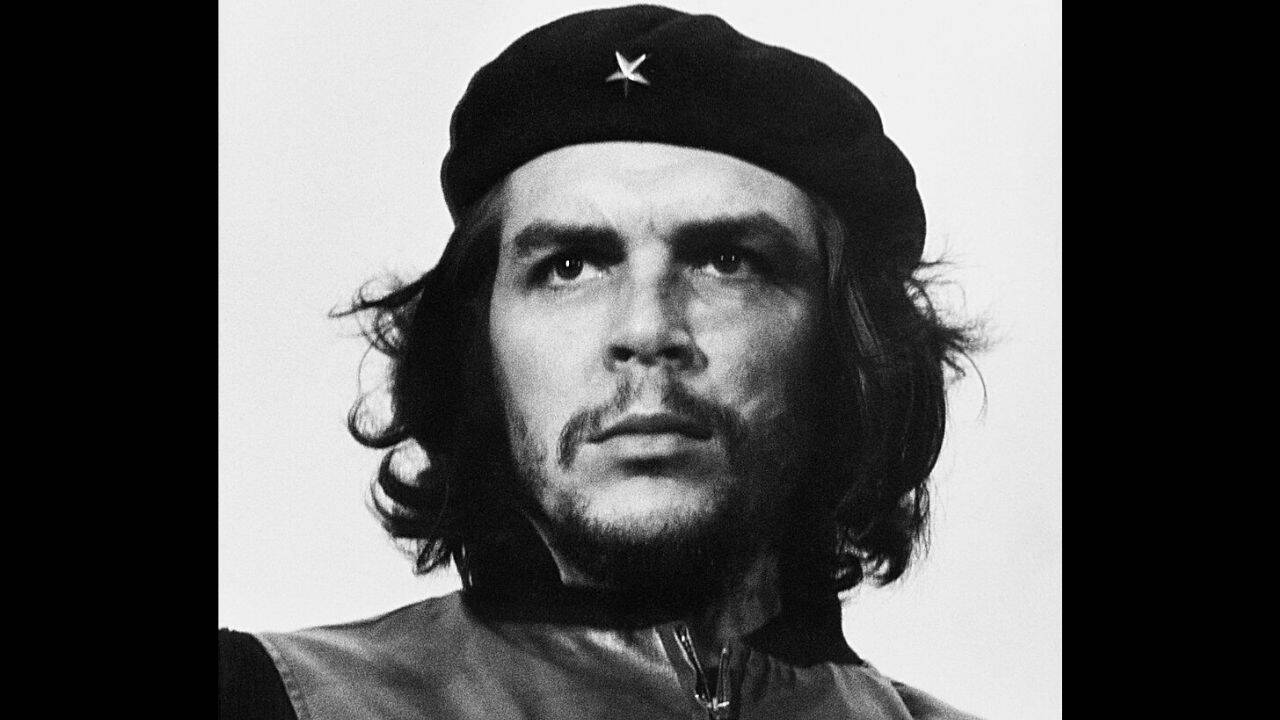
The internet loves to pass around a specific quote attributed to Ernesto "Che" Guevara: "We cannot be sure of having something to live for unless we are willing to die for it."
Every day, thousands of productivity influencers, startup founders, and self-help gurus post this sentiment. They plaster it over high-contrast photos of misty mountains or sleek corporate boardrooms. The message they want you to absorb is simple: true commitment requires absolute, self-sacrificing devotion. If you aren't willing to burn your life to the ground for your cause, your business, or your art, you simply don't care enough.
This is a dangerous lie.
It is a romanticization of martyrdom that actively destroys modern careers, bankrupts companies, and wrecks mental health. The "lazy consensus" of the self-help industry treats Guevara’s revolutionary zeal as a blueprint for everyday achievement. They mistake historical fanaticism for sustainable high performance.
In reality, the willingness to die for something does not prove its worth. It usually just proves an inability to manage risk, pivot, or think objectively.
The Economics of Fanaticism
Let us look at the structural flaw in the "willing to die for it" framework. When you treat your objective as an all-or-nothing, existential crusade, you strip away your ability to make rational choices.
In behavioral economics, this manifests as an extreme escalation of commitment, heavily driven by the sunk cost fallacy. I have seen founders blow millions of dollars in venture capital on fundamentally broken software architectures simply because they bought into the myth that "giving up is not an option." They treated their original business plan like a sacred text rather than a series of unproven hypotheses.
- The Martyr Complex: Believing that suffering equals progress.
- The Blind Spot: Ignoring market signals because your "purpose" is too pure to fail.
- The Crash: Total burnout or bankruptcy when reality refuses to bend to your willpower.
When you are willing to lose everything for a goal, you lose the capacity to evaluate whether the goal is still worth pursuing. You become blind to data.
Consider a thought experiment. Imagine a product team building an application. The market shifts halfway through production; a competitor launches a superior, free version of the exact same tool. A rational leader pivots immediately. A leader infected with the Guevara mindset doubles down, demands eighty-hour workweeks, and drives the team into the dirt because they refuse to "abandon the mission."
Commitment without a feedback loop is just stubbornness with a marketing budget.
Dismantling the Premise of "True Purpose"
People frequently ask variations of the same question: "How do I find a career passion that I am willing to sacrifice everything for?"
The premise of the question is entirely broken. You should not be looking for something to sacrifice everything for. You should be looking for a portfolio of activities that create value, offer intellectual stimulation, and fund a stable life.
The glorification of total sacrifice relies on a deeply flawed understanding of human motivation. Psychologists like Edward Deci and Richard Ryan, pioneers of Self-Determination Theory, argue that sustained human motivation requires three things: autonomy, competence, and relatedness.
Notice what is missing from that list? Total self-abnegation.
[Fanatical Focus] -> Extreme Stress -> Tunnel Vision -> System Failure
[Diversified Focus] -> Autonomy -> Clear Decision-Making -> Sustained Value
When you tie your entire identity to a single, high-stakes outcome, your anxiety spikes. High anxiety narrows your cognitive focus. You miss peripheral threats. You alienate your allies. You make unforced errors because you are playing with rent money, metaphorically or literally.
The High Cost of the Monomaniac Founder
The tech industry is particularly guilty of worshiping the monomaniac. We are told to emulate figures who slept on factory floors and sacrificed their families for a stock price.
But for every outlier billionaire who succeeded through pathological obsession, there are tens of thousands of broken people who followed the exact same script and ended up with nothing but divorces and ulcers. This is classic survivorship bias. We write biographies about the one fanatic who won the lottery, and we ignore the graveyard of fanatics who lost everything.
True operational excellence is boring. It looks like standard operating procedures, risk mitigation, and emotional detachment.
- Fanatics build fragile systems. If the system depends on your constant, agonizing sacrifice to survive, the system is poorly designed.
- Professionals build resilient systems. They build structures that operate smoothly even when the leader takes a weekend off.
If your business requires you to be willing to "die for it" just to keep the lights on, your business model is broken. Clean up your margins. Fix your distribution channel. Stop trying to cure bad unit economics with existential martyrdom.
Radical Detachment as a Competitive Advantage
The alternative to the all-consuming purpose is not laziness. It is radical detachment.
When you care deeply about the work but remain unattached to the existential weight of the outcome, you gain an immediate competitive advantage. You can see the chessboard clearly. You can cut a failing product line without feeling like you are cutting off a limb. You can fire a toxic high-performer because your self-worth isn't wrapped up in the company's daily valuation.
Here is the inconvenient truth nobody admits: the people who change industries are rarely the ones screaming on the barricades. They are the cold, analytical operators who know exactly when to cut their losses and where to reallocate capital.
Stop looking for something to die for. Start looking for systems that work while you live.