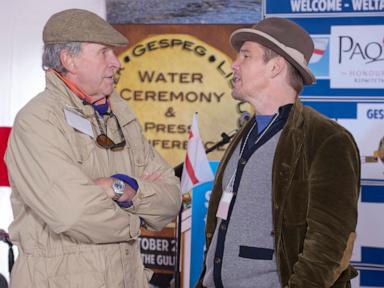
Charles Gaines passed away on July 21, 2026, at 84 years old. Most headlines will sum up his life in a single neat line: "The author who wrote Pumping Iron and introduced Arnold Schwarzenegger to the world".
That description isn't wrong. It's just absurdly incomplete.
If you only know Gaines as the guy who wrote the 1974 book Pumping Iron: The Art and Sport of Bodybuilding alongside photographer George Butler, you're missing one of the most eccentric, wildly adventurous figures in American literature. He didn't just document culture; he casually created entire subcultures out of thin air.
Here's the real story of Charles Gaines, how he turned a fringe subculture into a billion-dollar global industry, and why his legacy goes way beyond the gym floor.
The Sports Illustrated Assignment That Changed Pop Culture
Before 1972, iron sports were hidden away in dark basements, oily backstage rooms, and shadowy coastal gyms. The general public viewed bodybuilders as strange, self-obsessed oddities.
Then Sports Illustrated sent Gaines to cover a local Mr. East Coast contest.
Gaines didn't look down on the subculture. Raised in Alabama and trained at the prestigious University of Iowa Writers' Workshop, he brought an anthropological curiosity to the weight room. He didn't see freakish outsiders; he saw subculture as primeval, unmapped territory.
"If we felt at times a little like 19th century explorers, it was because we found bodybuilding to be as primeval and unmapped as parts of Labrador," Gaines later noted.
Gaines teamed up with photographer George Butler to write the 1974 book Pumping Iron. They spent months following a charismatic, young Austrian lifter named Arnold Schwarzenegger and his fierce rival Lou Ferrigno.
The book didn't just sell. It exploded.
Gaines and Butler adapted the material into the legendary 1977 documentary Pumping Iron. It pulled bodybuilding straight out of the shadows. Without Gaines framing weightlifting as an art form driven by Greek-god ambitions, the fitness boom of the late 1970s and 1980s wouldn't have happened the way it did. Arnold Schwarzenegger might have remained just another Austrian muscleman instead of becoming a global action icon and the governor of California.
He Literally Invented Paintball
If turning bodybuilding into a global phenomenon wasn't enough for one lifetime, Gaines casually co-invented an entire extreme sport on a whim.
In June 1981, Gaines sat down with his friends Hayes Noel (a Wall Street stockbroker) and Bob Gurnsey (a ski shop owner). They were debating whether survival instincts were innate or learned. Could a city dweller outsmart a seasoned woodsman in the wild?
To settle the debate, they bought Nel-Spot 007 pistols—tools used by foresters to mark trees and ranchers to mark cattle with oil-based paint. They created a set of rules, gathered nine other men in the woods of New Hampshire, and played the first-ever survival game.
Gaines was the one who captured the flag and won that very first game.
What started as a weekend bet turned into the National Survival Game, launching the multi-million-dollar global paintball industry. Gaines didn't just write about adventure; he built new ways for people to experience it.
The Writer Who Refused to Be Boxed In
It's easy for the media to fixate on Pumping Iron, but treating Gaines as a one-hit wonder does his literary career a massive disservice.
His debut 1972 novel, Stay Hungry, dives deep into the weird, fascinating intersection of old-money Southern society and local gym culture. It was adapted into a feature film starring Jeff Bridges, Sally Field, and Schwarzenegger in his first major dramatic role.
Gaines was a true chameleon as a writer. He wrote beautifully about:
- World-class fly fishing and the deep philosophy of outdoor life.
- High-stakes mountaineering and winter wilderness survival.
- Upland bird hunting and field dog training.
- Moving memoirs about living in Alabama and Nova Scotia.
He wasn't sitting in an ivory tower theorizing about nature. He lived it. He served on the board of the U.S. Fly Fishing Team, was inducted into the Alabama Writers Hall of Fame in 2018, and won the Truman Capote Prize for lifetime achievement in non-fiction in 2020.
Why His Storytelling Formula Worked So Well
Plenty of sports writers cover events, but very few alter the trajectory of the sport itself. Gaines succeeded where others failed because he understood human psychology.
He didn't write about sets, reps, or meal plans. He wrote about ambition, vulnerability, ego, and obsessiveness.
When he looked at Schwarzenegger flexing on stage, he didn't just see muscles—he saw an unstoppable force of will carving out an identity. When he looked at fly fishing, he didn't just see a lure in the water—he saw an intimate, quiet conversation between a person and the natural world.
He treated every niche subculture with deep dignity. He proved that if you write about a tiny, ignored pocket of humanity with absolute seriousness and literary skill, the rest of the world will stop and pay attention.
What You Should Read First
If you want to experience the genius of Charles Gaines firsthand, don't just stop at the documentary. Pick up these original works to see a master storyteller at work:
- Pumping Iron: The Art and Sport of Bodybuilding (1974) — Read the original prose. The writing is far richer and more poetic than the film version.
- Stay Hungry (1972) — His brilliant debut novel that captures the gritty, strange magic of 1970s Birmingham bodybuilding.
- The Next Valley Over: An Angler's Progress (2017) — A masterclass in outdoor writing that shows his deep love for fly fishing.
Charles Gaines proved that the most interesting stories aren't waiting in the center of mainstream culture. They're hiding out on the fringes, waiting for someone curious enough to go look for them.


