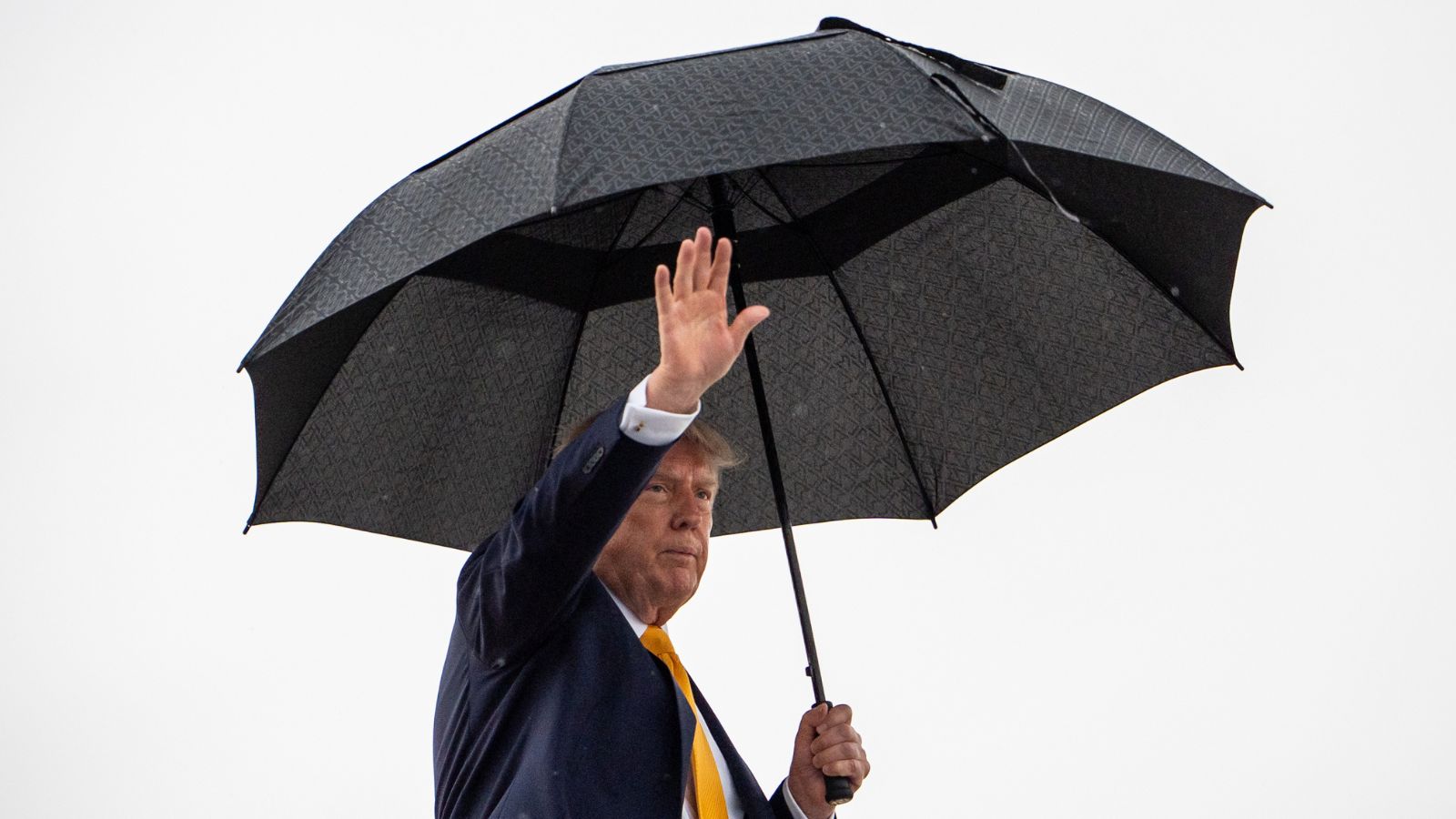
The security incident at the 2026 White House Correspondents’ Dinner sent the most powerful figures in American government into a sudden, frantic evacuation. While the Vice President, First Lady, and Cabinet members were quickly confirmed safe, the event left the nation staring at a terrifyingly familiar void of information. Within minutes, the machinery of the modern presidency shifted from a black-tie gala to a high-stakes media briefing where Donald Trump sought to regain control of a narrative that was already fracturing across social platforms. This wasn't just a physical security scare. It was a stress test for how the executive branch handles a crisis in an era where the first report of a gunshot often comes from a smartphone before the Secret Service has even cleared the room.
The Perimeter Problem in the Modern Capital
High-profile events in Washington D.C. are supposed to be the most secure "hard zones" on the planet. Magnetometers, background checks, and plainclothes detail officers create a layered defense intended to make an incident impossible. Yet, the disruption at the Washington Hilton proved that even the most rigorous protocols have a breaking point when faced with the unpredictability of a crowded, civilian-heavy environment. For another view, see: this related article.
The Secret Service operates on a philosophy of "protection through distance," but at the Correspondents’ Dinner, that distance is non-existent. You have the President and Vice President sitting mere feet from journalists, celebrities, and corporate sponsors. When the "scare" occurred—initially reported as a loud bang near the kitchen entrance—the primary objective wasn't just to shield the principals but to prevent a stampede in a room filled with over 2,000 people.
The failure wasn't necessarily in the physical response, which was immediate. The failure lay in the information vacuum. For forty-five minutes, the only source of news was a chaotic stream of "X" posts from terrified dinner guests hiding under tables. By the time the official "all safe" was issued, the internet had already speculated on everything from a coordinated hit to a foreign state actor. Further coverage on the subject has been published by The New York Times.
Trump and the Art of the Post-Crisis Briefing
When the media briefing finally began, the objective was clear: project strength and minimize the optics of vulnerability. This is a tactic honed over decades of public life. In the aftermath of a security breach, the physical facts—who did what, and when—are often secondary to the emotional frequency the leader broadcasts.
Donald Trump’s decision to brief the media almost immediately after the room was swept was a deliberate choice to bypass the traditional lag of a press secretary’s statement. By standing at the podium while the adrenaline of the room was still high, he effectively became the primary narrator of the event. This move serves two purposes. First, it settles the markets and foreign allies who may be reacting to rumors of an assassination attempt. Second, it allows the administration to frame the Secret Service's response as a "total success" before any oversight committee can begin asking why the scare happened in the first place.
Historical precedent shows that when a leader retreats during a crisis, they lose the ability to define the event. By stepping forward, the administration sought to turn a moment of potential weakness into a demonstration of executive resolve.
The Technical Reality of the False Alarm
In modern security, the "loud bang" is the most dangerous variable. In a room with high-end acoustics and a massive PA system, a burst light bulb or a dropped heavy tray can sound identical to a small-caliber firearm discharge. This is the acoustic ghost that haunts large-scale events.
Security teams now utilize "ShotSpotter" style technology—acoustic sensors designed to triangulate the exact origin of a sound and identify its signature. However, inside a ballroom, these systems struggle with reverberation. The human element still takes precedence. If a single agent shouts "Down!" the entire room follows, regardless of whether a weapon was actually fired.
The psychological toll of these false alarms cannot be overstated. We are living in a period of heightened political volatility where the "threat baseline" is higher than it has been in decades. When the Secret Service moves, they move with the assumption that the threat is real, because they don't get a second chance to be wrong. This creates a feedback loop of trauma for the attendees and a massive logistical headache for the city, as blocks are cordoned off and the "bubble" expands to encompass entire neighborhoods.
The Breakdown of the Safe Room Protocol
One of the most jarring aspects of the evening was the visibility of the evacuation. Typically, the "Package"—the term for the protectees—is whisked away through service tunnels and pre-planned routes that the public never sees. At the Hilton, the sheer density of the crowd meant that the Vice President and First Lady were seen being hurried through kitchen corridors by agents with drawn weapons.
This visibility is a nightmare for the Secret Service. It reveals the "seams" in their armor. Every camera phone that captured a grainy video of a Cabinet member being shoved into a secure vehicle provided a piece of intelligence for anyone looking to map the evacuation routes for a future, more coordinated attack. The "Why" of this incident is still being investigated, but the "How" is already being analyzed by security experts who realize that the traditional playbook for D.C. events is becoming obsolete in the face of universal surveillance.
The Industry of Outrage and the Media Response
The press corps, who were the "victims" of the scare alongside the politicians, faced a unique professional dilemma. How do you report on a crisis when you are currently being ushered into a basement by men with submachine guns?
The resulting coverage was a mix of raw, emotional first-person accounts and a frantic attempt to verify the status of the executive branch. This incident highlighted the fragility of the press-politics relationship. At the dinner, they are supposed to be "frenemies" engaging in light-hearted roasts. The moment the security bubble popped, that artifice vanished.
What remained was a stark reminder that the United States government operates under a constant shadow of threat. The "briefing" that followed was as much about re-establishing the social contract between the press and the President as it was about factual updates. It was an attempt to return to "business as usual" in a world where business is anything but usual.
The Security Industrial Complex
Following an event like this, there is an inevitable surge in funding and equipment requests. We will likely see an increase in the use of AI-driven behavioral analysis in the lobbies of major hotels and the deployment of more sophisticated non-line-of-sight communication tools for agents.
But the reality is that technology cannot fix a fundamental flaw in the way we conduct public life in the capital. You cannot have a "transparent" and "accessible" government that is also 100% insulated from the chaos of the public. There is a cost to the optics of the Correspondents’ Dinner—a risk that every attendee signs on for, whether they realize it or not.
The investigation will likely find that the "scare" was something mundane, a mechanical failure or a human error by a member of the hotel staff. But the damage to the sense of security at these events is permanent. The next time a tray drops or a balloon pops in a D.C. ballroom, the reaction won't be a flinch. It will be a full-scale evacuation.
This is the new baseline. The administration’s quick pivot to the media briefing was a masterclass in crisis management, but it doesn't change the fact that for nearly an hour, the leadership of the free world was running for its life through a kitchen. That is the image that will linger long after the official transcripts are filed and the gala dresses are put back into storage.
The immediate takeaway for the industry is clear: the gap between a "scare" and a "catastrophe" is measured in seconds and the quality of the information provided in the aftermath. If the government cannot provide that information, the public will find it elsewhere, usually in the darkest corners of the internet. The briefing was a patch, not a cure. The underlying vulnerability of our public institutions remains exposed, sitting front and center at the next table over.