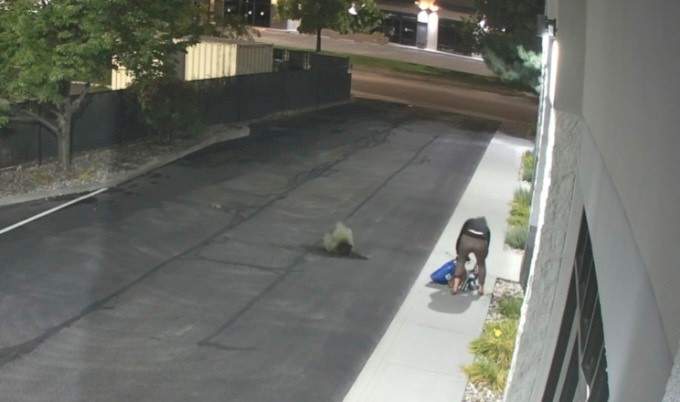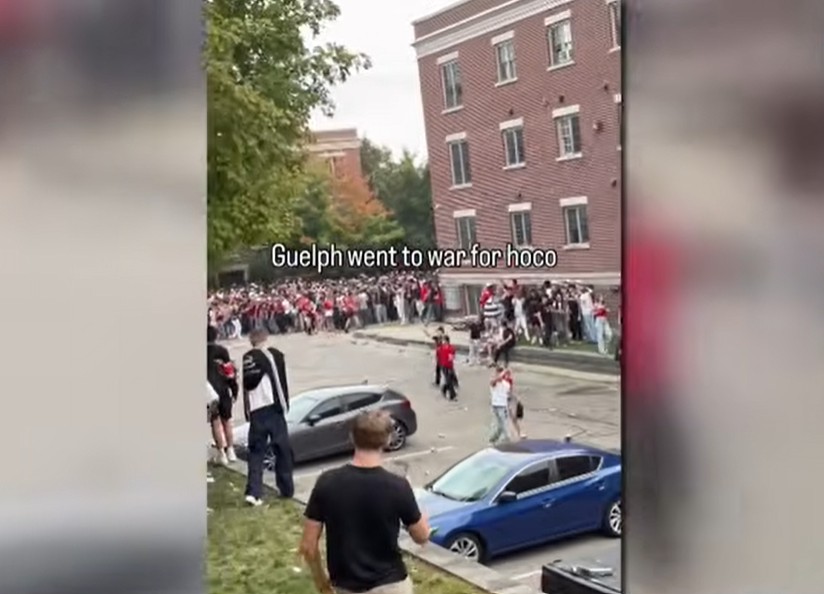
Thousands of young adults converged on the residential blocks surrounding the University of Guelph for unsanctioned homecoming celebrations, leaving behind flipped cars, injured first responders, and a fractured community relationship that years of administrative warnings have failed to repair.
The chaos erupted along Edinburgh Road and the surrounding student-heavy neighborhoods, transforming quiet suburban avenues into makeshift amphitheaters for mass public disorder. Local emergency services confirmed multiple injuries, including a police officer struck by flying debris and several partygoers requiring medical transport for acute intoxication and trauma. Property damage mounted rapidly as street signs were ripped from their anchors, fences collapsed under surging crowds, and municipal infrastructure absorbed thousands of dollars in repairs. Yet, treating this episode as a mere anomaly of youthful exuberance misses the deeper systemic breakdown unfolding across university towns in Ontario. You might also find this similar story useful: What Donald Trump Got Right and Wrong About the UK Air Base Terror Scare.
The Anatomy of an Unsanctioned Gathering
Street parties of this magnitude do not materialize spontaneously through word of mouth. They are organized logistics networks operating entirely outside municipal oversight. Social media channels utilize encrypted messaging groups and temporary geographic pins to coordinate thousands of participants within minutes, outmaneuvering traditional police intelligence units.
When law enforcement arrives in standard tactical gear, the dynamic shifts immediately from crowd management to adversarial confrontation. Missiles consisting of glass bottles, cans, and construction debris rain down from the peripheries. The sheer density of the crowd renders standard dispersal tactics ineffective without risking a catastrophic crush injury event. Municipal leaders find themselves trapped in an operational dilemma: intervene aggressively and risk inciting a full-scale riot, or maintain a perimeter and risk the destruction of private property. As discussed in detailed reports by Associated Press, the results are worth noting.
University administrations consistently distance themselves from off-campus incidents, citing jurisdictional boundaries. Municipal councils bear the financial brunt of policing and cleanup costs, passing the burden onto local taxpayers who watch their neighborhoods treated as expendable party zones.
The Economics of Institutional Disconnect
Higher education institutions have grown exponentially over the past two decades, yet the infrastructure supporting student housing has stagnated. On-campus residences cater to a fraction of incoming cohorts, forcing tens of thousands of students into the private rental market. Landlords divide single-family homes into high-density student rentals, concentrating hundreds of young adults into neighborhoods ill-equipped for the density.
When affordable social outlets shrink and institutional oversight vanishes past the campus quadrangle, the street becomes the default venue for community formation. The rituals of homecoming have evolved from school spirit displays into performative spectacles fueled by cheap alcohol and viral clout-chasing.
Municipalities across the province now face an unsustainable fiscal cycle. Extra police deployments during homecoming weekends require millions of dollars in overtime pay. City councils pass stricter noise bylaws and administrative monetary penalties, yet these fines serve as negligible deterrents for participants who treat them as the cost of doing business.
Shifting the Burden of Accountability
Real solutions require dismantling the artificial wall dividing campus administrators from municipal governance. Universities must tie enrollment targets directly to guaranteed housing availability, ensuring that growth does not outpace municipal capacity. Local police services are shifting toward post-incident forensic investigations, utilizing high-definition drone footage and social media scraping to identify and charge instigators weeks after the dust settles, shifting the consequence from immediate physical confrontation to long-term legal jeopardy.
The morning after the barricades come down, the street sweepers clear the broken glass from the asphalt, and the tow trucks haul away the wrecked vehicles, the fundamental vulnerabilities remain completely unaddressed.