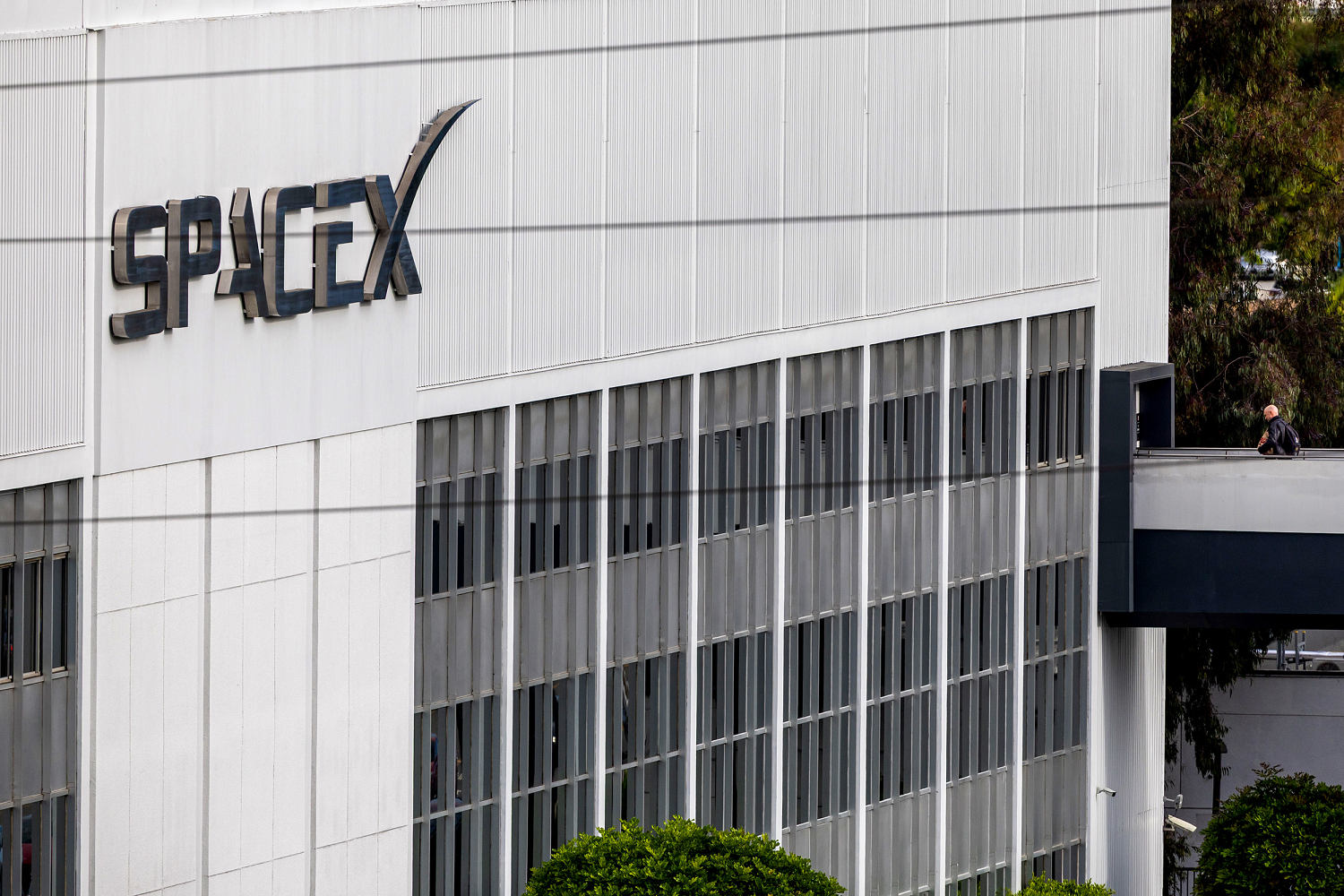
The initial public offering of SpaceX at $135 per share represents a fundamental departure from established corporate finance paradigms. By engineering an all-primary issuance of 555.56 million Class A shares to raise $75 billion, the entity has executed the largest capital market debut in history, outstripping Saudi Aramco’s 2019 record of $25.6 billion.
This transaction establishes an initial market value of $1.77 trillion, a figure underpinned by an unprecedented structural inversion: a valuation representing 92 times its trailing twelve-month revenue of $19 billion, sustained despite a 2025 net loss of $4.94 billion. The market mechanisms driving this transaction demonstrate how a capital-intensive aerospace manufacturer has successfully repriced itself as an infrastructure layer for the global artificial intelligence economy.
The Tri-Product Ecosystem Value Chain
To understand how a loss-making entity achieves a valuation exceeding JPMorgan Chase and Berkshire Hathaway, the business model must be broken down into its three interconnected operational units. The traditional launch business does not subsidize the valuation; instead, it acts as a low-margin delivery mechanism that underwrites the deployment of higher-margin downstream assets.
+---------------------------------------+
|          1. Launch Services           |
| (Low Margin, Unit Capacity Provider)   |
+-------------------+-------------------+
                    |
                    v Lower Cost per kg
+-------------------+-------------------+
|          2. Starlink Network          |
| (High Margin, Global Connectivity)    |
+-------------------+-------------------+
                    |
                    v Low-Latency Network
+-------------------+-------------------+
|       3. Orbital Compute / xAI        |
| (Exponential Scaling Data Centres)   |
+-------------------+-------------------+
1. Launch Services as a Unit Capacity Provider
The commercial launch division operates as a vertically integrated freight network. By mastering primary stage reusability via the Falcon 9 and developing the fully reusable Starship architecture, SpaceX has structurally altered the cost function of orbital insertion.
The primary economic metric here is the marginal cost per kilogram to Low Earth Orbit (LEO). This cost advantage serves two purposes: it creates a functional monopoly over third-party commercial and defense payloads, and it drives down the internal capital expenditure required to build out the company's internal satellite constellations.
2. The Starlink Network as a Global Connectivity Layer
Starlink translates raw launch capacity into a high-margin, recurring consumer and enterprise utility. With over 10.3 million active subscribers and a fleet of approximately 9,600 active broadband and mobile satellites, this segment operates on traditional telecom economics characterized by high upfront infrastructure costs followed by low marginal delivery costs.
The primary revenue drivers are global enterprise accounts, maritime connectivity, aviation contracts, and sovereign defense networks. These segments present significantly higher average revenue per user (ARPU) than traditional consumer broadband.
3. Orbital Compute Infrastructure and xAI Integration
The definitive engine behind the $1.77 trillion valuation is the integration of xAI and the development of orbital AI data centers. By merging these debt-laden artificial intelligence and social media business units into the core aerospace structure, the company has claimed a theoretical total addressable market (TAM) of $28.5 trillion.
The core thesis relies on placing advanced compute nodes directly in orbit, linked by inter-satellite laser communications. This layout sidesteps terrestrial land acquisition, cooling constraints, and localized regulatory friction, while providing ultra-low-latency processing nodes that can bypass traditional geopolitical internet bottlenecks.
The Economics of Inverted Price Discovery
The structure of this offering challenges traditional Wall Street underwriting mechanics. In a standard IPO framework, investment banks initiate a roadshow with a broad, provisional price range, adjusting the final price based on institutional book-building feedback to gauge market equilibrium. SpaceX rejected this mechanism.
The Fixed-Price Direct Mandate
Management dictated a non-negotiable, fixed price of $135 per share before the formal roadshow commenced. This approach shifts pricing power entirely away from institutional allocators. The mechanism succeeded due to massive structural oversubscription, with aggregate orders exceeding $225 billion—more than three times the available supply.
Standard IPO:
[Price Range Issued] ---> [Institutional Feedback] ---> [Final Price Discovery]

SpaceX IPO:
[Fixed Price Set] -------> [Massive Capital Demand] -> [Absolute Allocation Control]
By removing price discovery from the market, the company prevented institutional downward pressure on its valuation, using sheer demand to force acceptance of its 92x price-to-sales multiple.
Capital Allocation Velocity
Because this issuance is entirely composed of primary shares, zero liquidity is provided to early insiders, venture backers, or employees during the debut. The full $75 billion injection bypasses secondary exits and flows directly onto the balance sheet.
The immediate capital allocation strategy targets distinct operational bottlenecks:
- Debt Amortization: A $20 billion tranche is earmarked to immediately extinguish the bridge loan secured in March to fund the xAI merger.
- Constellation Scaling: Capitalizing the deployment of up to 100,000 next-generation Starlink satellites to secure global orbital spectrum dominance.
- Silicon Supply Chain Integration: Funding joint chip manufacturing ventures with Tesla to build custom, radiation-hardened inference and training chips tailored for space deployment.
Institutional Allocation Subversion and Retail Mechanics
The transaction alters the typical distribution of equity in mega-cap listings by deliberately expanding the retail investor base.
| Metric | Typical Mega-Cap IPO | SpaceX Structure |
|---|---|---|
| Retail Allocation Share | 5% to 10% | 20% to 30% ($15bn - $22.5bn) |
| Minimum Capital Threshold | $100,000 - $500,000 | $2,000 (via selected platforms) |
| Proceeds Destination | Mixed (Primary & Insider Secondary) | 100% Primary Operating Capital |
| Pricing Strategy | Variable Range Book-Building | Fixed Unit Pricing ($135) |
This allocation framework serves a distinct structural purpose. Retail investors exhibit lower price sensitivity and a longer investment horizon based on brand alignment rather than quarterly institutional benchmarks. By routing up to $22.5 billion of the deal through retail networks managed by institutions like Bank of America and Fidelity, the underwriters created a highly distributed, non-institutional buffer.
To mitigate the volatility typical of highly fragmented retail ownership, the syndication team secured fast-entry mandates on major indices. Nasdaq altered its listing rules to allow inclusion in the Nasdaq 100 after 15 trading days. FTSE Russell implemented an accelerated five-day window to integrate the asset into the Russell 1000 and 3000 indices.
These structural fast-tracks create an immediate, non-discretionary buying mandate for passive index funds and exchange-traded funds (ETFs). This institutional demand automatically absorbs secondary market retail selling and provides programmatic support to the $135 floor price.
Structural Risk Matrix and Valuation Vulnerabilities
The scale of this capitalization creates asymmetric exposure to several operational and governance factors. Investors evaluating the asset face a unique set of risks where failure in any single category could cause significant contraction in the company's valuation multiple.
Key-Man Dependency and Governance Asymmetry
The corporate architecture provides zero institutional recourse. Elon Musk maintains absolute governance control through Class B common stock carrying ten votes per share, translating to 82.4% of total voting power.
The corporate entity explicitly states in its prospectus that its operational continuity, reputational capital, and strategic vision are tied to a single individual. The loss of this individual presents an unhedged operational risk for which no clear succession protocol exists.
The Profitability Disconnect
The projected valuation depends on an unprecedented transformation of the company's revenue mix:
Current Revenue Mix (2025: $19B):
[ Launch & Consumer Starlink: ~95% ] [ AI & Enterprise Compute: ~5% ]

Projected Revenue Mix (2030 Target: $322B AI Revenue):
[ Launch & Broadband: ~20% ] [ AI, Space Data Centres, Enterprise Compute: ~80% ]
Lead underwriters project that AI-driven revenue will scale to $322 billion by 2030, anchored by enterprise compute demand and agreements like Anthropic’s $1.25 billion monthly commitment for compute capacity through 2029.
However, the xAI unit currently acts as a severe drag on net margins, accounting for the bulk of the $4.94 billion net loss in 2025. Furthermore, the Anthropic agreement contains a 90-day termination clause exercisable by either party, exposing this critical revenue stream to high near-term volatility.
Starship Execution Bottlenecks
The deployment of both the 100,000-node Starlink constellation and the heavy orbital data centers depends entirely on the operational maturity of the Starship launch system.
If Starship fails to achieve rapid, low-cost reusability and quick turnaround times between flights, the cost of putting this infrastructure into orbit increases exponentially. A bottleneck here would cap the orbital data network’s expansion rate, rendering the $28.5 trillion TAM unattainable and forcing a drastic downward repricing of the stock toward traditional telecom or aerospace multiples.
Strategic Action Plan
For large asset managers and market participants, navigating this listing requires looking past short-term trading volume to focus on specific structural indicators:
- Monitor the Stabilization Agent Capital Flows: Morgan Stanley holds an over-allotment green-shoe option of 83 million shares. If macroeconomic volatility or geopolitical tensions push the market down, track the stabilization agent's buying patterns near the $135 threshold during the first 15 trading days. Heavy defense of this price points to artificial support, whereas clean trading above it confirms organic institutional accumulation.
- Track Index Tracking Inflows: Position portfolios ahead of the day-5 FTSE Russell and day-15 Nasdaq 100 fast-entry windows. The forced buying mandates from passive index funds will provide predictable liquidity injections that can be used to gauge true market depth.
- Audit Starship Cadence Over Quarterly Earnings: Disregard short-term net income fluctuations for the first four quarters. The critical metric for long-term valuation health is the quarterly tonnage placed into orbit by Starship. If tonnage trends upward while launch costs fall, the capital architecture of the orbital AI infrastructure remains viable, justifying the stock's premium multiple.