Headline numbers sell clicks. They rarely explain policy failures.
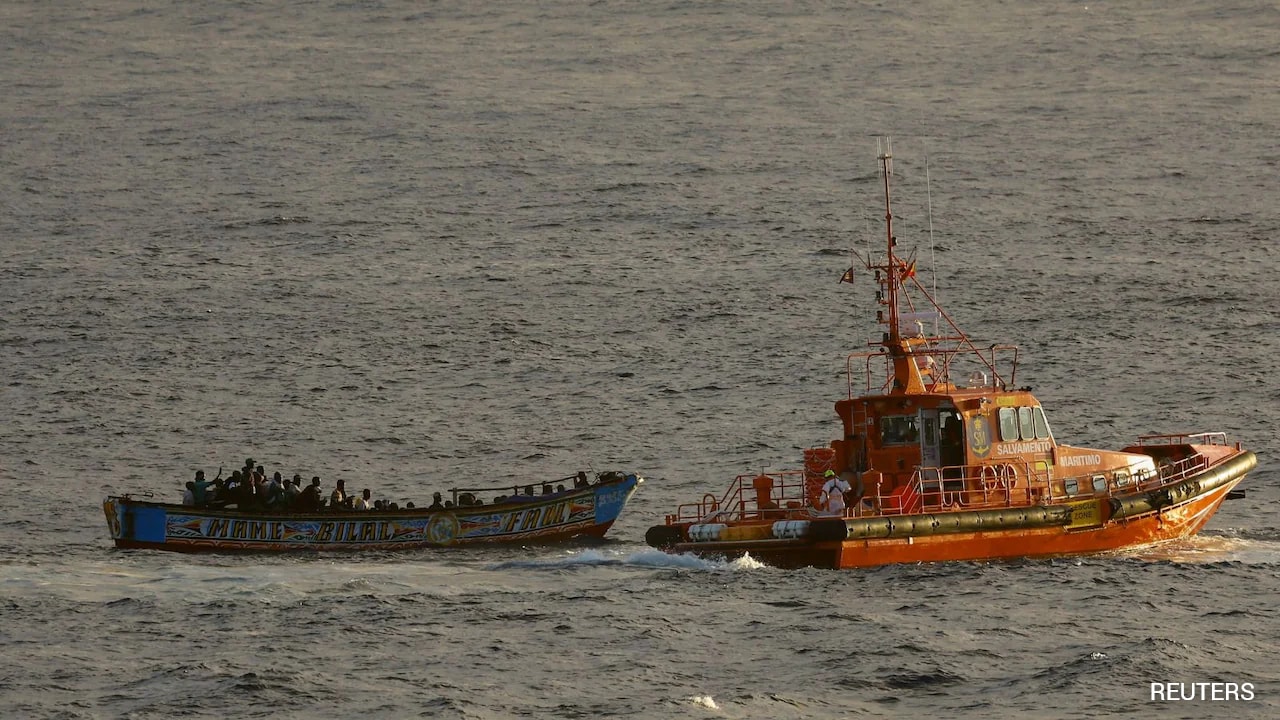
When Spanish authorities reported roughly 1,500 migrants arriving in the Canary Islands within a single 24-hour window—the highest daily total since the 2020 peak—media outlets immediately defaulted to crisis framing. Boats packed with people from sub-Saharan Africa reaching El Hierro, Tenerife, and Gran Canaria became another data point in an endless cycle of alarmist coverage.
The standard media consensus treats these spikes as unpredictable natural disasters. Weather shifts, smugglers adapt, and European border agencies react. That narrative misses the structural reality driving the Atlantic route.
The Illusion of the "Unprecedented" Spike
According to data from Spain's Ministry of the Interior and Frontex, the European Border and Coast Guard Agency, migration flows along the Western African route do not happen in a vacuum. They are the direct result of enforcement displacement.
When European Union funding and bilateral agreements tighten patrol operations in the Central Mediterranean—specifically off the coasts of Tunisia and Libya—smuggling networks do not shut down. They pivot. The Atlantic crossing from Senegal, Mauritania, and Gambia to the Canary Islands is among the deadliest maritime routes in the world, spanning hundreds of kilometers of open ocean. Yet arrivals surge precisely when shorter Mediterranean corridors become heavily policed.
Researchers at the Migration Policy Institute and the Mixed Migration Centre have repeatedly documented this balloon effect. Squeeze one corridor, and pressure expands elsewhere. Treating a 1,500-person arrival day as an isolated shock ignores the predictable mechanics of maritime deterrence.
What the Mainstream Coverage Leaves Out
Most breaking news reports focus entirely on reception capacity: overwhelmed local centers, strained regional budgets in Madrid and Santa Cruz de Tenerife, and emergency transfers to the Spanish mainland. Those logistical pressures are real, particularly on small islands like El Hierro, which has a permanent population of around 11,000 people.
However, focusing solely on reception logistics obscures three critical factors:
- The Externalization Trap: The European Union has poured hundreds of millions of euros into agreements with transit nations like Mauritania and Senegal to intercept vessels before they leave territorial waters. While these deals temporarily suppress departure numbers, political instability, local economic shocks, and shifts in enforcement priorities quickly erode their effectiveness.
- Demographic and Economic Push Factors: In West Africa, inflation, youth unemployment, and disruptions to traditional livelihoods—such as artisanal fishing affected by international industrial fleets—create persistent demand for migration. Border patrols cannot solve macroeconomic displacement.
- Asylum Processing Bottlenecks: Under Spanish and European law, individuals arriving irregularly must be registered, screened, and given access to asylum procedures. Prolonged processing times keep people in state-funded facilities longer, creating artificial bottlenecks that amplify the appearance of permanent crisis.
Deconstructing the Core Questions
Public debate around the Canary Islands route usually gets stuck on binary arguments: total border closure versus unrestricted humanitarian reception. Both positions misread how maritime migration actually operates.
Does stricter maritime patrolling stop departures?
Evidence from Frontex and independent maritime analysts shows that increased surveillance near destination islands primarily shifts rescue operations rather than preventing launches. Once a wooden cayuco or inflatable boat enters international waters or Spanish search-and-rescue zones, maritime law—specifically the UN Convention on the Law of the Sea—obligates vessels to render assistance to persons in distress.
Why are arrivals concentrating on smaller islands like El Hierro?
Geography and currents dictate landfall. Smugglers launching from southern Mauritania or Senegal use prevailing Atlantic currents that push vessels westward toward the outermost islands of the archipelago. El Hierro sits at the southwestern edge of the Canaries, making it the first landmass encountered by boats drifting off course or running low on fuel.
What happens after migrants are rescued?
Upon arrival, Spain's National Police conduct initial identification and biometric registration within a 72-hour legal window. Individuals are then transferred to humanitarian reception centers managed by organizations such as the Spanish Red Cross and CEAR (Spanish Commission for Refugees). Because the Canary Islands have limited long-term infrastructure, the Ministry of Inclusion, Social Security and Migration routinely transfers adults to facilities on the Spanish peninsula to relieve local pressure.
The Policy Trade-Offs Nobody Wants to Own
Every policy lever available to Madrid and Brussels carries steep, unavoidable costs.
- Expanding Bilateral Security Deals: Paying third countries to police their own coastlines reduces short-term arrivals in Spain. The downside is severe: it creates diplomatic leverage for transit governments, exposes EU funds to governance risks, and pushes migrants onto longer, far more lethal ocean crossings further south.
- Increasing Legal Labor Pathways: Spain has experimented with circular migration programs and updated immigration regulations to fill labor shortages in agriculture, hospitality, and construction. While legal channels reduce irregular demand over time, they move far too slowly to absorb acute surges driven by regional crises in the Sahel.
- Centralizing EU Burden-Sharing: The EU Pact on Migration and Asylum aims to distribute responsibility across member states through mandatory solidarity mechanisms. In practice, national governments resist relocating asylum seekers, leaving frontline states like Spain, Italy, and Greece to manage disproportionate arrival numbers.
Reframing the Metric of Success
Measuring border policy solely by daily arrival counts guarantees permanent failure. A single calm week on the Atlantic can produce a 1,500-person spike that dominates headlines, while a rough month of trade winds creates the illusion of policy success.
Effective management requires separating search-and-rescue obligations from long-term migration governance. That means investing in rapid asylum adjudication on the mainland rather than letting bottlenecks build on small islands, auditing bilateral agreements in West Africa for human rights and operational durability, and expanding targeted work visas in sectors where Spain already faces structural labor deficits.
Until policymakers stop mistaking weather windows for strategy, the headlines will keep repeating themselves every time the Atlantic goes flat.