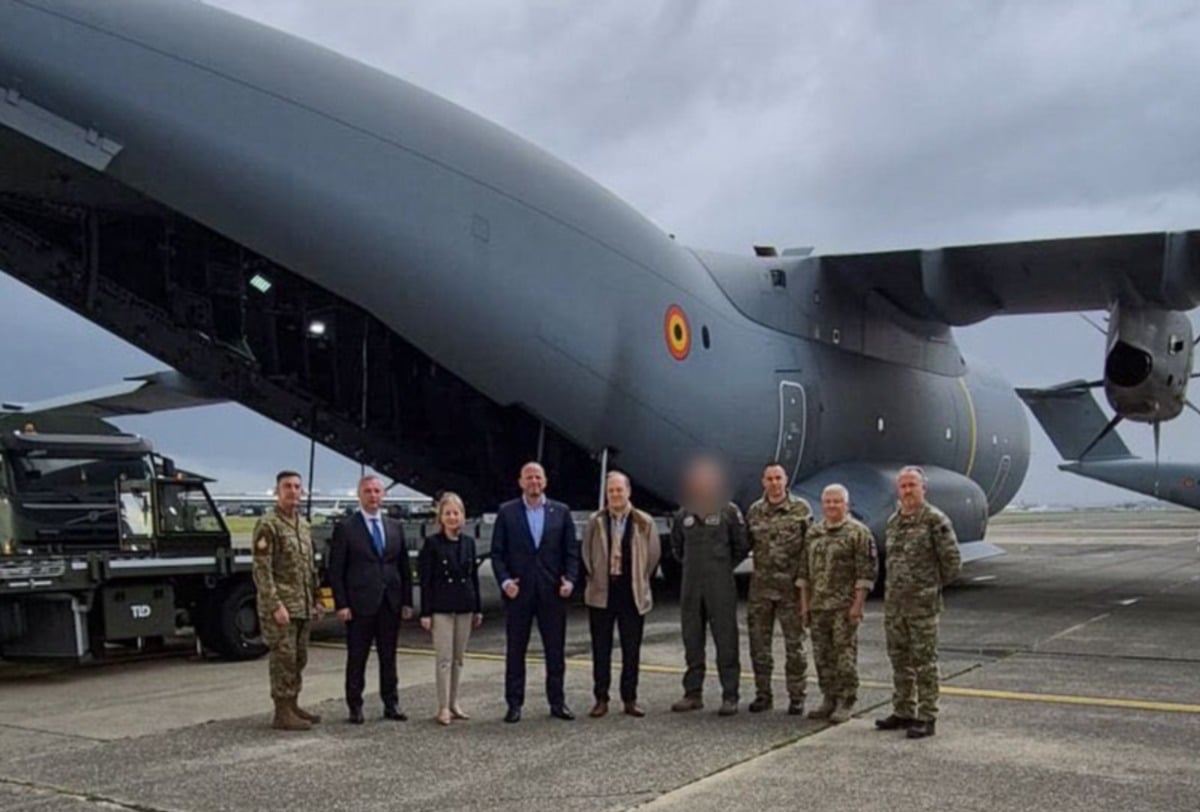
Western military aid logistics usually involve massive, publicly announced cargo flights straight into Polish hubs. But a recent under-the-radar operation flipped the standard script. A Belgian military transport aircraft spent an entire day moving high-value protective weapons systems straight out of Canadian military stockpiles, destined for Ukrainian frontline units.
This was not your typical press-release logistics run. While Ottawa and Brussels frequently broadcast their larger aid packages, this specific relay happened with remarkably little fanfare. It highlights a messy reality of the war. Moving critical hardware across the Atlantic requires a patchwork of European transport assets to plug the gaps when direct routes bottleneck.
The operation sheds light on how Canada relies on European allies like Belgium to solve its ongoing strategic airlift deficit while keeping the pipeline to Kyiv open.
Inside the Transatlantic Weapons Shuttle
Military flight tracking data revealed a Belgian Air Component Airbus A400M Atlas transport aircraft executing a precise, rapid-turnaround mission. The heavy lifter crossed the Atlantic to pick up specialized defensive systems directly from Canadian Forces inventory before heading straight back toward Eastern Europe.
The cargo consisted of specialized protective weapons systems. These are not basic small arms or standard infantry gear. We are talking about high-grade tactical equipment designed to enhance vehicle survivability and protect troop columns from drone strikes and precision artillery.
Canada has thousands of tons of surplus and active gear sitting in depots across Alberta, Ontario, and Quebec. The problem is getting it to the theater of war. The Royal Canadian Air Force has its own fleet of CC-177 Globemaster III transports, but those airframes are chronically overworked. They fly global missions, support domestic Arctic operations, and rotate Canadian troops deployed in Latvia.
When Ukraine needs specific gear on the double, Ottawa cannot always spare the wings. That is where Belgium came in.
The Logistic Reality Behind Hidden Shipments
Why did a Belgian asset fly a Canadian mission? The answer comes down to asset pooling inside NATO. Brussels and Ottawa have realized that decentralized, ad-hoc logistics networks are much harder for adversarial intelligence to track than predictable US-led flights out of Dover Air Force Base.
The weapons in question fall into the category of remote weapon stations and counter-drone protective arrays. Canada previously committed dozens of Rheinmetall Canada-made Nanuk Remote Weapons Systems alongside thousands of decommissioned CRV7 rocket motors and rocket ancillaries. While we cannot pinpoint the exact serial numbers on this specific flight, European defense logistics sources indicate the cargo matches ongoing transfers of Canadian armored combat support components.
Canadian Assets Transferred via European Logistics
--------------------------------------------------
* Nanuk Remote Weapon Stations (Rheinmetall Canada)
* CRV7 Rocket Motors & Ancillaries
* Multi-role Tactical Vehicle Spares
* Advanced Air Defense Component Relays
These systems let Ukrainian troops operate heavy machine guns and anti-tank systems from inside the armored hull of a vehicle, drastically cutting down on casualties from shrapnel and sniper fire. They are exactly what Ukrainian brigades need as they fortify positions against heavy Russian glide-bomb campaigns.
Why Brussels is Stepping Up
Belgium is quietly transforming its role from a conservative donor into a primary logistics integrator for the Ukrainian war effort. It is no secret that the Belgian military is undergoing a major structural shift. Defense officials in Brussels recently pushed plans to transfer their entire operational fleet of 53 F-16 Fighting Falcons to Ukraine over the coming years as new F-35As arrive.
Taking on the burden of flying Canadian gear across the ocean is part of this broader, more aggressive stance. It also makes practical sense. The Belgian Air Component operates a highly efficient fleet of A400M transports. These turboprop giants carry heavy payloads over long distances while burning less fuel than legacy jets, making them perfect for transatlantic equipment shuttles.
By acting as the middleman, Belgium ensures Canadian inventory doesn't sit gathering dust in warehouses while frontline units run dry. It also reveals a deeper truth about Western aid. The paperwork might say a weapon comes from Ottawa, but the actual delivery depends on a complex web of European cooperation.
How to Track Future Allied Military Flights
If you want to look past official press releases and see how Western military hardware actually moves, you don't need a security clearance. You just need to know where to look. Follow these steps to monitor the allied air bridge yourself.
- Use Decentralized Tracking Platforms: Standard commercial flight trackers censor military transponders. Switch to platforms like ADS-B Exchange or RadarBox, which filter less military data.
- Monitor Key Strategic Hubs: Keep an eye on airspace around Canadian Forces Base Trenton (YTR), Brussels Airport (BRU), Melsbroek Air Base, and Rzeszów-Jasionka Airport (RZE) in Poland.
- Filter by Aircraft Type: Set alerts for heavy military haulers. Look for the Airbus A400M (A40M), Boeing C-17 Globemaster (C17), and Lockheed C-130 Hercules (C130).
- Correlate with Ground Delivery Data: Cross-reference unusual flight patterns with local spotter groups on social media platforms like X and Telegram near the Polish-Ukrainian border. Unexpected arrivals almost always precede new equipment appearing on the frontlines a few days later.