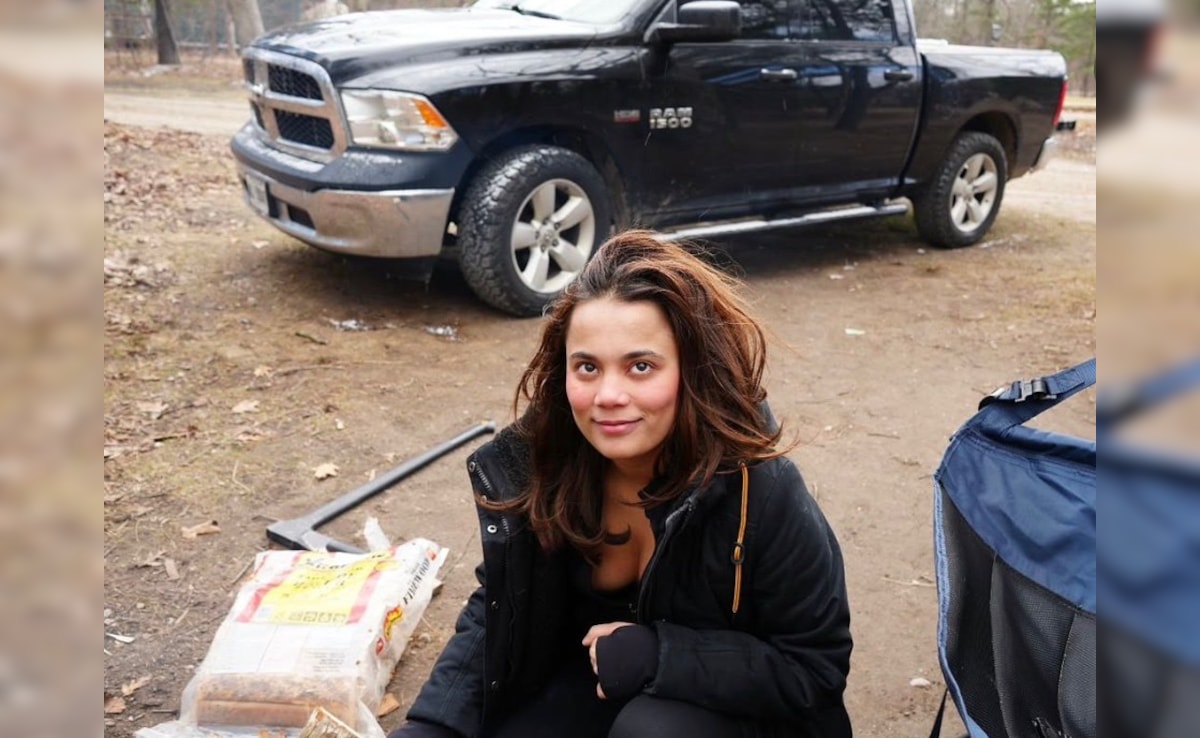
The brutal stabbing of 22-year-old Vidhi Kalpeshbhai Megha in Canada’s Niagara region highlights a quiet, systemic vulnerability facing international students. Megha, an ambitious law student from the Borsad town of Gujarat’s Anand district, was attacked in broad daylight on May 15. She died from her injuries shortly after being rushed to a local hospital. Her family, thousands of miles away in India, discovered the tragedy only 12 days later through diplomatic channels. This communication breakdown has exposed deep flaws in how the safety of over 400,000 Indian students in Canada is managed and monitored.
Initial Canadian police reports suggest the fatal knife attack may have stemed from an attempted robbery. One suspect is currently in custody. While local law enforcement officials treat the incident as an isolated homicide investigation, the murder belongs to a broader pattern of rising street crime and target vulnerability. The narrative that Canada remains a completely safe haven for young academic migrants is rapidly eroding under the weight of escalating local violence.
The True Cost of Permanent Residency Goals
International students do not live in a vacuum. To fund their dreams, they navigate a high-stress ecosystem of soaring tuition fees, exorbitant local rents, and intense pressure to secure Permanent Residency status. Megha had spent four years balancing her rigorous legal studies with part-time work to support herself. This grueling schedule forces many young immigrants into precarious living and working conditions.
They frequently take late-night shifts at gas stations, convenience stores, and fast-food outlets. They utilize public transit at odd hours. This demographic occupies a specific, structural vulnerability within Canadian suburban and urban centers.
Statistics Canada data reveals that youth violent crime rose by 10% between 2022 and 2023. This uptick directly impacts the temporary migrant workforce. When an international student steps onto a dimly lit street or works a solo shift past midnight, they are not just looking for pocket money. They are paying off high-interest loans back home. Criminal opportunists recognize this routine, transforming isolated student transit routes into zones of immense risk.
The Twelve Day Silence and Bureaucratic Disconnect
For nearly two weeks, the Megha family in Borsad called and messaged Vidhi, assuming she was simply occupied with her studies and part-time job. The reality was that her body lay in an Ontario mortuary while bureaucratic wheels turned at a agonizingly slow pace. The delay in notifying her next of kin points to a glaring disconnect between local Canadian police forces, federal immigration authorities, and the Indian consulate.
May 14: Vidhi last speaks to her father.
May 15: The fatal stabbing occurs in Niagara.
May 16: Family grows concerned but assumes she is busy with work.
May 27: New Delhi officials finally receive confirmation and notify the family.
When an international student arrives in Canada, their primary institutional tie is to their university or college. Yet, these institutions rarely possess the infrastructure to monitor the immediate physical safety or sudden disappearance of their off-campus student population. If a student misses a shift or fails to return to a private rented room, days can pass before anyone sounds an alarm. The current framework relies entirely on the student's immediate social circle to report emergencies. When that circle is small, isolated, or equally overwhelmed by work, the safety net fails completely.
A Spate of Violent Incidents Across the Provinces
The Niagara attack is not an isolated anomaly. Over the past twenty-four months, a troubling pattern of violence involving young Indian nationals has emerged across multiple Canadian provinces.
- In April 2025, Dharmesh Kathiriya, a 27-year-old student from Bhavnagar, Gujarat, was stabbed to death by a neighbor in Clarence-Rockland, Ontario.
- In March 2026, Gurkirat Singh Manocha, a 25-year-old business management student, lost his life during a violent confrontation at a boat launch in Fort St. John, British Columbia.
- In December 2024, the fatal shooting of 20-year-old Harshandeep Singh Anttal while working a night security shift in Edmonton highlighted the dangerous occupations these students must accept to survive.
These instances span different provinces, environments, and alleged motives, ranging from neighborhood disputes to workplace violence and random robberies. The common denominator is the exposure of the victims. International students are systematically overrepresented in high-turnover, customer-facing, and late-night employment sectors.
The political friction between Ottawa and New Delhi adds a layer of complexity to these tragedies. Diplomatic expulsions and reduced consular staff have complicated the routine processing of student welfare checks and emergency repatriations. When bilateral relations chill, the administrative machinery that handles the aftermath of a student's death slows down. This leaves grieving families in towns like Borsad waiting weeks just to receive the remains of their children for final rites.
Moving Beyond the Safety Myths
The traditional marketing pitch utilized by educational consultancies in Gujarat and Punjab presents Canada as an effortless path to prosperity. It omits the harsh realities of inflation, housing shortages, and the shifting domestic security environment within mid-sized Canadian cities. Confronting these risks requires concrete structural changes rather than generic travel advisories.
Universities and community colleges must take direct, financial responsibility for the off-campus safety of the international students who subsidize their budgets. This means providing dedicated, secure late-night transit options and establishing direct emergency alert pipelines linked to local police departments. Diplomatic missions must institute automated, fast-track communication protocols with regional police boards to ensure families are not left in the dark for weeks. Until these institutional gaps are closed, young students will continue to pay the ultimate price for the dream of a future abroad.